

The Ancient Motif Found from the Indus Valley to Egypt | Master of Animals - Storytrails
Every sight has a story to tell

The Ancient Motif Found from the Indus Valley to Egypt | Master of Animals

A 4500-year-old seal from the Indus Valley Civilisation shows a human figure grasping two lions. Known as the ‘Master of Animals’ motif, this enigmatic figure appears in different forms across cultures and over many centuries, stretching from Egypt to Mesopotamia. What did this image represent? And how did cultures separated by thousands of kilometres come to adopt such a strikingly similar icon?

1.Gebel el-Arak knife

Louvre Museum, CC0, via Wikimedia Commons

https://commons.wikimedia.org/wiki/File:Couteau_de_Gebel_el-Arak_-_Mus%C3%A9e_du_Louvre_Antiquit%C3%A9s_%C3%A9gyptiennes_E_11517_-_recto_verso.jpg 

2.Gebel el-Arak Knife ivory handle (front)

ALFGRN, CC BY-SA 2.0 <https://creativecommons.org/licenses/by-sa/2.0>, via Wikimedia Commons

https://commons.wikimedia.org/wiki/File:Gebel_el-Arak_Knife_ivory_handle_(front).jpg

3.Gebel el-Arak knife

Louvre Museum, CC BY-SA 2.0 FR <https://creativecommons.org/licenses/by-sa/2.0/fr/deed.en>, via Wikimedia Commons

https://commons.wikimedia.org/wiki/File:Gebel_el-Arak_knife_mp3h8791.jpg

4.Bull Headed Lyre of Ur

Binxedits, CC BY-SA 4.0 <https://creativecommons.org/licenses/by-sa/4.0>, via Wikimedia Commons

https://commons.wikimedia.org/wiki/File:Bull_Headed_Lyre_of_Ur.jpg

5.Minoan gold pendant

Jean-Pierre Dalbéra from Paris, France, CC BY 2.0 <https://creativecommons.org/licenses/by/2.0>, via Wikimedia Commons

https://commons.wikimedia.org/wiki/File:Pendentif_minoen_(British_Museum)_(8704963755).jpg

6.Luristan Bronze

Los Angeles County Museum of Art, Public domain, via Wikimedia Commons

https://commons.wikimedia.org/wiki/File:Cheekpiece_from_a_Horse_Bit_LACMA_M.76.97.106_(2_of_2).jpg

7.Iberian Relief

Jerónimo Roure Pérez, CC BY-SA 4.0 <https://creativecommons.org/licenses/by-sa/4.0>, via Wikimedia Commons

https://commons.wikimedia.org/wiki/File:Relieve_ib%C3%A9rico_con_domador_de_caballos._Museo_de_Arqueolog%C3%ADa_de_Catalu%C3%B1a.jpg

8.Egyptian Cippus

Picture taken by Marcus Cyron, CC BY-SA 4.0 <https://creativecommons.org/licenses/by-sa/4.0>, via Wikimedia Commons

https://commons.wikimedia.org/wiki/File:Ancient_Collection_MfA_Boston_0751.JPG 

9.Gundestrup Silver Cauldron

Nationalmuseet, Public domain, via Wikimedia Commons

https://commons.wikimedia.org/wiki/File:Gundestrupkedlen-_00054_(cropped).jpg

10.Chlorite Object

Nationalmuseumofiran, CC BY-SA 4.0 <https://creativecommons.org/licenses/by-sa/4.0>, via Wikimedia Commons

https://commons.wikimedia.org/wiki/File:Chlorite_object_Jiroft,_Kerman_ca._2500_BCE,_Bronze_Age_I,_National_Museum_of_Iran.jpg

11.Mistress of Animals

Louvre Museum, CC0, via Wikimedia Commons

https://commons.wikimedia.org/wiki/File:D%C3%A9esse_nourissant_des_caprins_-_Mus%C3%A9e_du_Louvre_Antiquit%C3%A9s_orientales_AO_11601.jpg

12.Barsu Sada petroglyphs

Matsyameena sanju, CC BY-SA 4.0 <https://creativecommons.org/licenses/by-sa/4.0>, via Wikimedia Commons

https://commons.wikimedia.org/wiki/File:Barsu_(Ratnagiri_District)_Petroglyphs.jpg

13.Baru Sada petroglyphs

Images courtesy: Chetan https://www.instagram.com/chetan9124/ 

14.Pashupati seal

Public domain, via Wikimedia Commons

https://commons.wikimedia.org/wiki/File:Shiva_Pashupati.jpg

15.Lord Shiva bas-relief

Anton Karmanov, CC BY 4.0 <https://creativecommons.org/licenses/by/4.0>, via Wikimedia Commons

https://commons.wikimedia.org/wiki/File:Lord_Shiva_bas-relief_at_Orekhovo-Zuevo.jpg

16.Stamp Seals

User:Zunkir, CC BY-SA 4.0 <https://creativecommons.org/licenses/by-sa/4.0>, via Wikimedia Commons

https://commons.wikimedia.org/wiki/File:Stamp_seals_%22Master_of_Animals%22,_Tepe_Giyan,_Iran,_5000-4000_BCE.jpg

17.Soapstone stamp from Lurestan

Zunkir, CC BY-SA 4.0 <https://creativecommons.org/licenses/by-sa/4.0>, via Wikimedia Commons

https://commons.wikimedia.org/wiki/File:Cachet_maitre_animaux_Lorestan_AO_22919.jpg

18.Ibexes flank a tree of life

Daderot, CC0, via Wikimedia Commons
https://commons.wikimedia.org/wiki/File:Relief_plaque_with_confronted_ibexes,_Iran,_Sasanian_period,_5th_or_6th_century_AD,_stucco_originally_with_polychrome_painting_-_Cincinnati_Art_Museum_-_DSC03952.JPG


END OF STORY

Share:

Facebook
Twitter
LinkedIn
WhatsApp
Pinterest
Email

You might also be interested in

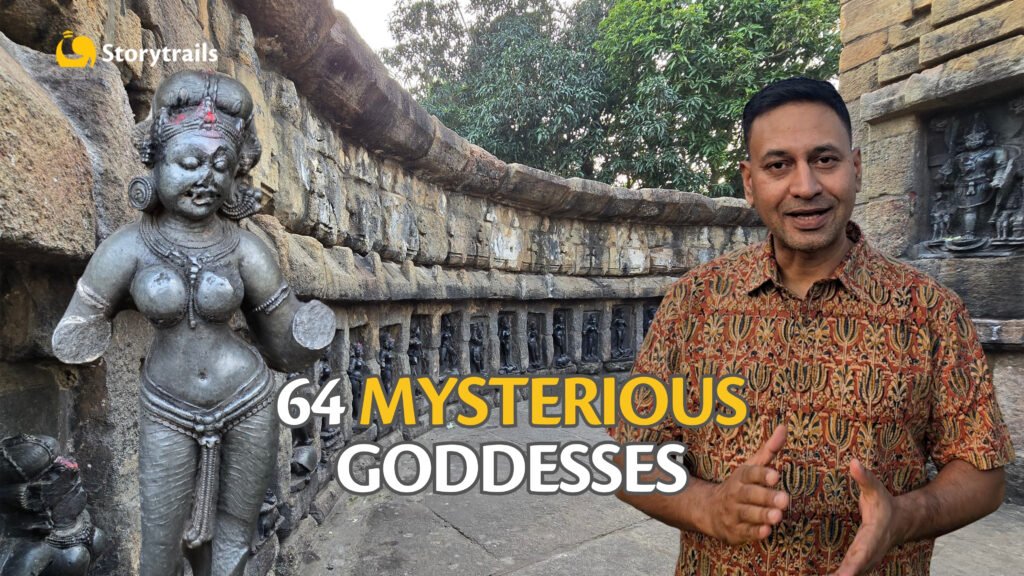
Tucked away near Bhubaneswar lies one of India’s most mysterious temples, Hirapur’s Chausath Yogini Temple. This circular, roofless shrine, built in the 9th century, is dedicated to 64 Yoginis; powerful female deities associated with Tantric traditions. The temple is lined with intricately carved Yogini figures, and offers a rare glimpse into a lesser-known spiritual world.
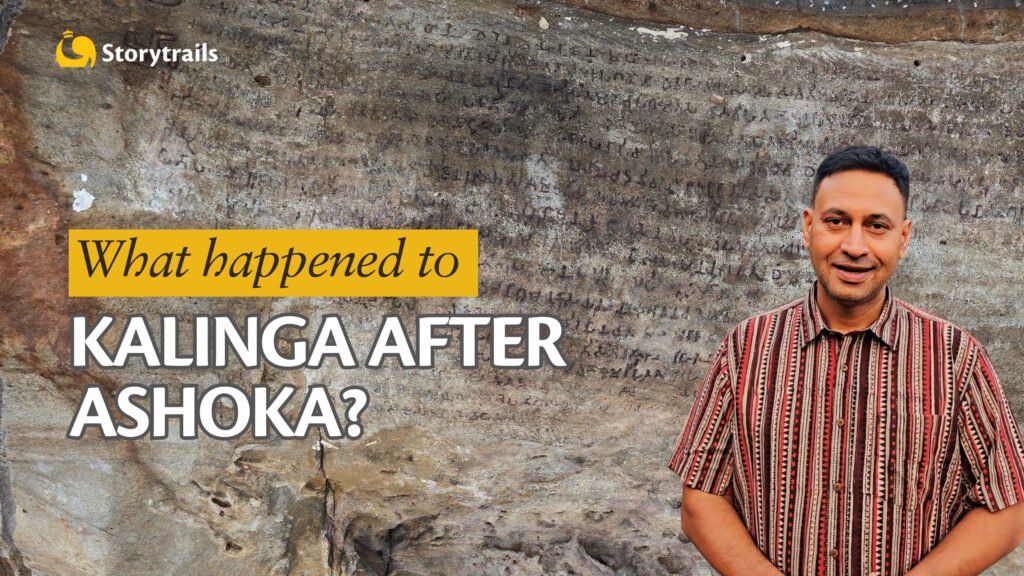
What happened to Kalinga after its devastating war with Ashoka? Did Buddhism simply sweep across the region? A 2000-year-old inscription offers some fascinating clues. Carved into the walls of the Udayagiri-Khadagiri Caves in Odisha, the Hathigumpha inscription tells the remarkable story of King Kharavela, a powerful ruler who emerged in Kalinga centuries after Ashoka’s conquest.
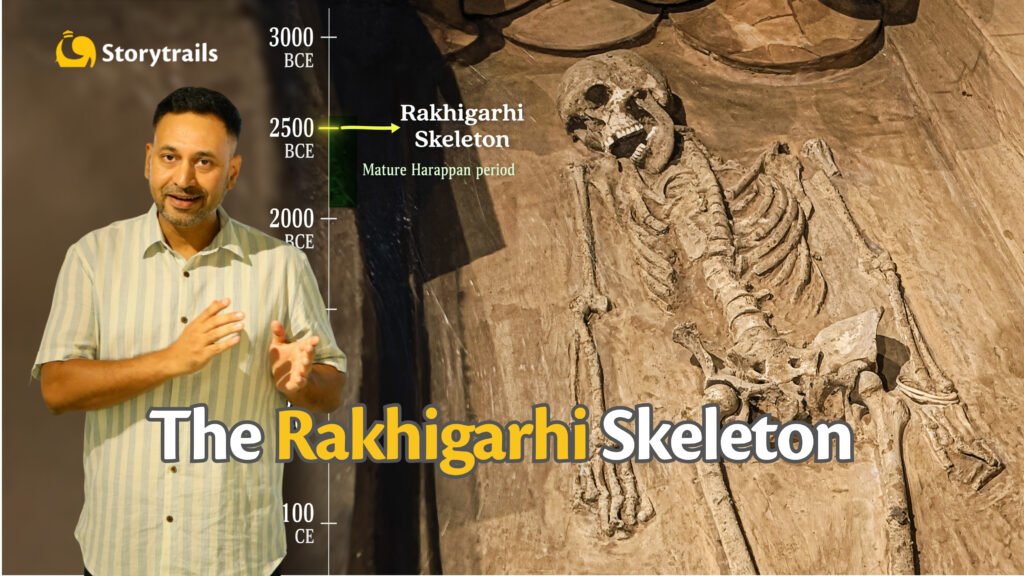
At Rakhigarhi in Haryana, archaeologists uncovered the 4500-year-old skeleton of a middle-aged woman from the Harappan period. Scientists recovered ancient DNA from her remains; the first successful genome from a Harappan individual. What makes this discovery significant, and what does it tell us about the ancestry of Indians?
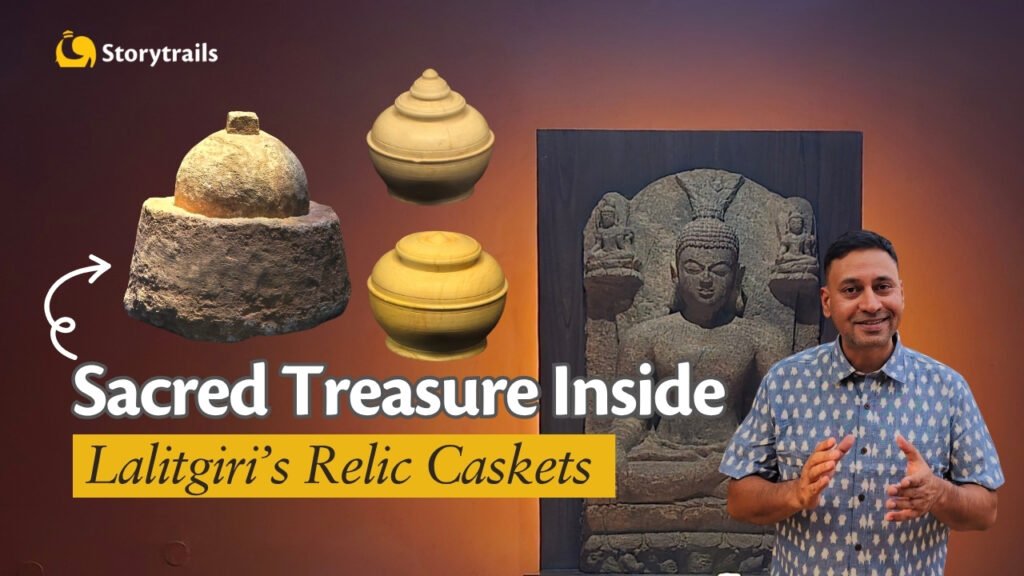
A casket within a casket… within another. Buried beneath centuries of earth at Lalitgiri, archaeologists uncovered a remarkable series of nested caskets in 1985. At their center lay a tiny gold reliquary containing relics believed to be those of the Buddha himself! It is one of the most significant Buddhist discoveries in India.
In 2015, on the banks of the river Vaigai, near Madurai in Tamil Nadu, archaeologists unearthed several artefacts dating back to the 6th century BCE. They offered many clues to the archaeologists about that civilisation: it told them about the language and literacy levels, the social hierarchy, and the age of the civilisation. What are now known as the ‘Keeladi excavations’ point to the existence of a literate society in parts of South India nearly 2,500 years ago!