The Chausath Yoginis of Hirapur - Storytrails
Every sight has a story to tell

The Chausath Yoginis of Hirapur

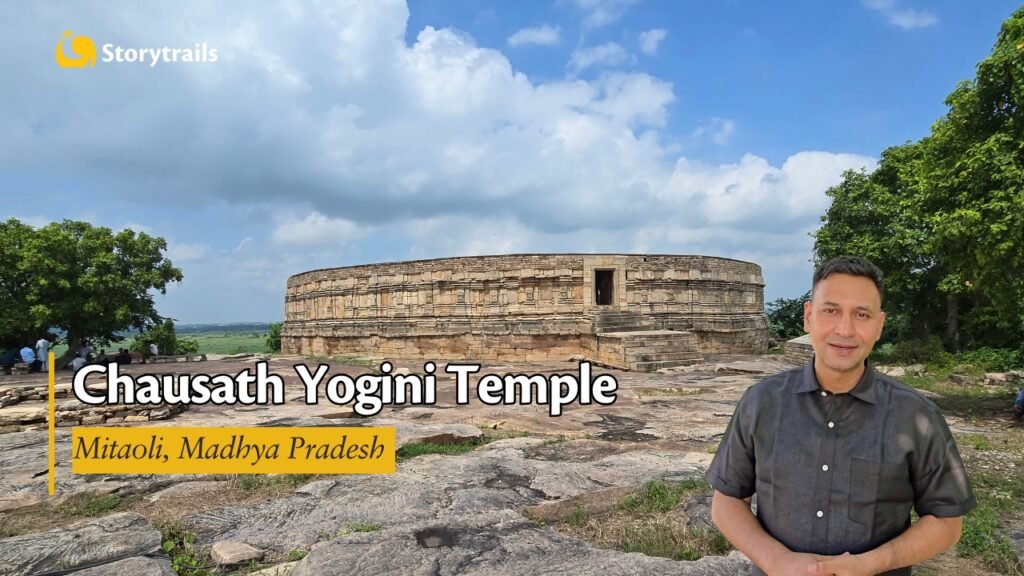
Tucked away near Bhubaneswar lies one of India’s most mysterious temples, Hirapur’s Chausath Yogini Temple. This circular, roofless shrine, built in the 9th century, is dedicated to 64 Yoginis; powerful female deities associated with Tantric traditions. The temple is lined with intricately carved Yogini figures, and offers a rare glimpse into a lesser-known spiritual world.

1.Medieval Yogini Statue

Nomu420, CC BY-SA 3.0 <https://creativecommons.org/licenses/by-sa/3.0>, via Wikimedia Commons

https://commons.wikimedia.org/wiki/File:Medieval_Yogini_Statue,_National_Museum,_New_Delhi.jpg 

2.Kaveripakkam Yogini

Indian, Yogini, late 9th – mid 10th century, Pyroxene gabbro. Detroit Institute of Arts, Founders Society Purchase, L. A. Young Fund, 57.88.

https://dia.org/collection/yogini/48791

3.Tantric Manuscript

Detroit Institute of Arts, Public domain, via Wikimedia Commons

https://commons.wikimedia.org/wiki/File:Unknown_(Indian)_-_Tantric_Manuscript_%22Sangrahani_Sutra%22_-_73.295.27A_-_Detroit_Institute_of_Arts.jpg

4.Two-sided yantra cards

Public domain, via Wikimedia Commons

https://commons.wikimedia.org/wiki/File:Two-sided_yantra_cards,_conveniently_portable_02.jpg

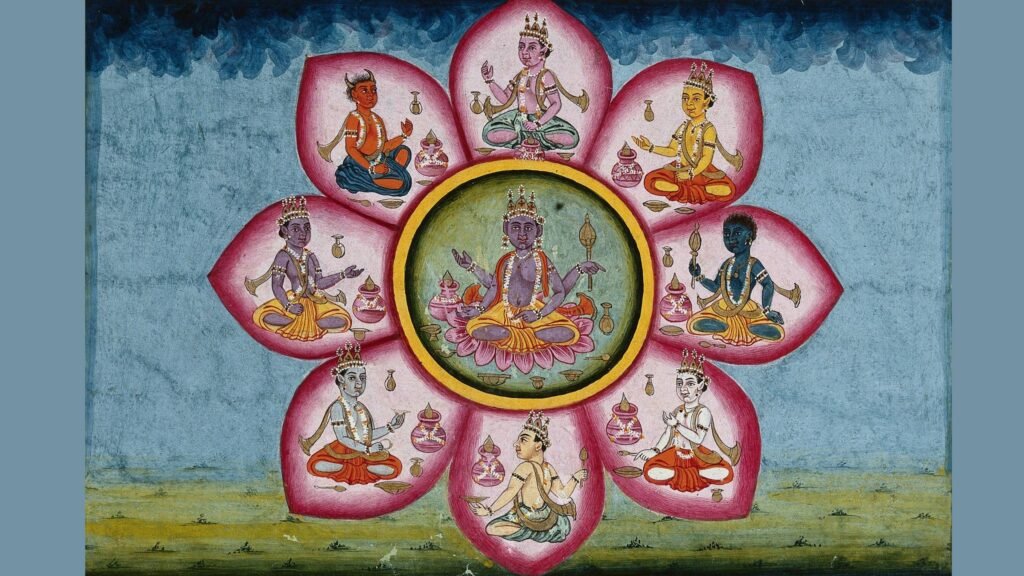
5.Devi with Yogini Chakra

Unknown 19th century artist from Rajasthan, Public domain, via Wikimedia Commons

https://commons.wikimedia.org/wiki/File:Devi_with_Yogini_Chakra_Rajasthan_C19th.jpg

6.Painting from the Sarvavid Vairocana Mandala Series

Museum aan de Stroom, CC0, via Wikimedia Commons

https://commons.wikimedia.org/wiki/File:Schildering_uit_reeks_over_de_Sarvavid_Vairocana_Mandala_-_Licht,_anoniem,_ca_1799,_MAS.jpg

7.Tantric Manuscript

Detroit Institute of Arts, Public domain, via Wikimedia Commons

https://commons.wikimedia.org/wiki/File:Unknown_(Indian)_-_Tantric_Manuscript_%22Sangrahani_Sutra%22_-_73.295.31A_-_Detroit_Institute_of_Arts.jpg

8.Scroll of Mudras

Metropolitan Museum of Art, CC0, via Wikimedia Commons

https://commons.wikimedia.org/wiki/File:%E7%99%BD%E6%8F%8F%E5%8D%B0%E7%9B%B8%E5%9B%B3%E5%B7%BB-Scroll_of_Mudras_MET_DP234946_CRD.jpg

9.Dhumavati yantra

HST108, Public domain, via Wikimedia Commons

https://commons.wikimedia.org/wiki/File:Dhumavati_yantra_color.jpg

10.Yoginis in a circular format

Soumendra Barik, CC BY-SA 3.0 <https://creativecommons.org/licenses/by-sa/3.0>, via Wikimedia Commons

https://commons.wikimedia.org/wiki/File:Yoginis_in_a_circular_format.JPG

END OF STORY

Share:

Facebook
Twitter
LinkedIn
WhatsApp
Pinterest
Email

You might also be interested in

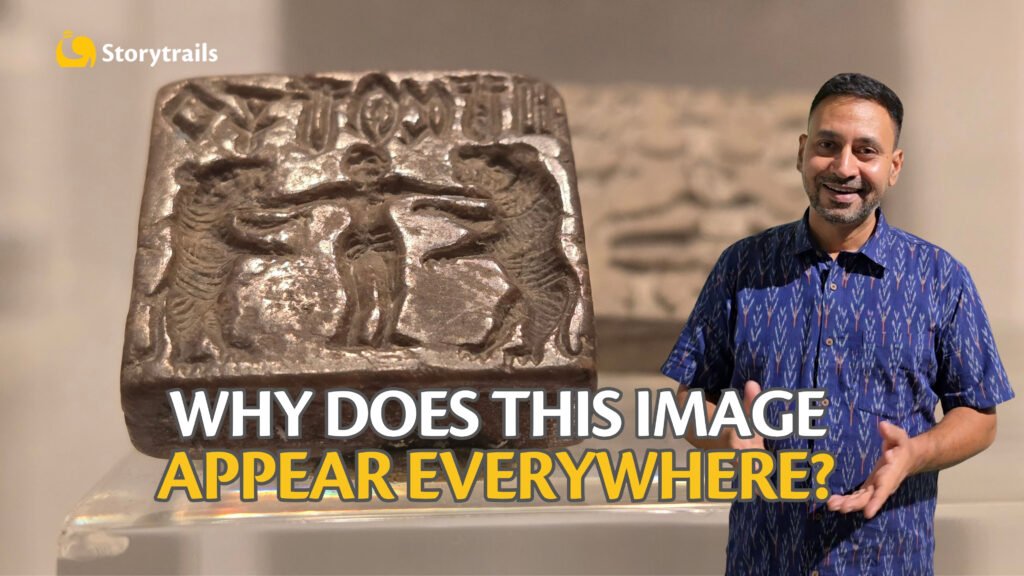
A 4500-year-old seal from the Indus Valley Civilisation shows a human figure grasping two lions. Known as the ‘Master of Animals’ motif, this enigmatic figure appears in different forms across cultures and over many centuries, stretching from Egypt to Mesopotamia. What did this image represent? And how did cultures separated by thousands of kilometres come to adopt such a strikingly similar icon?
What happened to Kalinga after its devastating war with Ashoka? Did Buddhism simply sweep across the region? A 2000-year-old inscription offers some fascinating clues. Carved into the walls of the Udayagiri-Khadagiri Caves in Odisha, the Hathigumpha inscription tells the remarkable story of King Kharavela, a powerful ruler who emerged in Kalinga centuries after Ashoka’s conquest.
The yoginis are at once, both alluring and fearsome. They had special, circular temples built for their worship, the nature of which remained esoteric. But about a thousand years ago, the cult of Yogini worship completely disappeared from public knowledge. What do we know about this strange cult of goddess worship in India?
Diwali, or the ‘festival of lights’ is one of the most popular festivals in India. There are many myths and legends associated with it, and different regions in India celebrate it in different ways and for different reasons. But did you know that there are certain Hindu communities that don’t celebrate it?