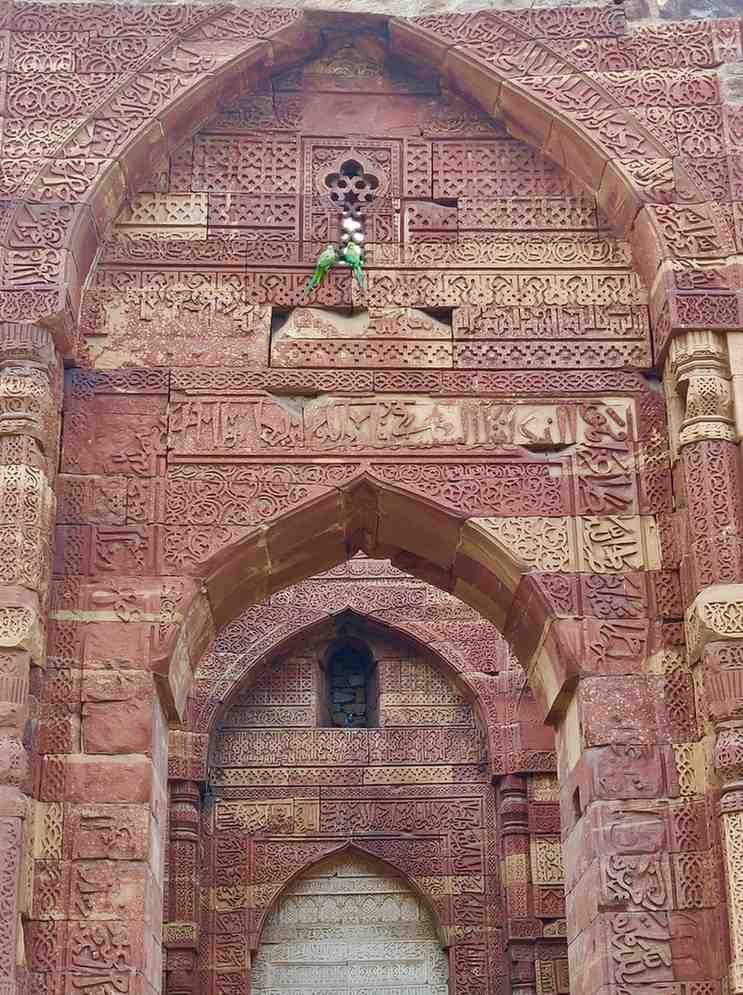
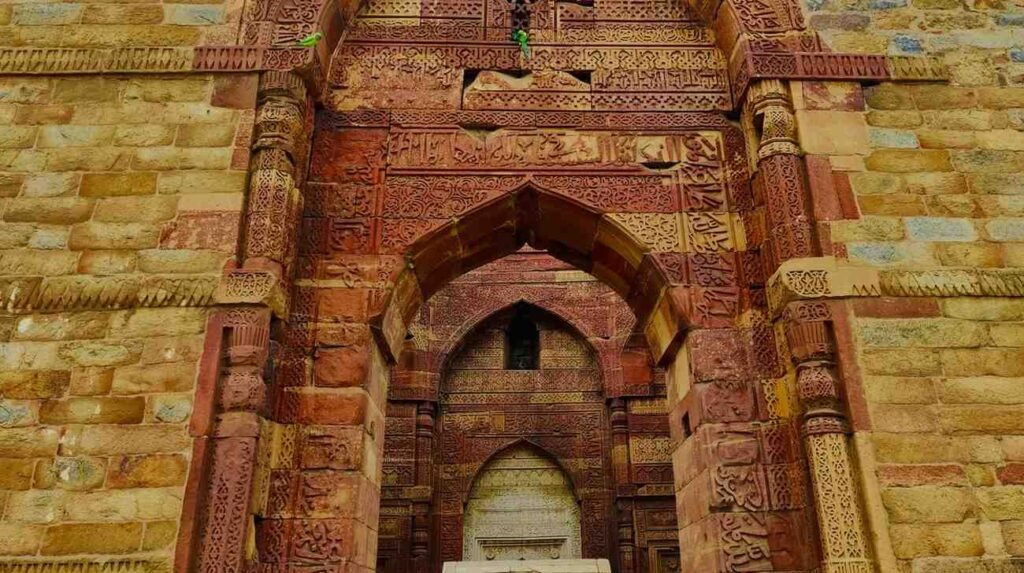
Iltutmish Tomb
This is the story of a man who was a slave of a slave, before he became king.
From Alauddin Khilji’s tomb, walk Northwards, to the tomb of Iltutmish. Play this story at this monument.
We’ve heard the story of Qutb-ud-Din Aibak, the slave who became king. This monument tells the story of a slave’s slave, who also became king.
Qutb-ud-Din Aibak, the first slave king of Delhi, had a favourite slave of his own, a man named Shamsuddin Iltutmish. In 1210, Qutb-ud-Din Aibak died, without appointing a successor. In the chaos that followed, Iltutmish edged out all the other rivals and took over as the king. His story is uncannily similar to that of Aibak.
Like Aibak, Iltutmish too was sold off into slavery as a young boy, by his own brothers. Like Aibak, he too found a mentor who gave him good education. And just like Aibak, he too was ambitious enough to work his way to the top. Aibak was purchased by Ghori, and ended up as the king of Delhi. Iltutmish was purchased by Aibak. In time, he rose to the position of a governor and even married Aibak’s daughter. And when Aibak died, Iltutmish, took over.
Many scholars consider Iltutmish to be the real founder of the Delhi Sultanate. It was he who shifted the capital of the Sultanate from Lahore to Delhi. He went on to rule for 25 long years from here.
In 1228 Iltutmish received a delegation from the caliph of Baghdad, the spiritual leader of Islam. From then on, his rule over India was officially recognised by the Caliph himself, giving his rule legitimacy in the Islamic world.
Iltutmish was a pious Muslim. But he did not force religious conversions on his Hindu subjects. Despite pressure from a powerful orthodoxy he stopped short of thrusting Muslim law on a largely non-Muslim land.
But Iltutmish’s greatest legacy is his contribution to architecture. He added three floors to the Qutub Minar and significantly expanded the Quwwat ul Islam Mosque. More importantly he provided a turning point in architectural style in India. He brought in artisans from Persia to work with local craftsman. The resulting fusion was called Indo-Islamic architecture.
Walk into the tomb and you will see many styles of Islamic calligraphy sitting pretty amidst
lotuses, diamonds and other local motifs. This monument was originally covered by a circular dome. You can see the white marble cenotaph in the centre. There are entrance ways on three sides of the monument, while the fourth side has an ornamental Mihrab, a niche in the wall that indicates the direction of Mecca to the faithful.
This is the second oldest mausoleum in India, built in 1235. The oldest one is the Sultan Ghari Mausoleum, also in Delhi. That too was built by Iltutmish, for his eldest son who died five years before him.