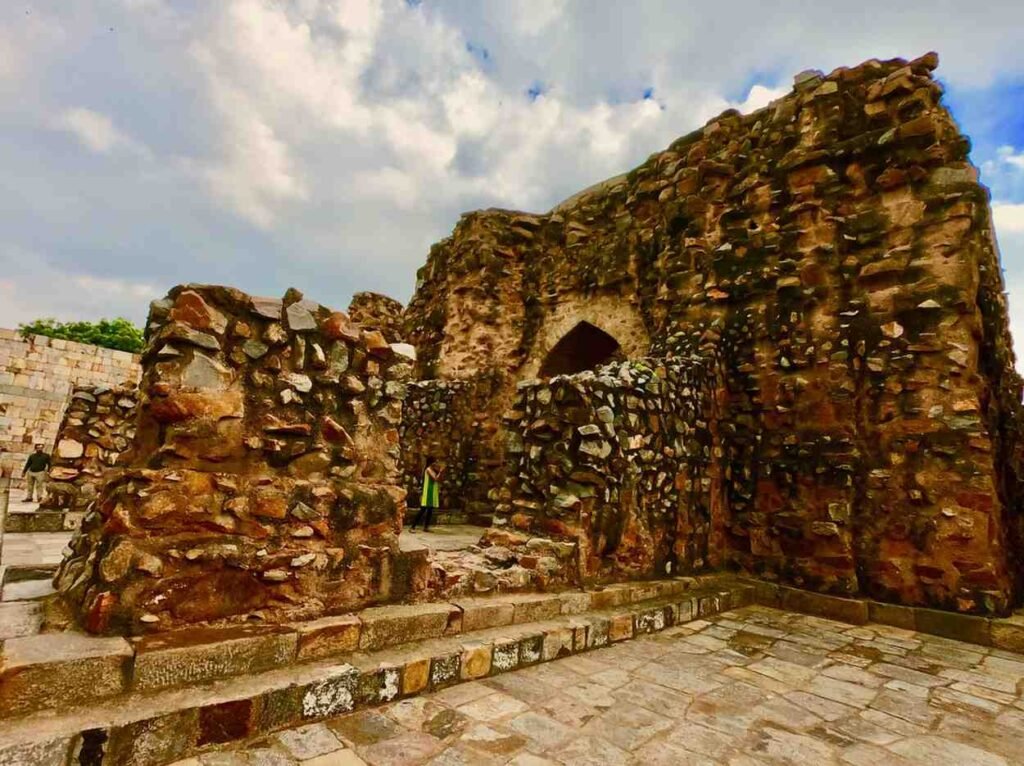
Khilji Tomb and Madrasa
Who was the real founder of the Delhi Sultanate? This is the incredible story of Allauddin Khilji and his partner in life and war – Malik Kafur.
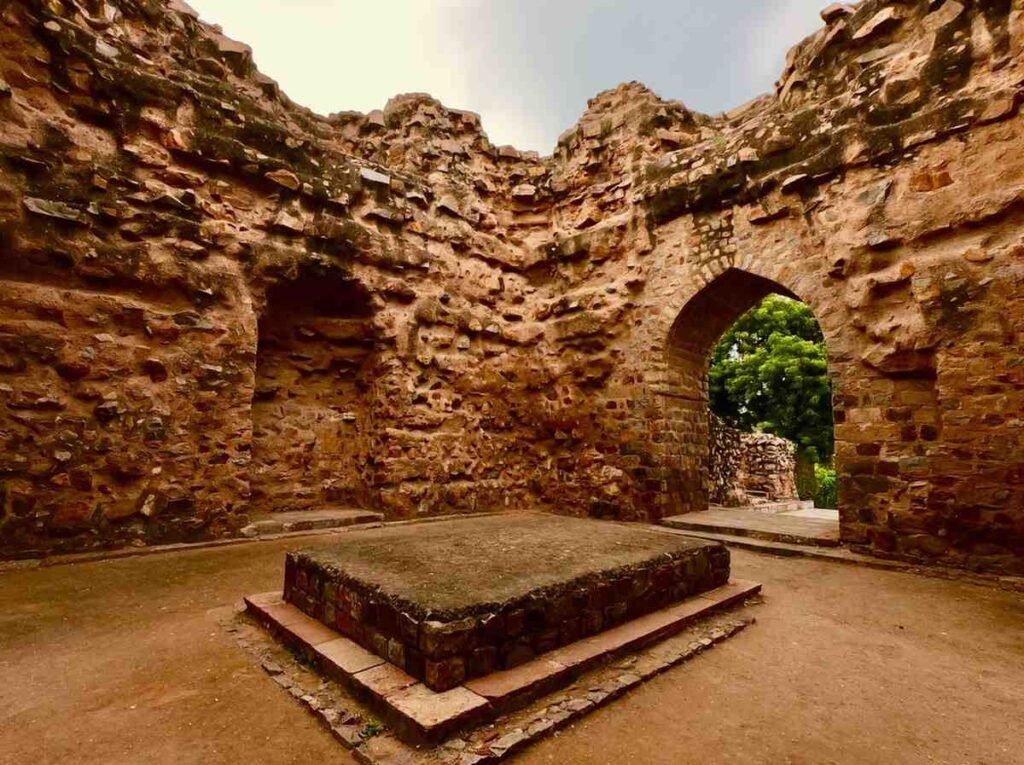
Walk through the arches next to the Iron Pillar, and follow the path on your left. It will lead you to the Madarsa and the tomb of Alauddin Khilji. Play the next story here.
This is the tomb of Alauddin Khilji, the king who built the Alai Darwaza we visited earlier. It was commissioned by him before his death. It doesn’t look very grand today but originally it had a dome over it.
The structure you see on one side of it, is a Madrasa, an Islamic school that was also built by Alauddin Khilji. It is believed to be one of the oldest Madarsas in India.
Alauddin Khilji was a complex man. He was undoubtedly a ruthless king and Hindus were often at the receiving end. But most historians consider him more of an opportunist than a religious fanatic. It is true that his armies destroyed several Hindu temples. But desecrating temples was not their only goal. They were equally drawn by the treasures the temples hoarded. He levied a special tax on Hindus, because he knew there was no risk of a backlash. But then, Alauddin was not an orthodox Muslim either. He often skipped Friday prayers. He lent a ear to Islamic scholars, but didn’t always toe their line. At the height of his success, he even wanted to start his own religion.
In 1299, Alauddin’s army attacked Gujarat. The spoils of war included a young, handsome, slave, a eunuch named Malik Kafur. He was presented to Alauddin. And Alauddin Khilji promptly fell in love with Malik Kafur. It also helped that Kafur had a sharp mind and a remarkable understanding of military strategy. He quickly shot up through the ranks and became one of Alauddin’s most trusted military generals.
Alauddin Khilji and Malik Kafur were a cozy twosome - partners in war, administration and in personal life. Those were bloody times. And Khilji and Kafur revelled in using cruelty as their main weapon. They were known to display the severed heads of their enemies on their Fort walls. It served as a warning to everyone else. Such psychological warfare became their trademark and their biggest strength.
Such ruthlessness was visible in local administration too. Any merchant who was caught cheating had an equal weight of flesh cut off from his limbs. Thieves were swiftly put to death. Their heads were displayed on a tower called the Chor Minar that still stands on a busy roundabout in Delhi.
After Alauddin died, Kafur took complete control. And turned rogue. By Islamic law, a blind man can never be king. So he got two of Alauddin’s eldest sons blinded. He imprisoned the third son, and Alauddin’s senior queen. And he took the junior queen as his wife. But he had made far too many enemies. Within a month of all this, Kafur himself was murdered.
But the ruthlessness didn’t end there. Alauddin’s imprisoned son now assumed throne. But only after he blinded his own six year old brother. He too was soon murdered, ironically by his own trusted slave and lover, a man named Khusro. And that was the end of the Khilji dynasty. A line of brutal kings who lived by the sword and died by the sword.

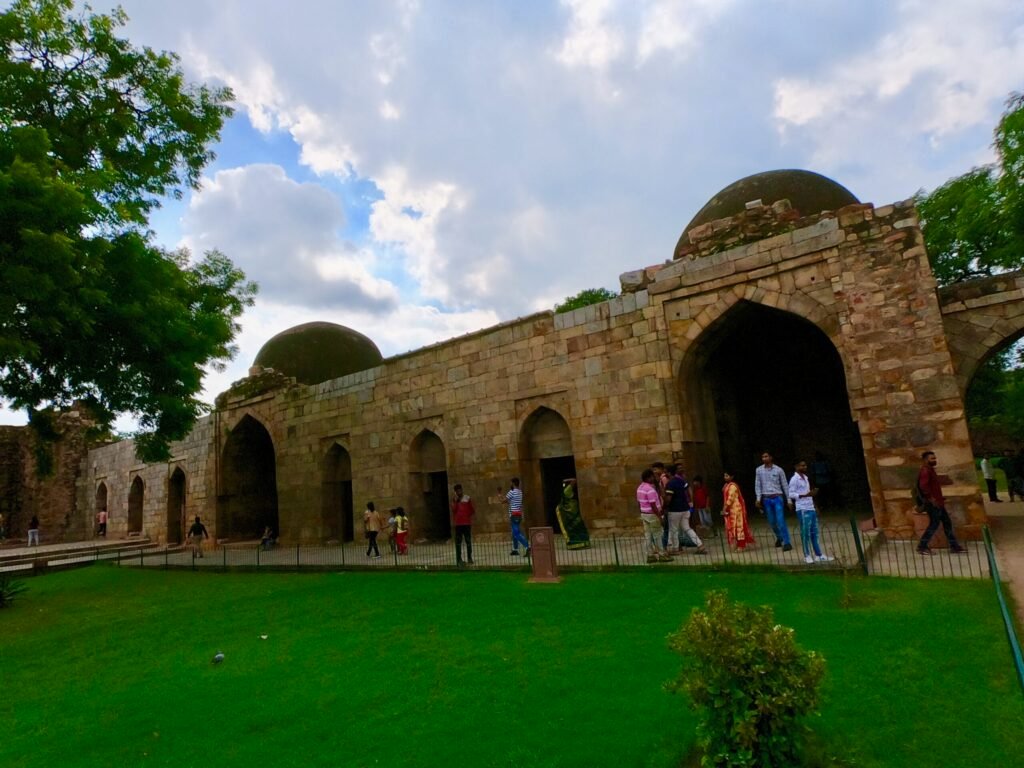
Madrasa built by Khilji in the early 14th century