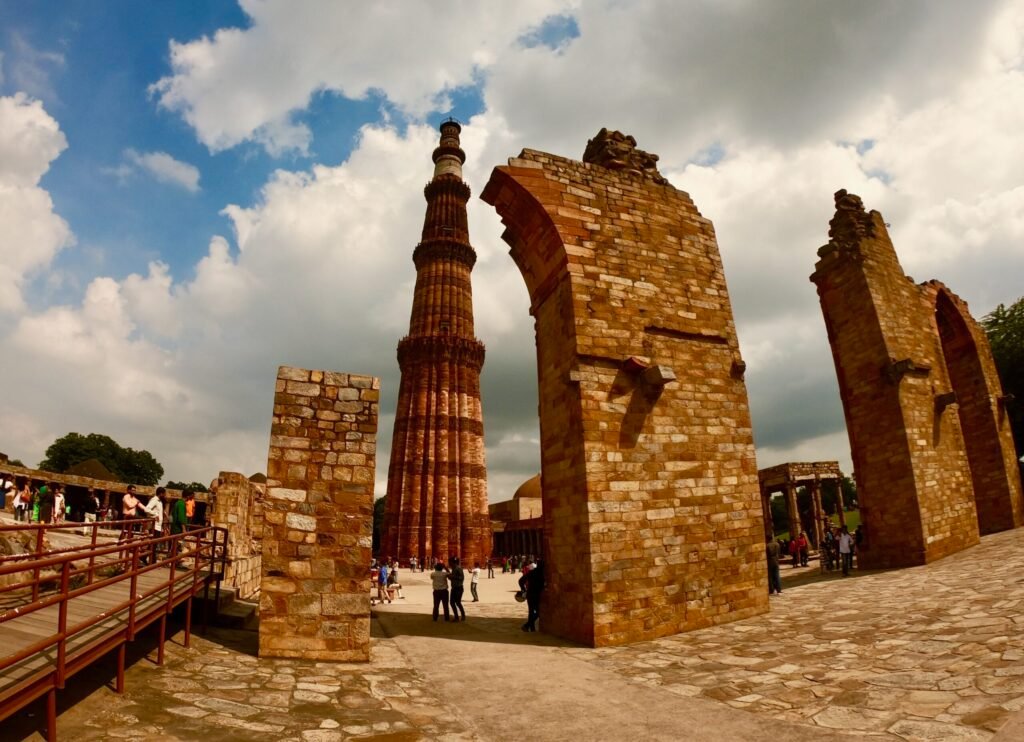
Qutub Minar
Who actually built the Qutub Minar? Why was it built? And how has it fared over the last 800 years?
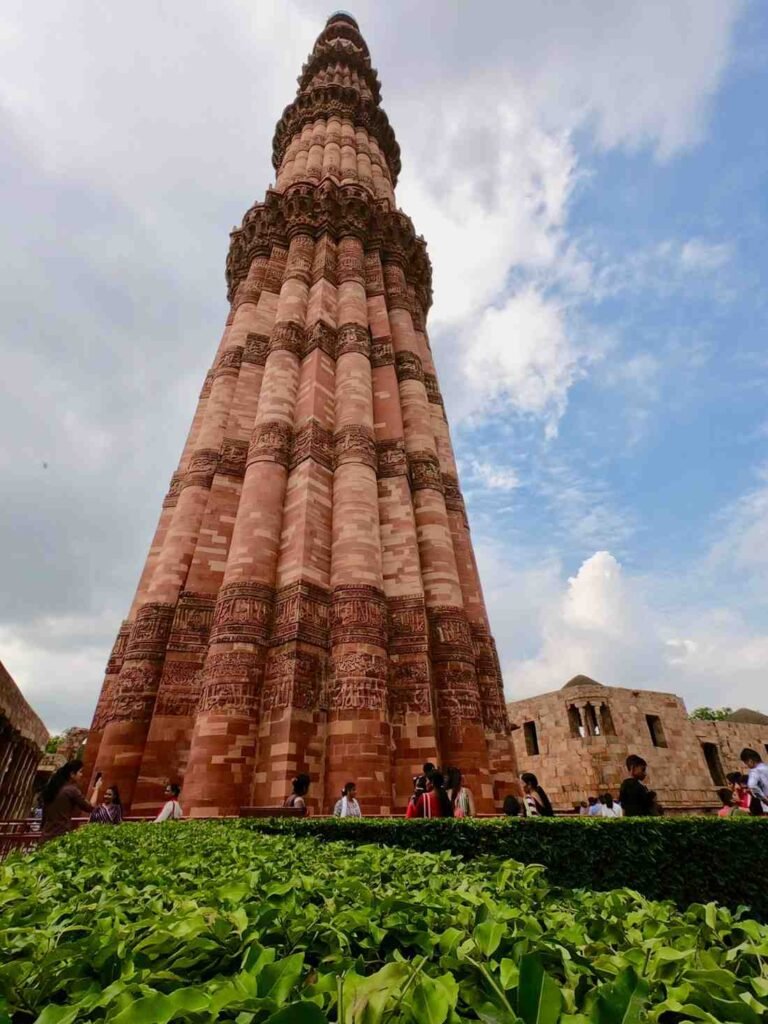
From Alai Darwaza, walk through the archway that leads to the Qutub Minar. Play the next story here.
You are looking at a very tall tower. And it has been standing tall for over 800 years now. Is it the tallest tower in India? Not really. Surprisingly, it isn’t even as tall as the Taj Mahal, which tops it by a couple of feet. But it does have the distinction of being the tallest brick tower in the world, all of 73 metres tall.
Why is it called Qutub Minar? In 1192, when Q Aibak took over as the first king of the Delhi Sultanate, he started building the Qutub Minar as a victory tower, celebrating the victory of Islam over these new lands. So it may have been named after Q Aibak. But some scholars believe that it was named after a popular Sufi saint, Qutbuddin Bhaktiar Kaki. He lived in Delhi in the early 13th century, when the Qutub Minar was under construction. He was revered by both the Sultanate kings and the Mughal rulers, and many believe the tower may have been named after him.
Was Q Minar built by Q Aibak? That depends on which floor you are looking at. The ground floor was built by Q Aibak in 1192. His successor Iltutmish, added 3 more storeys to the structure. In 1369, the tower was struck by lightning and the top storey was damaged. So the Sultan of the time, Firuz Shah Tughlaq repaired the structure and added one more story and a cupola, making it a 5 storeyed tower. Lightning struck a second time in 1505. This time, Sikandar Lodi who ruled over Delhi then, repaired the damage. In 1540, another king, Sher Shah Suri added a new entrance to the monument. How do we know all this? Take a look at the inscriptions on the tower. They give us an almost complete history of the tower with the names of all the kings who contributed to it.
In 1803, an earthquake knocked out the cupola on top. Major Robert Smith of the East India Company carried out repairs, and added a notoriously ill-matched cupola on top. That cupola was eventually taken down and placed on the lawns outside. But Qutub Minar remains a beautiful amalgam of many styles.
You can see that each floor is different from the other. The first three floors are covered in red sandstone while the top floors make liberal use of marble.
Until some years ago, it was possible to climb the narrow staircase of 379 steps and reach the top. In 1981, a brief power failure inside the tower resulted in a stampede. The Minar has been closed to visitors ever since. Over the years, the Qutub Minar has acquired a slight tilt - today it leans about 25 inches from its vertical axis. Some blame it on water seepage, while other point fingers at the top stories added by Firoze shah Tughlaq. Nevertheless, it is a negligible tilt and we can hope that the Qutub Minar will continue to dominate the skyline of Delhi and remind us of its momentous past.

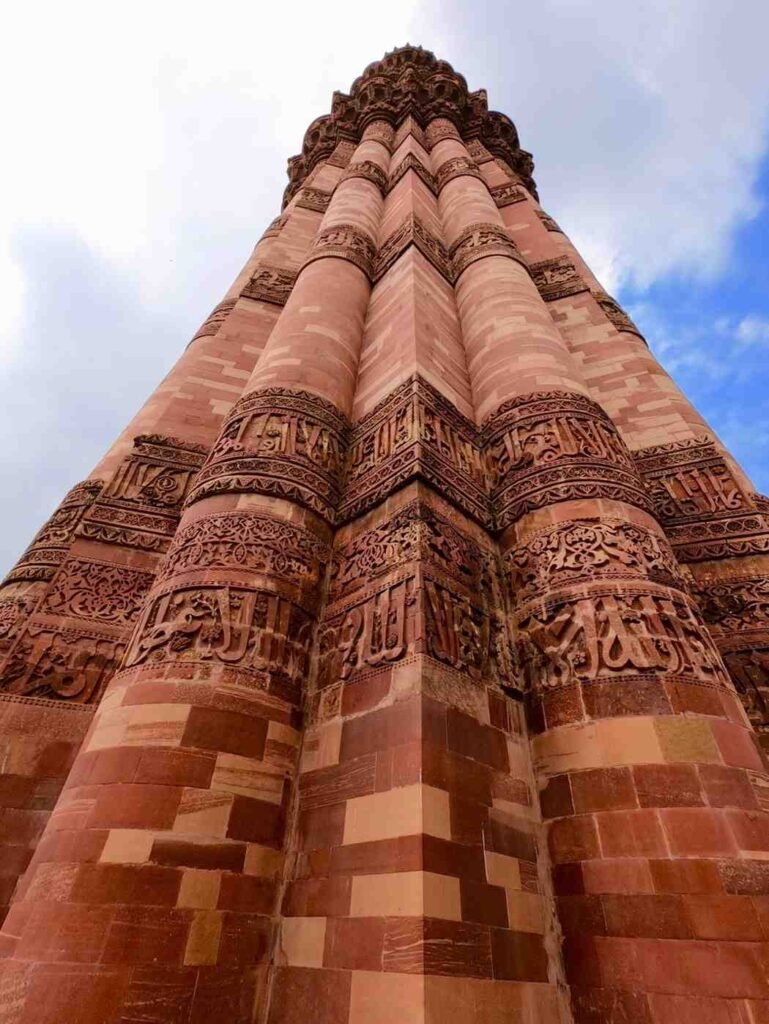
Qutub Minar, detailing. Construction started in 1192 CE