
Slave Dynasty
Did you know that the northern part of India was ruled by a dynasty of slaves for nearly a hundred years? This is the story of the Slave dynasty.
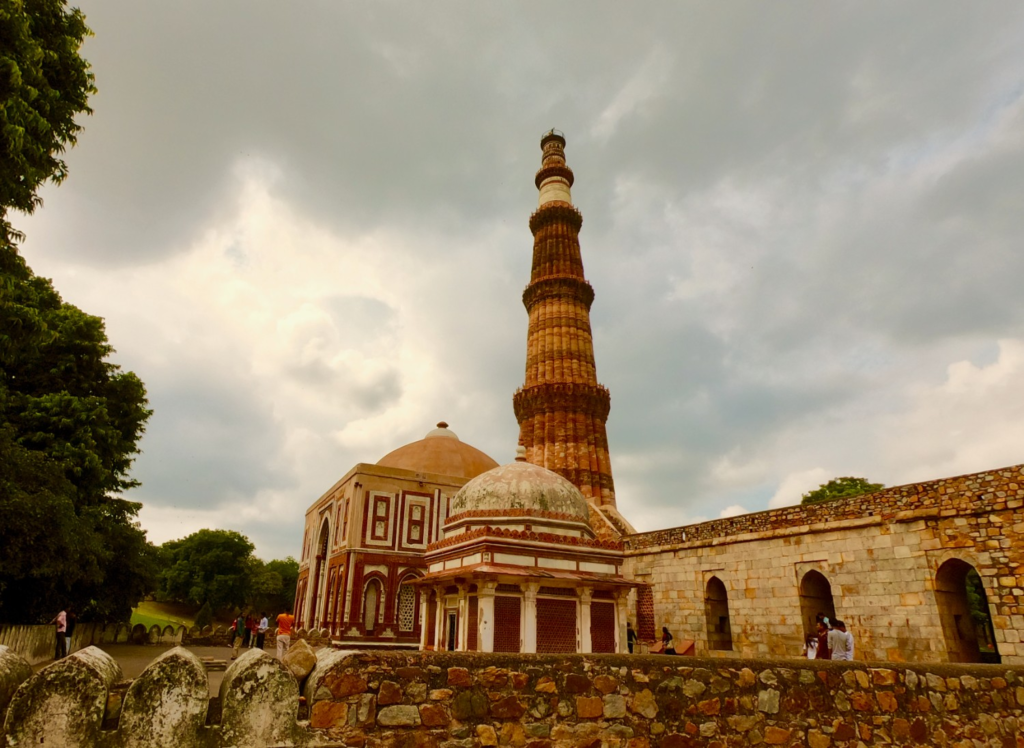
Walk past the Mughal Mosque until you see an arch at the turn of the road. Play the next story here.
Before we go deeper into the Qutub complex, let’s speak about the man who laid its foundation. His name was Qutubuddin Aibak, and he was the first king of the Delhi Sultanate. He belonged to a dynasty called the Mamluks. Mamluk in Arabic literally means property. Before he became king, Q Aibak was a slave, the property of his master, Mohd Ghori. So his dynasty is also called the Slave dynasty.
Q Aibak was born to Turkic parents in 1150 CE, in modern day Kazakhstan. As a young boy, he was taken slave and sold. His first master treated him well and educated him. When the master died, Aibak was put up for sale again. As luck would have it, he was purchased by the king of the land, Mohammed Ghori. Back then, Turkic slaves from the Eurasian steppe lands were highly prized. They were given education and weapons-training and were appointed to key military posts.
Aibak’s training stood him well and he quickly rose to become one of Ghori’s most trusted generals.
In 1192, Ghori conquered Delhi. Soon he returned to Afghanistan, leaving the new territories under the governorship of his Slave Deputies. Q Aibak was appointed as the Governor of Delhi. In 1206, Aibak got the news that his master, Ghori, had been assassinated. Aibak quickly consolidated his power and became the first Sultan of the Delhi Sultanate.
Q Aibek was a complex man. He was a patron of arts who was known to be as generous as he was ruthless. His followers called him Lakh Baksh, meaning one who donated to a hundred thousand people. It was Aibak who started building the Q Minar and the Quwwat ul Islam mosque that we will visit shortly. The Qutub Minar was built as a victory tower, celebrating the victory of his master Mohammed Ghori over these lands.
Aibak ruled for a mere 4 years. His end was as dramatic as his rise to power. Story goes that one day, Aibak was playing a game of Chogan, a kind of polo which was popular in those days. Aibak’s horse stumbled, he was thrown off, and the horse fell over him. He died instantly. Today, you can see his tomb in Lahore.
