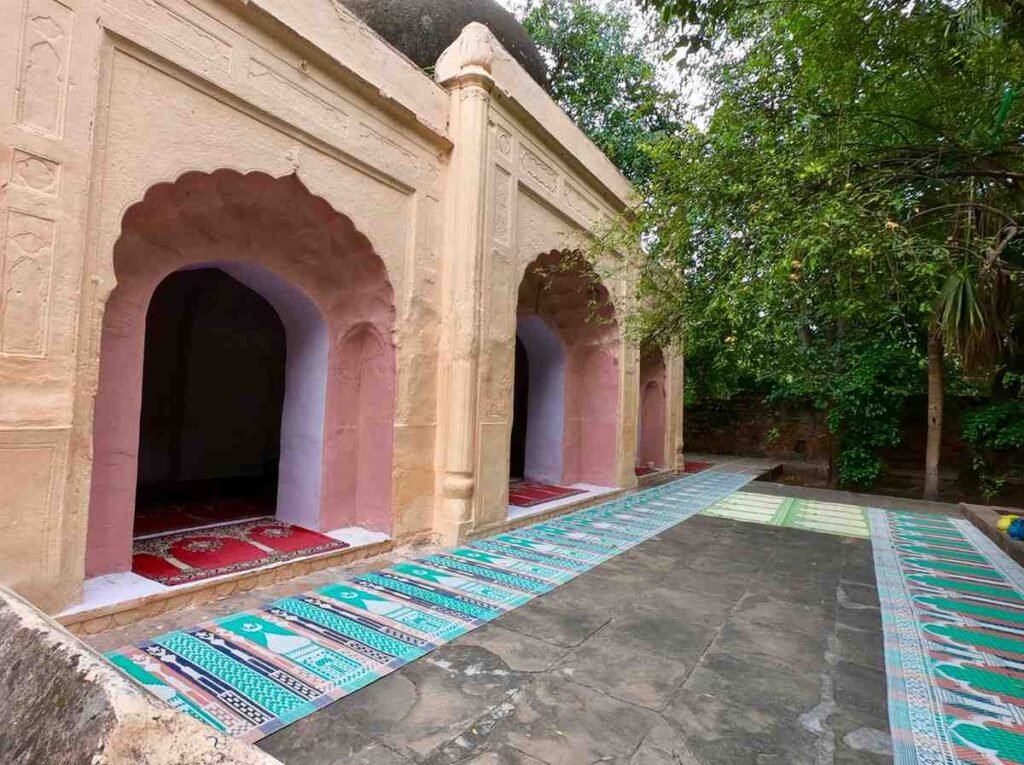
Mughal Mosque
This mosque is from the Mughal period, built after the Delhi Sultanate ended. This is the story of how Babur established the Mughal empire in India.
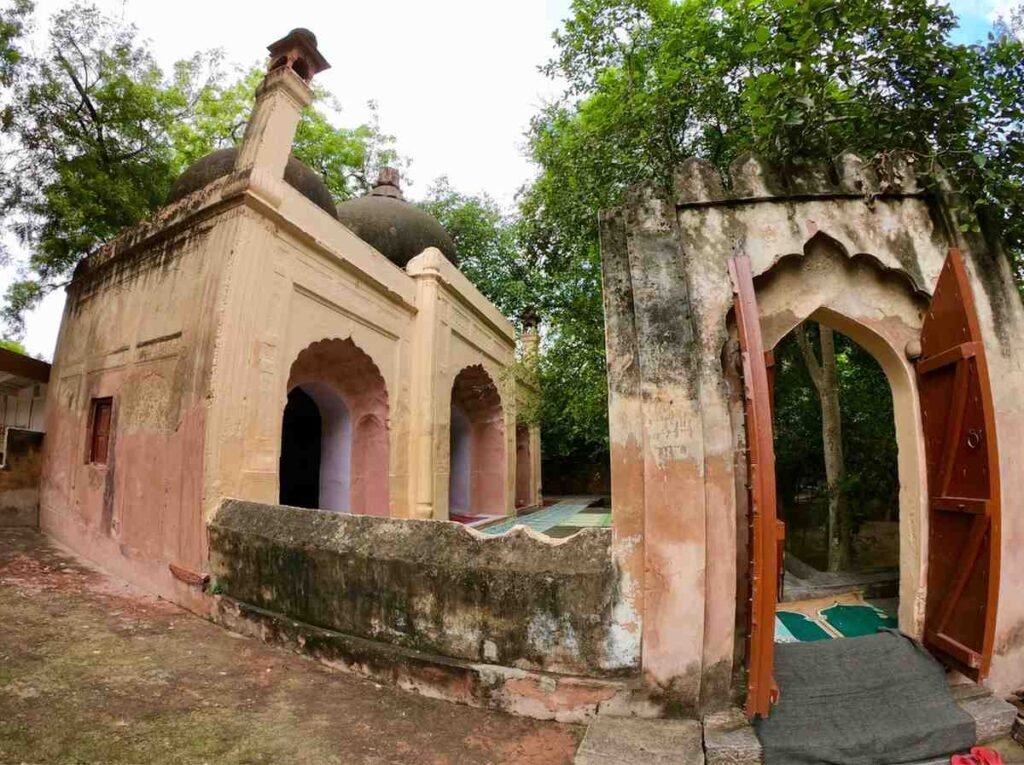
Immediately after crossing the entrance check points, you will see signages directing you to the Mughal Mosque on your right. Walk up to this monument and play the next story. The Mughal Gardens and Mughal Sarai are at the end of this pathway.
This monument, the Mughal Mosque, is an odd-man-out in this complex. It was built in the late Mughal period while most of the other monuments seen here belong to the Delhi Sultanate period. What’s the difference? Remember we spoke about a slave-turned-king named Qutb ud din Aibak? He was the first king of a series of 5 Muslim dynasties that ruled Delhi between 1206 and 1526 - the Mamluks, the Khiljis, the Tughlaqs, the Sayyids and the Lodhis. They were collectively called the Delhi Sultanate. They came from Central Asia and spoke a Turkic language.
Most of our stories in this complex relate to the period of the first 3 dynasties of the Delhi Sultanate. But here, at this monument, we’ll talk a little more about the Mughals, the dynasty that followed the Delhi Sultanate.
The Sultanate ended in 1526. That’s when the king of Kabul, a man named Babur, attacked Delhi. Babur was a Turkic Mongol warrior who came from modern-day Uzbekistan. On his father’s side he was a descendant of Timur Lang, at one time, the most powerful ruler in the Islamic world. On his mother’s side, he was a descendant of the dreaded Mongol King Genghiz Khan, who founded one of the largest empires in world history. And Babur himself, went on to write a new chapter in India’s history.
Babur attacked Delhi with a small army. The sultanate army was larger and included 100’s of war elephants. But Babur came in with big guns. This was the first time when an entire artillery regiment using cannonballs was deployed in India. It was a turning point in warcraft.
The Sultanate army was lured into a trap and their elephants ran straight into Babur’s artillery. The last Delhi Sultan was killed in battle.
Babur became the new king of Delhi, and established the Mughal dynasty. Mughal is the Persian word for Mongol and the Mughals trace their roots to Mongolia. The Mughals were a very powerful dynasty, and at their peak in the 1700s, they ruled over a large part of the Indian subcontinent. Much of the Persian influence seen in Indian art and architecture today, came during the Mughal period.
This place is also called the Mughal Serai. A serai is an inn, or a guest-house. The Mughals built many serais like these to encourage commerce. 500 years ago, this was a place where merchants could rest their horses or camels, cook food, and sleep, before moving on.