The Museum Theatre and other buildings
An introduction to the iconic Museum Theatre and various other buildings in the complex.
From the ticket counter, walk towards the Museum buildings. You can play this story at the Museum Theatre.
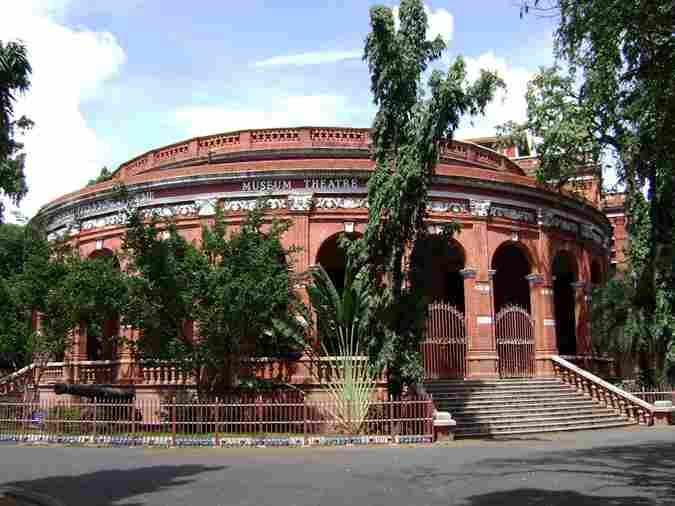
The Egmore Museum is home to some of the finest stone and bronze sculptures in the country. But apart from the wealth of exhibits it houses, the campus is also dotted with some very fine buildings. This iconic building is called the Museum Theatre. By the 1890s, this museum had become extremely popular with the citizens of Madras. So the museum management decided to build a theatre for promoting performing arts as well. The architect, Henry Irwin, decided to build this theatre in the shape of an amphitheatre in the Italianate style. This style drew inspiration from the 16th century Renaissance buildings. It was all the rage in England, but an absolute novelty in Chennai. Stage mikes were yet to become popular and air-conditioners were unknown. Therefore, Irwin designed the theatre with ample ventilation, but without compromising acoustics. More than 125 years later, it is still a popular venue for staging plays and chamber music recitals.
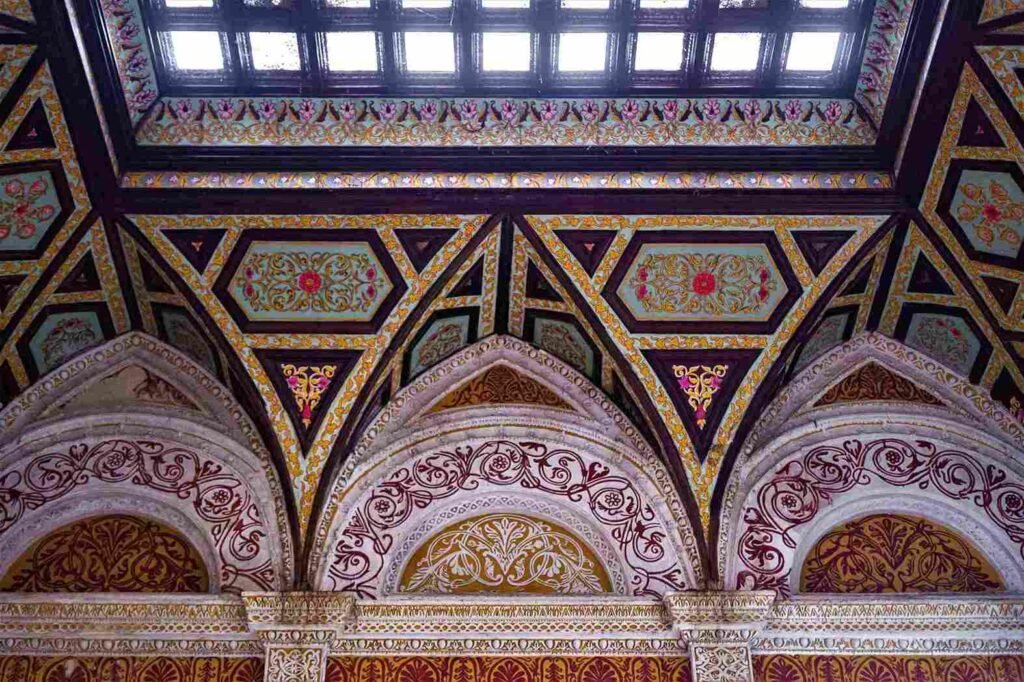
Right behind the Museum theatre, Irwin positioned a group of galleries that is now the Anthropology Gallery, which we shall be visiting shortly. As you go in, do look up at the ceiling. Those were the days before museums had even thought of spotlights. So, Irwin strategically placed skylights on the high ceilings and supplemented them with bright stained glass windows. You would also notice that the ceilings are painted with lovely ornate designs.
By the side of the Anthropology gallery is the Connemara Library, which was once run by the museum. It is now an autonomous body. Irwin designed this building too. If you do visit the library later, you will see the Renaissance influence in the library too: high ceilings with decorative motifs, ornate arches and pillars and stained glass windows.
But the oldest part of this Museum is the building behind the Anthropology gallery. In 1854, when the Museum was moved from the MLS to this location, this campus was called the Pantheon. The Pantheon had been a popular public hall since 1780. The building you see behind the Anthropology gallery and the sculpture garden is the old Pantheon block. Technically this part of the museum is almost 250 years old!