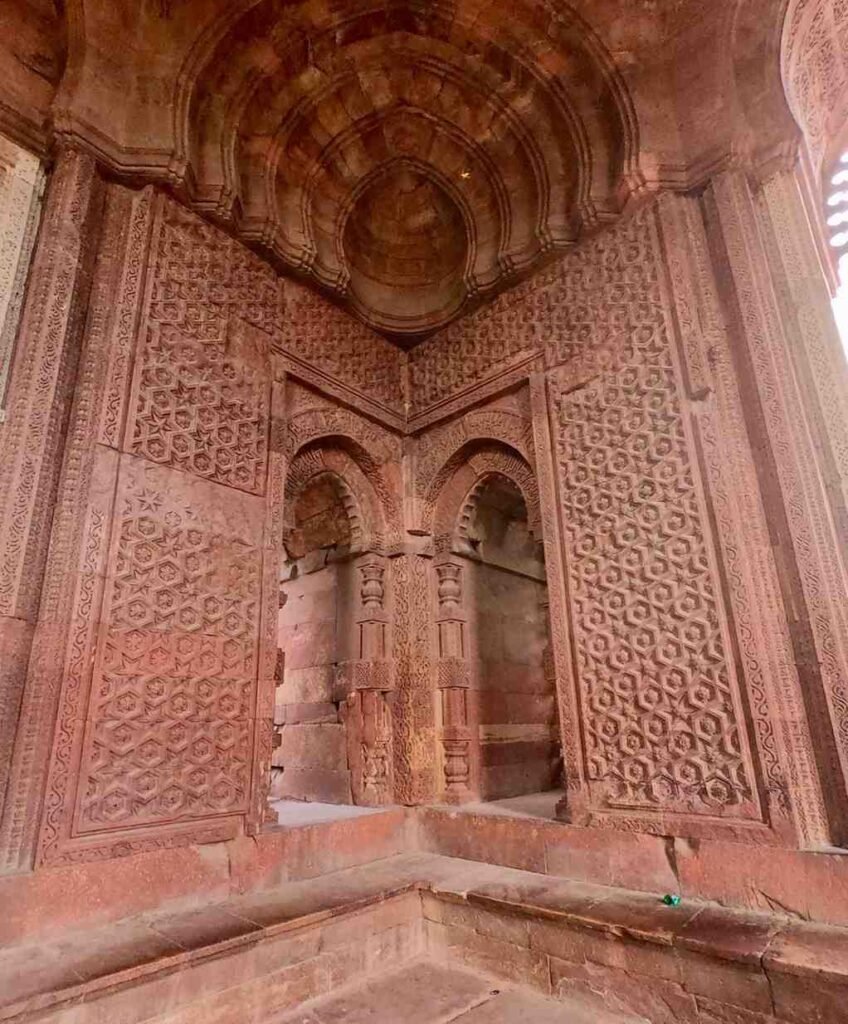
Alai Darwaza
This is the story a ruthless king Alauddin Khilji, who succesfully defended India against a savage Mongol onslaught.
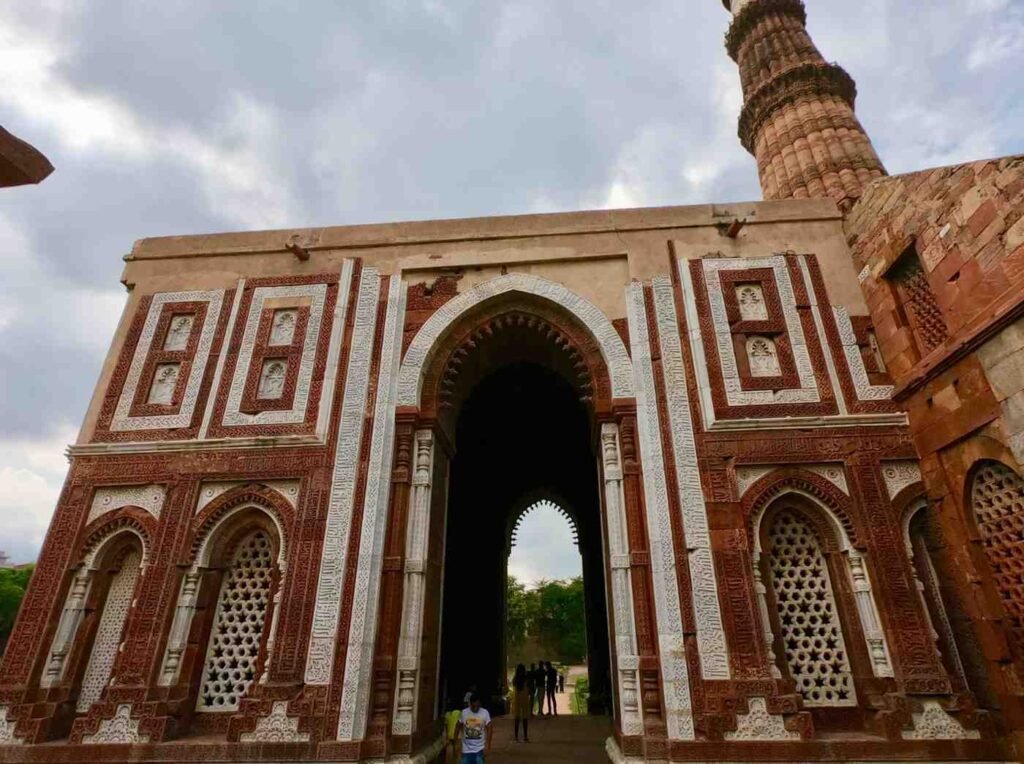
From Imam Zamin’s tomb, take the steps that lead to Alai Darwaza - the grand monument located right next to the tomb. Play the next story here.
The monument you see in front of you is called the Alai Darwaza. Darwaza means a gateway, and this impressive door is the southern entrance into the Quwwut Ul Islam mosque, that we will visit shortly. This gateway was built in 1311 by Alauddin Khilji, one of the most powerful kings of the Delhi Sultanate.
Towards the end of the 13th century, the Mamluk dynasty of Qutub uddin Aibak was overthrown by one of their own nobles, a man named Jalaluddin Khilji. His nephew was an ambitious young man named Alauddin Khilji. One fine day, Alauddin murdered his uncle in cold-blood and took over the throne of Delhi. He even hoisted his uncle’s head on a spear for all to see. It was a loud statement and a sign of things to come.
Alauddin Khilji believed in ruling by complete intimidation. He quickly raised a huge army and his military campaigns brought substantial parts of North India under his control. He also unleashed terror in the South - destroying temples and plundering kingdoms as far south as Madurai.
While he was a ruthless king, he also was a brilliant general. He was successful in fending off the biggest threat of those times - the Mongols. Delhi had long been subject to Mongol raids from the times of Gengiz Khan. These nomadic Mongols were merciless warriors who left a trail of utter devastation in their wake. When the Mongols came to town, you could expect a complete genocide.
Alauddin Khilji was fully alert to this threat and prepared for it. He built new forts and repaired old ones. Permanent armies, led by trusted generals, were kept in readiness along the borders. And when the Mongols attacked, Alauddin’s army took them on and beat them back. Not once, but six successive times. Alauddin Khilji effectively saved India from a savage Mongol onslaught, one that would have left nothing but wasteland behind.
But Khilji didn’t just stop at maintaining a line of defense. He often sent his own soldiers to relentlessly pursue and harass the Mongols. He was every bit as merciless as the murderous Mongols were. After one particularly difficult battle, he had over 8000 Mongols beheaded. It is said that he embedded their heads into the walls of his Fort in Delhi. The Hindustani word for head is Sir and local legend has it that the fort came to be called Siri Fort after this incident.
At the height of his success, he decided to leave a more permanent legacy by building grand monuments. The adjoining Quwwat ul Islam Mosque had already been in existence for over a century. Alauddin decided to glorify it further by adding four ornate gateways around it. Only one of them, the Alai Darwaza that you see here, was completed.
Historians claim that Alai Darwaza is the oldest example of pure Islamic architecture in India. The dome that you can see on top is one of the earliest true domes seen on a monument in India.
Alauddin added a few other monuments to this complex. We’ll visit them shortly.

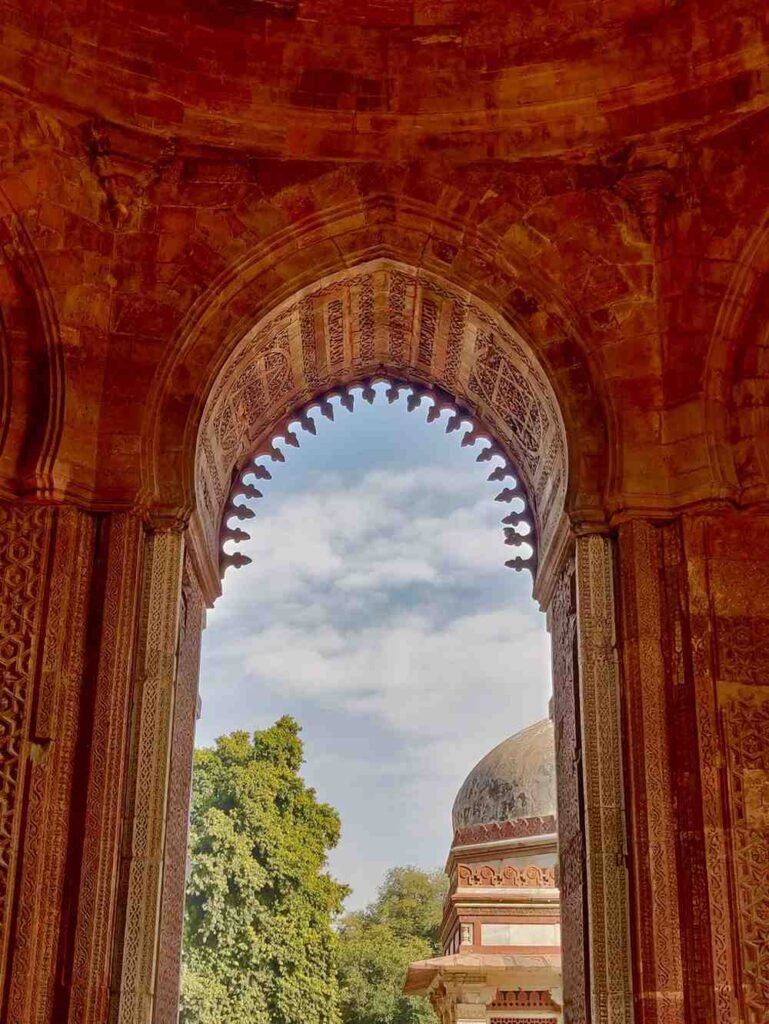
Closer view of the Alai Darwaza built in 1311 CE.