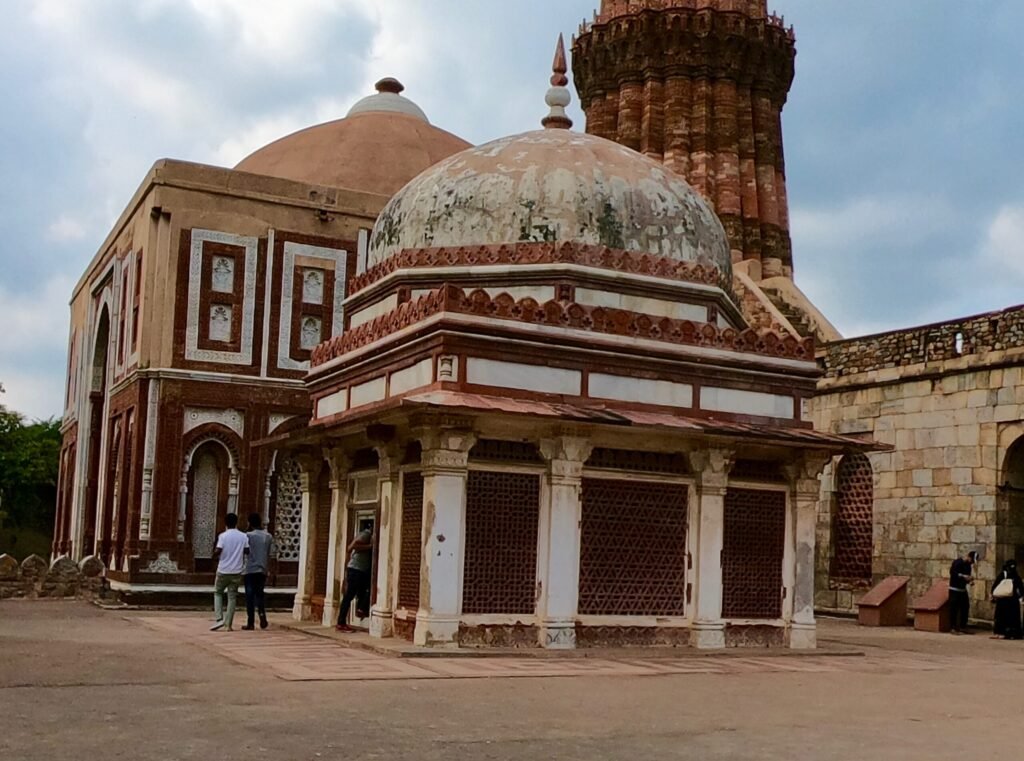
Imam Zamin Tomb
This is the story of the Indo-Islamic style of architecture that was born during the rule of the Delhi Sultanate and reached its peak during the Mughal rule.
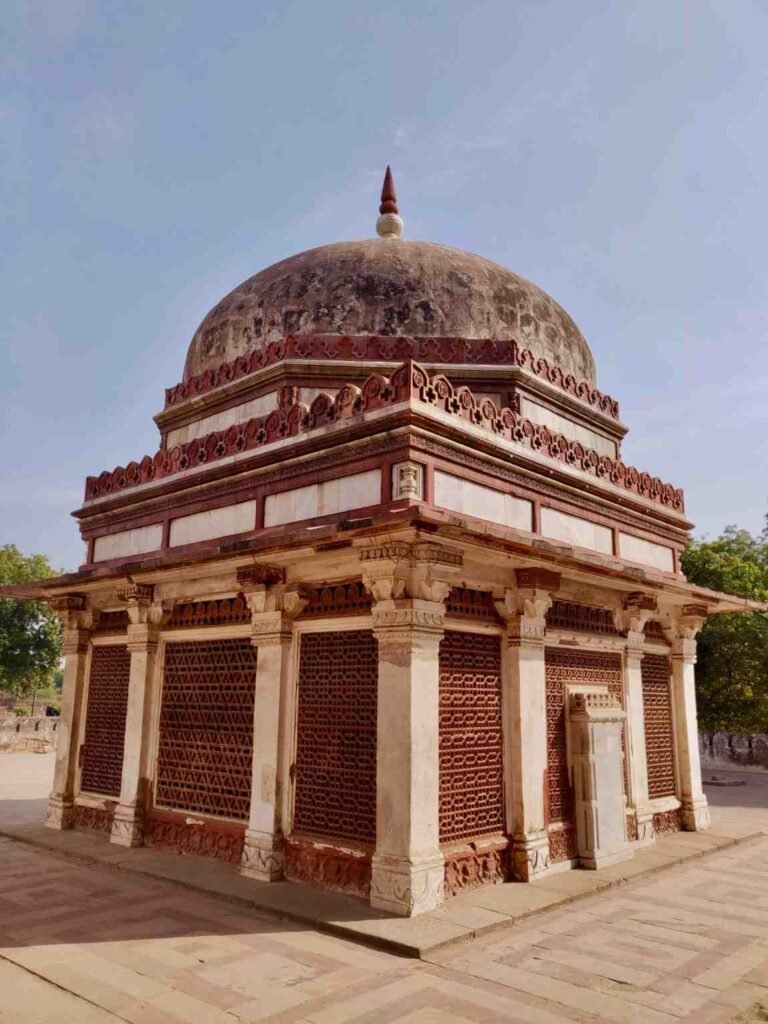
Walk up the steps next to the lawn, through the narrow arch that leads to Imam Zamin's tomb. Play the next story here.
This is the tomb of a saint named Imam Zamim. In the 1500s, Imam Zamim was a priest who held a position of importance in the adjoining Quwwatul Islam mosque. He built this structure during his lifetime with the express wish that he be buried here.
Imam Zamim was a Sufi saint. The Sufis are mystic practitioners of Islam. They believe in the use of dance, music, and poetry as a path to God. Both the Delhi Sultans and the Mughal kings patronised Sufi saints.
Imam Zamim lived during a time when the Delhi Sultanate gave way to the Mughals. This structure was built during the reign of the second Mughal king, Humayun, making it a few centuries younger than the surrounding monuments. And it reflects the change in local architecture that was ushered in by the arrival of Islamic rule in Delhi.
Do take a closer look at the monument. It has beautiful screens painstakingly carved out of stone to look like lace. It is built in a style called the Indo-Islamic style. As the name implies, it is a fusion of Hindu and Islamic styles of architecture.
You can see that it has a dome on top. Until the arrival of Islamic rulers, buildings in India usually had flat roofs or a pyramidal structure. The techniques to build arches hadn’t been mastered yet and domes were rare. So structures were held together by beams and lintels. Islamic builders, on the other hand had been experimenting with arches from many centuries earlier and domes were common. New buildings that now sprang up in these parts started being topped by graceful circular domes. The earliest of these experimental domes have long fallen. You will see that the tombs of Iltutmish and Khilji have lost their domes. You will be passing by those monuments shortly. This structure was built in the 1500s, by which time, the technique of constructing domes had been mastered.
The decorations on the buildings also underwent a change. By tradition, Islamic architecture uses only geometric patterns and calligraphy - the art of decorative writing. Islam does not allow the depiction of the human form. But the Hindu artisans, who worked on these monuments, were masters at carving natural forms of all sorts. So gradually, the Muslim builders took to adding delicate carvings of plants and flowers into their ornamentation. Some of the earliest examples of this hybrid style can be seen in the arches of the adjoining Quwwat Ul Islam Mosque.
Today, the Indo Islamic style of architecture can be seen across India, in palaces, forts, and tombs. One of the earliest Islamic mausoleums in India, the tomb of Iltutmish, built in 1235, can also be seen in this complex.

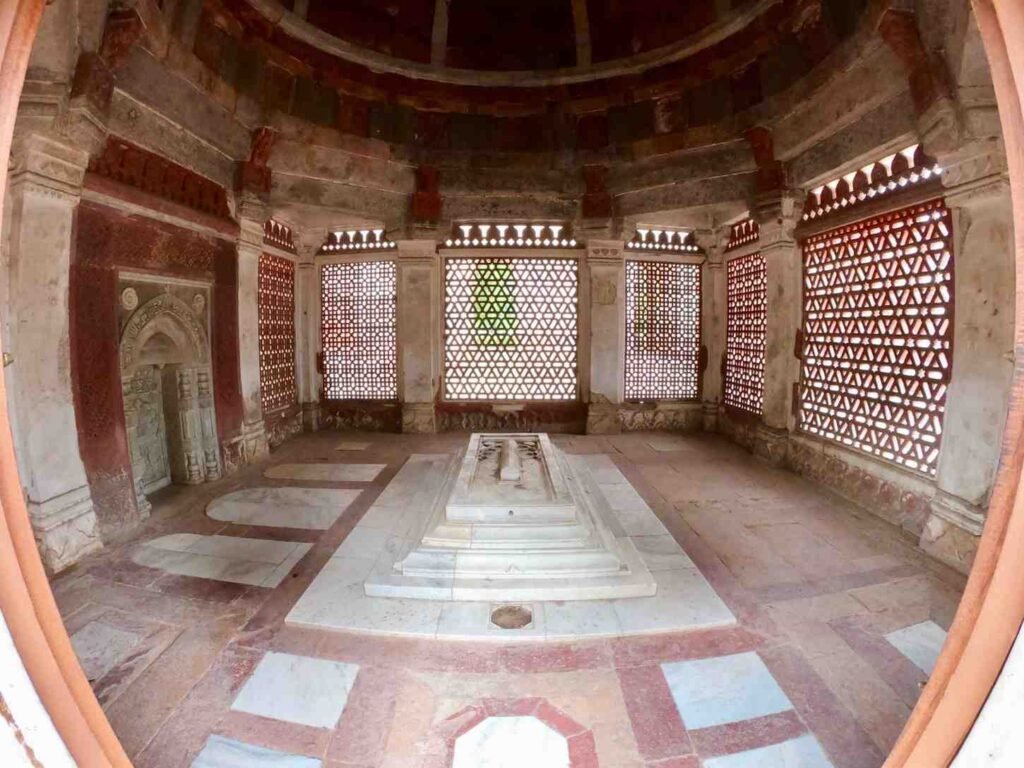
Inside the tomb of Imam Zamin, built in 1538 CE