
Vadnagar Fort and Gates
Arjun Bari Gate is one of the six surviving gateways of Vadnagar’s historic fort, recalling the town’s strategic importance and layered past.
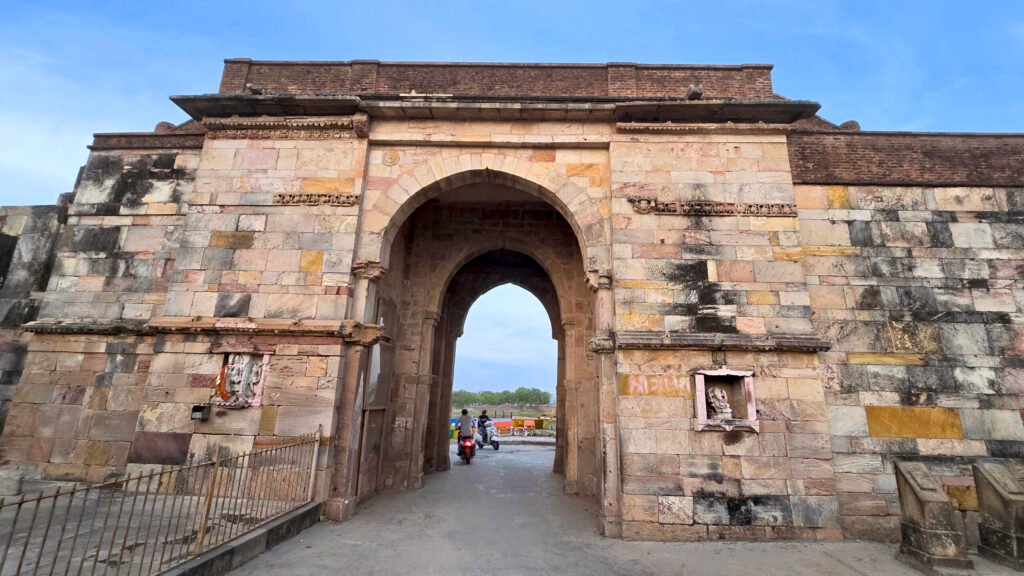
From the Theme Park, head west walking along Sharmishtha lake for about 200 m, till you reach Arjun Bari Gate.
This is Arjun Bari Gate, one of the six gateways that once marked the perimeter of fortified Vadnagar. Only fragments of the fort walls remain today, but these gates were once part of a continuous wall that enclosed the entire town, stretching for nearly 3.4 kilometres. It was protected by a moat on 3 sides and the Sharmishtha lake on the fourth.
Vadnagar’s strategic location at the crossroads of major trade routes brought in goods and influences from many regions, including Greece, Rome, Arabia and and other parts of India. This made it a well connected town, attracting not just traders, but also invaders. The fort protected this thriving town through many eras. In fact, archaeologists have discovered multiple layers of fortifications beneath the existing walls, the oldest layer dated to the 2nd century BCE. One layer yielded huge stone balls from the 5th century CE. They were missiles launched using an ancient catapult.
Most of what you see today dates to the 12th century, from the time of King Kumarapala of the Solanki, or Chaulukya, dynasty. There are beautiful images carved on the walls. You can spot gods like Ganesha or Bhairava. There are scenes of battle and hunting, and even small erotic sculptures placed discreetly above eye level, details that reflect both devotion and a certain openness in society.
This gate also has a sanskrit inscription dating to 1151 CE written in the Nagari script. It was composed by Sripal, the court poet of the Solanki King, Kumarapala. It refers to this town as the prosperous and well-fortified town of Anandpur, and praises Kumarapala as an ideal ruler.
Much of our knowledge of Kumarapala comes from the works of many medieval Jain scholars. The accounts are vivid and interesting, but often idealised. According to a popular account, Kumarapala once lived as a fugitive. At the time, this region was ruled by King Jayasimha Siddharaja, a relative of Kumarapala’s. A prophecy is said to have warned King Jayasimha that his throne would one day pass to this very relative.
Alarmed by this, Jayasimha turned against Kumarapala, forcing him into years of exile. Some stories even describe him moving in disguise, living the life of an ascetic. During this period, he is said to have come into contact with the Jain scholar Hemachandra, who influenced him greatly. Kumarapala eventually outlived Jayasimha and went on to claim the throne, ruling for nearly three decades. His reign is remembered for stability and for a strong patronage of art, architecture, and religion.
Many Jain traditions hold that Kumarapala embraced Jainism later in life. Under his rule, ideas such as ahimsa, restrictions on animal slaughter, and a more ethical model of governance became part of royal policy.
There is another inscription in Persian at Arjun Bari Gate. It dates to 1633, and records the renovation of this gate during the reign of Mughal emperor, Shah Jahan.

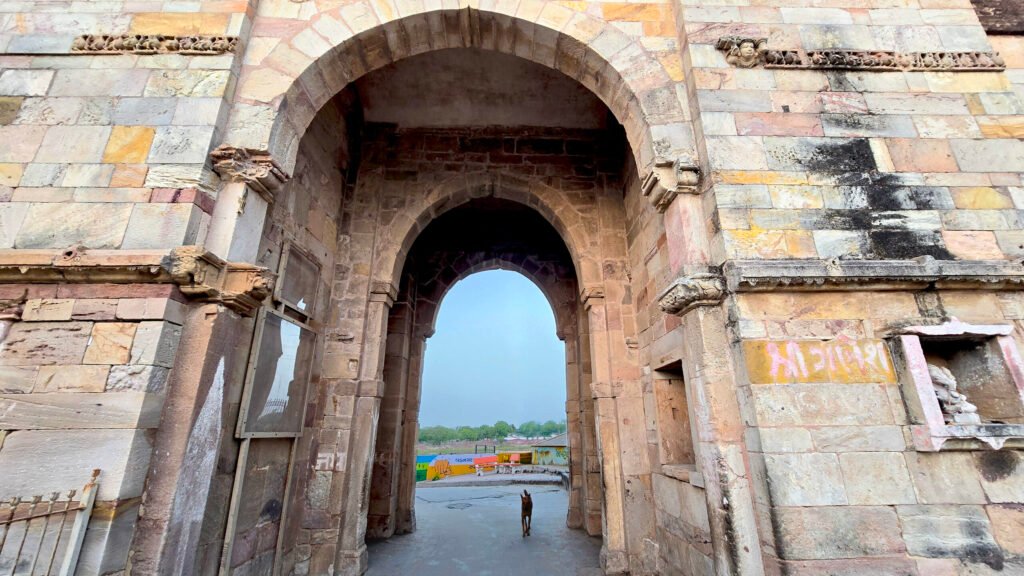
Arjun Bari Gate
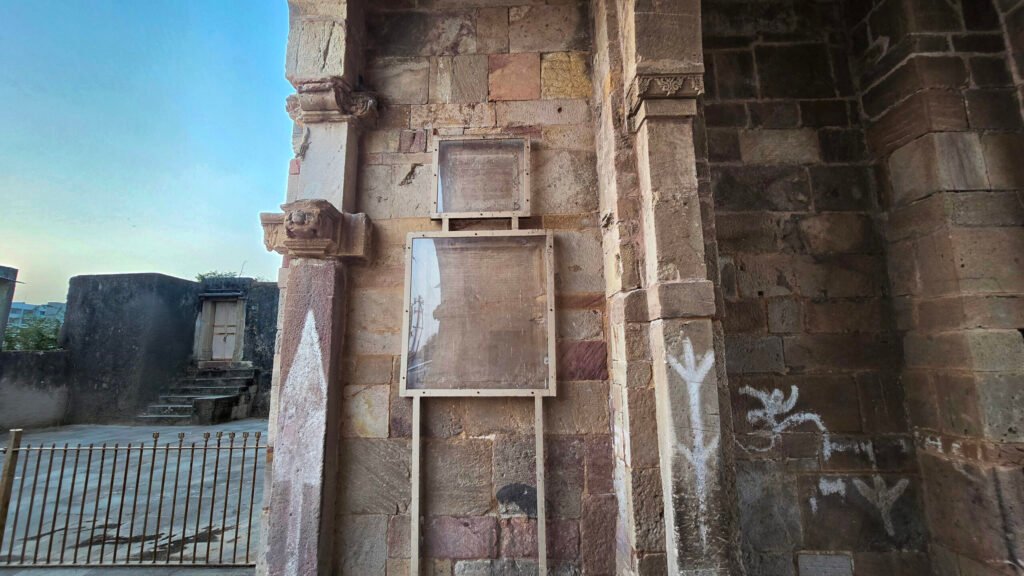
Arjun Bari Gate
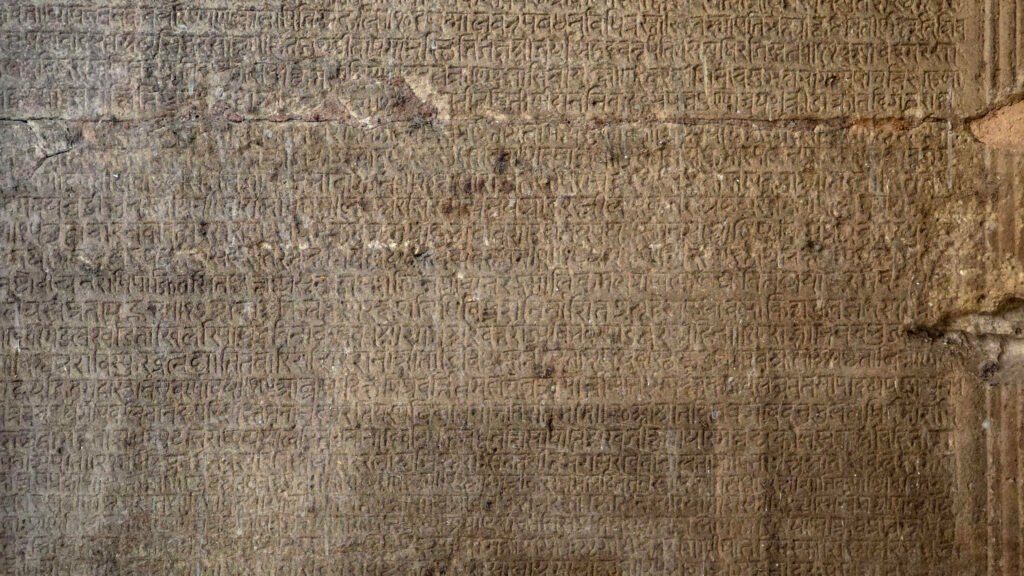
Arjun Bari Gate
Explore More
India’s oldest living city | The Hindu
A deep archaeological excavation at Vadnagar, shows evidence of a human settlement that is as old as 800 BCE.
Going beyond ancient boundary in Vadnagar | The Times of India
Excavations along the Sharmishtha lake.