
Lateri Vav Stepwell
Lateri Vav is a 15th century stepwell; medieval India's ingenious solution for life in semi-arid regions.
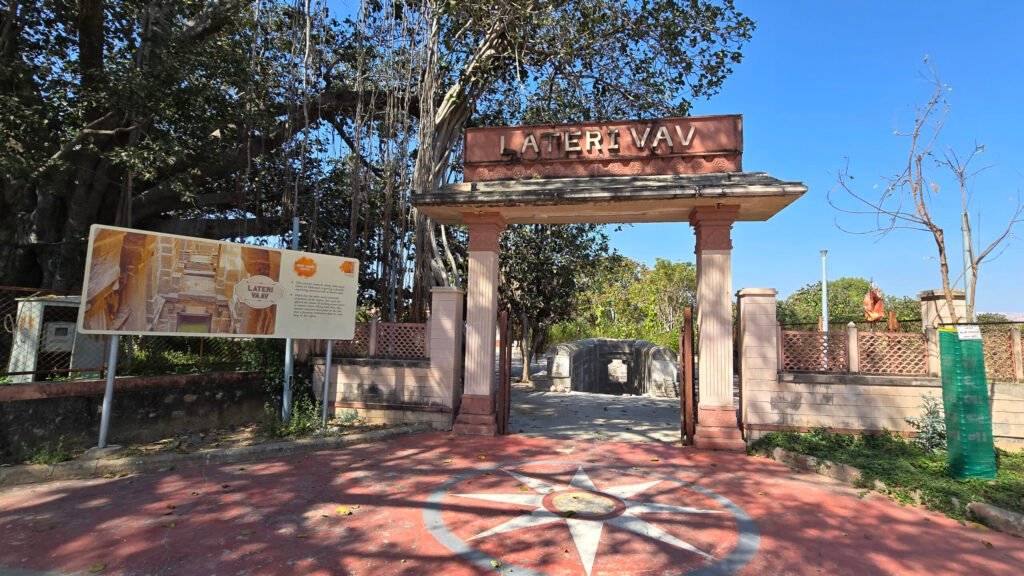
Drive North from Hatkeshwar temple across the Ring road. Lateri Vav is about 2 km away.
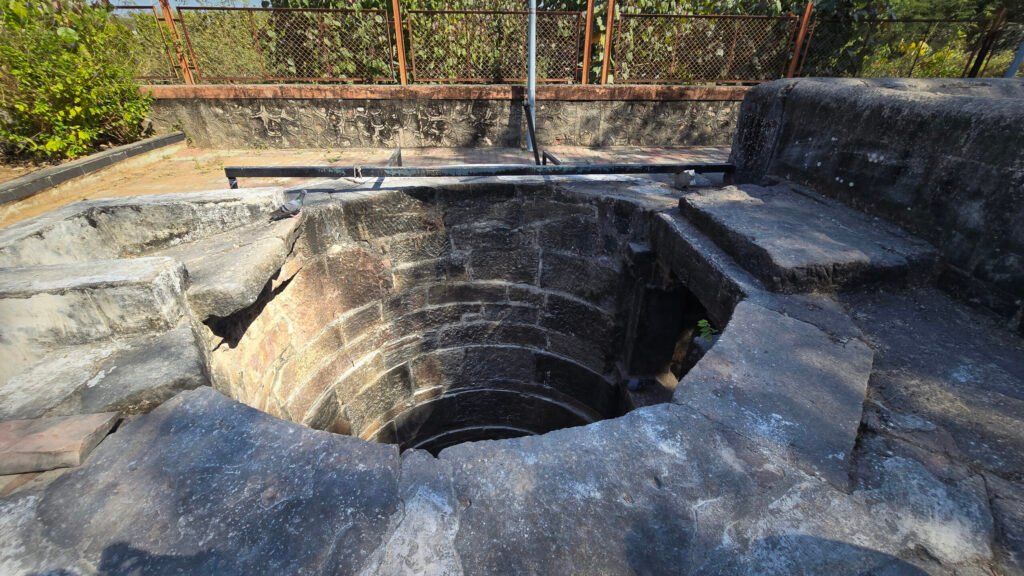
Vadnagar is located in a semi-arid region, and as one would expect, it is dotted with numerous wells. But in a land like Gujarat where water often lies deep underground, simply digging a vertical well was not always enough. Accessing and maintaining them was difficult. So, the builders of western India came up with an ingenious solution: a well that you could literally walk into! The stepwell or the Vav.
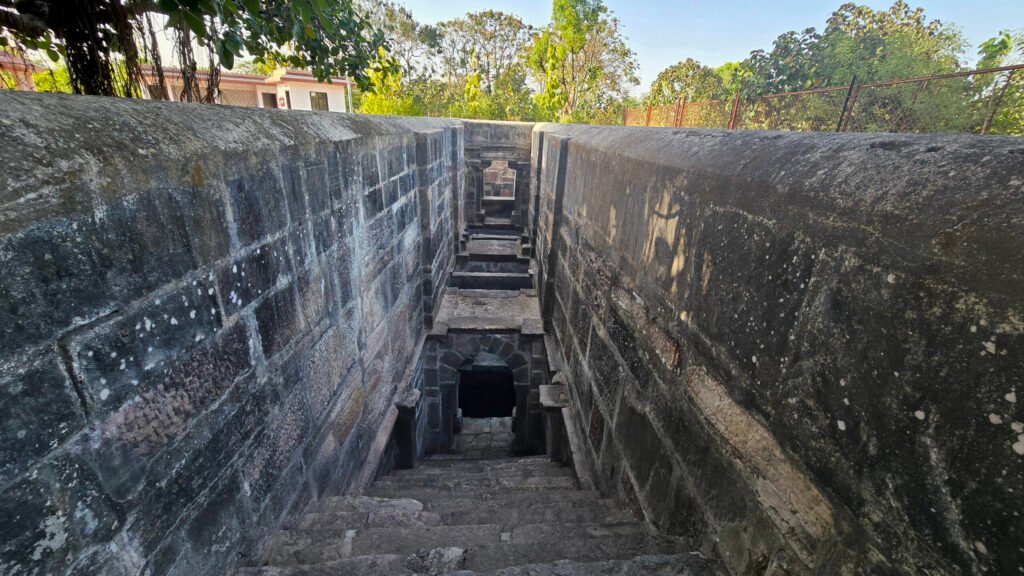
This stepwell is called Lateri ni Vav. Think of it as an inverted pyramid, with water at its lowest point. You can see the deep shaft where water collects. But the journey to it is just as important; a series of steps, platforms, and shaded corridors.
You see, Vavs were not designed to simply collect water. They also functioned as social spaces. Their shaded corridors offered relief from heat, and were spacious enough to allow people to gather, rest and socialise, before carrying the precious water home. Even animals had their own space in a Vav. Water was drawn up using a wheel mechanism into channels for them to drink.
Stepwells like this evolved over centuries and were once common across western India.
Early versions were simple and functional. But during the Solanki period, between the 11th and 13th centuries, they became more elaborate. The walls of the stepwells started being adorned with beautiful sculptures. The most famous stepwell in India is the Rani Ki Vav, about 65 Kms west of here, built by the Solankis in the 11th century.
Lateri ni Vav is more modest. It was likely built later, around the 15th century, and we don’t know who built it. While Rani ki Vav is intricately carved and was built as a memorial for a king, Lateri ni Vav is much simpler and smaller in scale and served a utilitarian purpose. Like many traditional structures, it was constructed using interlocking stone blocks without mortar, making it both flexible and resilient.
At the entrance, you can see a huge banyan tree, a common feature at most social spaces in India. In Indian culture, the banyan tree is a symbol for longevity and is usually a gathering place for community life. In fact, the very name Vadnagar comes from this tree; ‘Vad’ meaning banyan, and ‘Nagar’ meaning town. A town of banyan trees.

Lateri Vav Stepwell
Lateri Vav Stepwell
You Might Also Be Interested In
Explore More
Adaptation to droughts | The Times of India
How Vadnagar survived drought a millenium ago