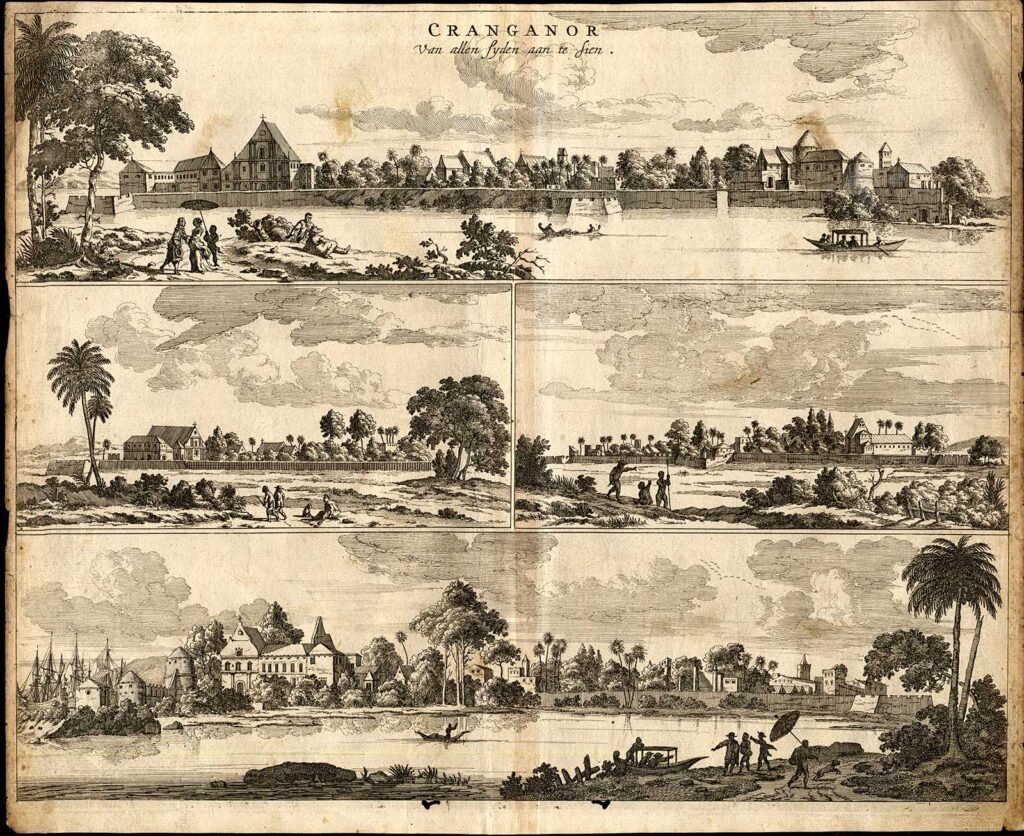
Ancient maritime trade
The story of the ancient Tamil-Roman maritime trade.
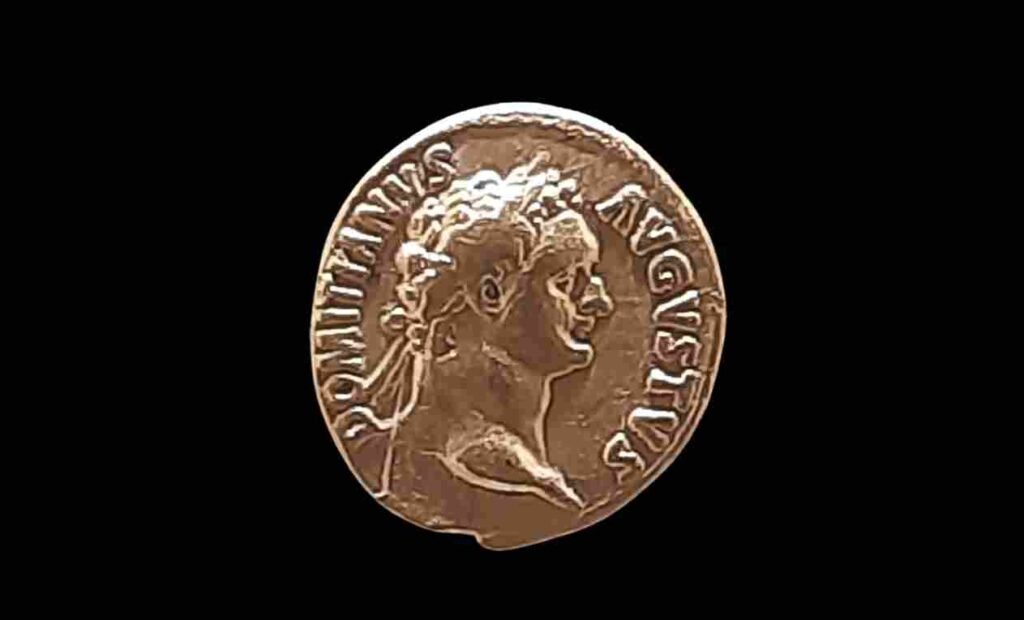
Step into the bay showcasing coins. Look for the Roman coins section and play this story there.
The Roman coins that you see here are over 2000 years old. And they journeyed 7500 km to get here. How did they get here? It’s a long, ancient tale of trade, travel and transactions.
Indians started minting coins probably around the 6th century BCE. Even at that time, they were trading with countries around the globe. By then, people had started exchanging valuable metals like copper, bronze, silver and gold to buy the products they wanted. The kings marked these coins with their seals to certify their weight and value, and they became official tender. Early coins were die-punched. It was a simple process: a strong man placed a blank metal between two dies and hammered the upper die. You can see an example in the Satavahana coins in this gallery - they are the oldest coins displayed here. Over the years, the metallurgy, minting techniques and designs got more sophisticated. You can get a glimpse of the Indian Coin’s journey as you tour this gallery.
But to come back to our original question: What were Roman coins doing in far away India? By the 3rd cent. BCE, the Romans, Greeks, Arabs and others were already sailing regularly to south India - to buy exotic things like pepper and other spices, sandalwood, medicinal plants, fine cotton, ivory, pearls and corals. They in turn sold fine wine, ornaments, glass and copperware to the Indians. The Romans bought a lot more than they sold, and they paid for the difference in gold coins like these, which was great for the economy then.
From the other side, the Chinese ships also sailed to the Coromandel coast. They too have traded with Indians for over 2000 years. With the rise of the Persian empire under Darius I around the 5th century BCE, Chinese traders sought an alternative to the famed Silk route. This sea route provided a viable alternative and Chinese traders came to India to sell their products both to Indians and to the Romans. You can see some Chinese coins also displayed in this gallery.
The trade volumes were mind-boggling. Pliny the Elder, an advisor to the Roman emperor in the mid-1st century CE cautioned his king that the greed of the elite Roman class for imported Indian luxuries was draining valuable gold. He estimated that every year the Romans had an outflow of 55 million sesterces because of all the trading with India. At its current value, that is about 60 billion Indian rupees!

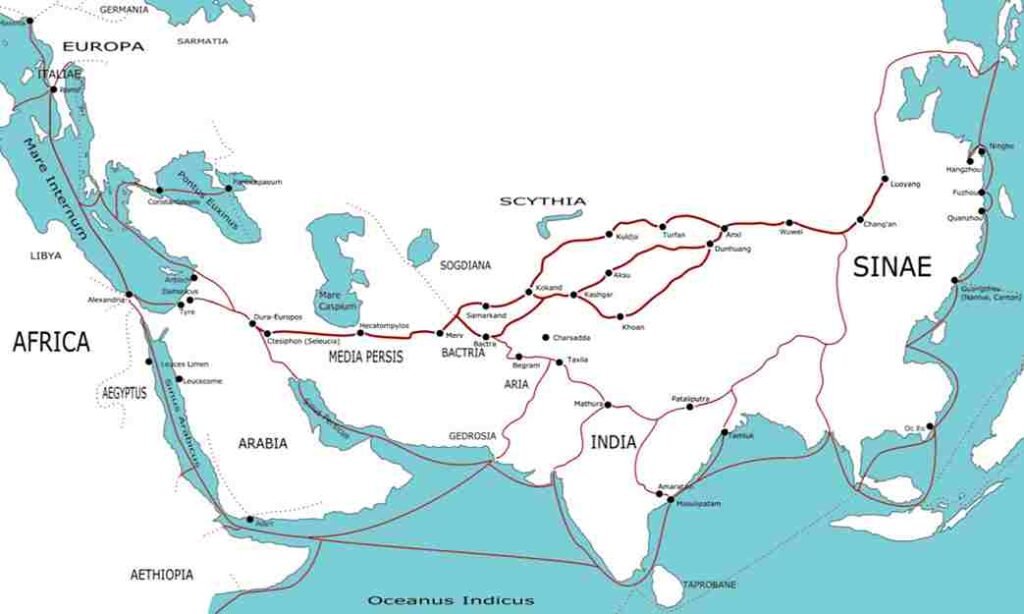
Silk Route map
Wikipedia