Varadharaja
An introduction to Varadharaja and the main symbols of Vaishnavism.
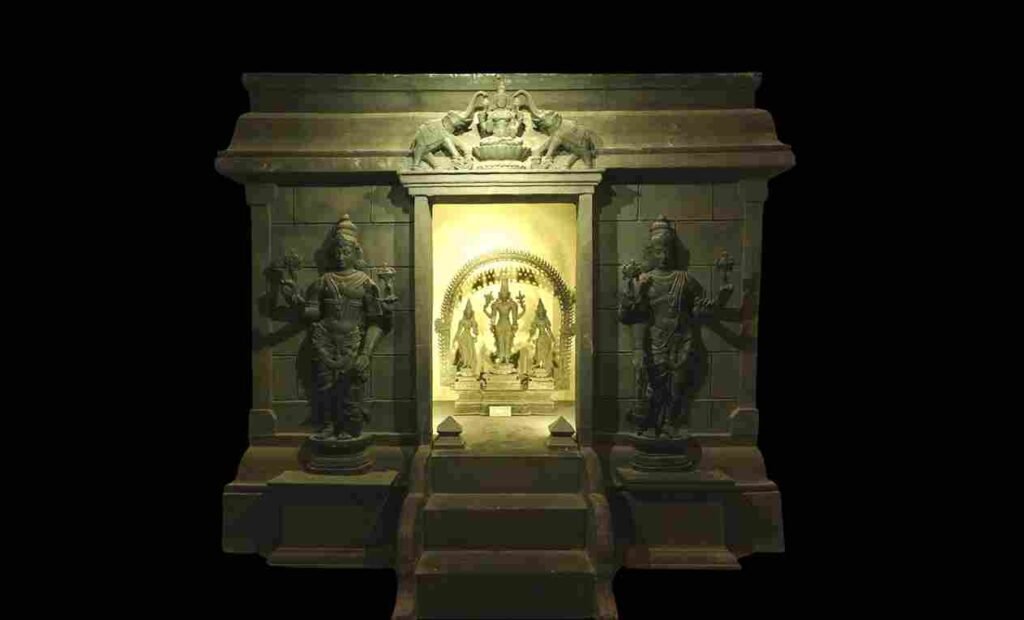
This gallery is dedicated to Vishnu, the god of protection. It is believed that he took ten avatars, or reincarnations, to save the earth every time it was in danger of being overcome by evil. In this gallery, you can see some of his most important forms - Rama, Krishna, Narasimha, Srinivasa and Varadaraja.
Just like Shaivism, Vaishnavism, or the worship of Vishnu as the supreme deity, is also a large sect among the Hindus. Vishnu too was brought to the forefront during the Bhakti Movement. The 12 Alwars, or great devotees of Vishnu, spent their time composing the most expressive songs about Vishnu, and popularised them across the country. There are 108 Vishnu temples mentioned in their poems and these temples are called Divya Desams. These places are important pilgrimage centres to Vaishnavites even today. Of the 108 Divya Desams, 105 are in India, one is in Nepal, and the last two are said to be in the heavens.
A Vaishnavite temple can be recognised by three main symbols: the chakra or flying disk, the sankha or conch and the U-shaped mark called the naamam. You will see these symbols being repeated everywhere throughout this gallery. You can see two of these symbols on the sculpture in front of you. This is Varadharaja, a minor avatar of Vishnu. His name roughly translates to ‘the King of Boons’, and he is particularly known for bestowing boons to his devotees. Ask him anything you wish for and he gives it without any hesitation. In the sculpture you see before you, this aspect of his is represented using the front right hand which is positioned in the varada mudra. The varada mudra is meant to express the action of bestowing boons.
Statues of Varadharaja can be found all over South India. But the most famous temple dedicated to him is the Varadaraja Perumal temple in Kancheepuram, one of the most sacred sites for Vaishnavites. There is even a submerged wooden statue of him that is brought out once every 40 years for ritual purposes.

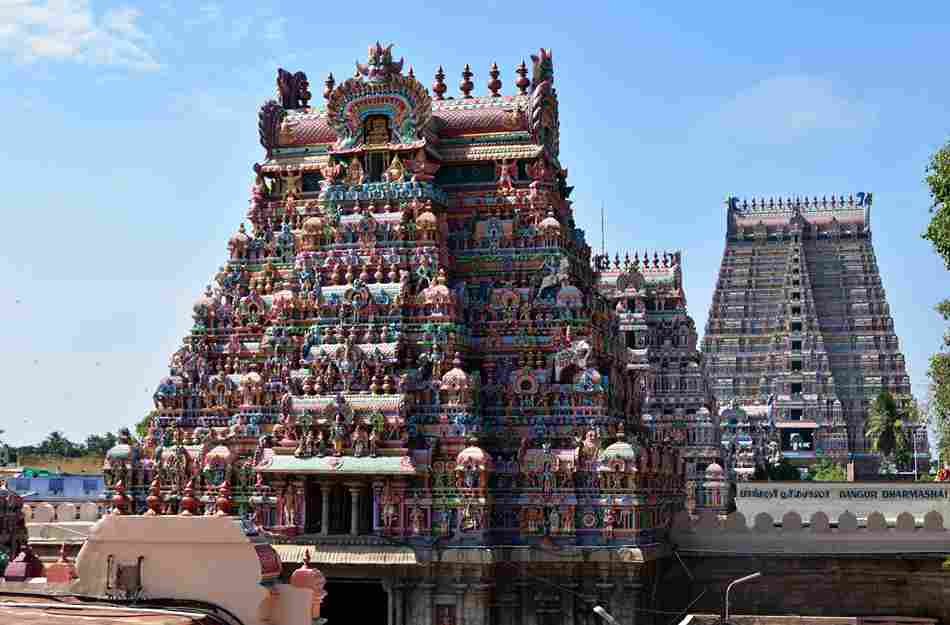
Sri Ranganathaswamy Temple, dedicated to Vishnu, Srirangam, near Tiruchirappalli (Trichy), TN
Wikipedia. Photo by Richard Mortel