Nataraja
The story and symbolism behind one of the most iconic representations of Shiva - Nataraja.
Walk upto the main display in the central bay marked ‘Natesa’. Play this story there.
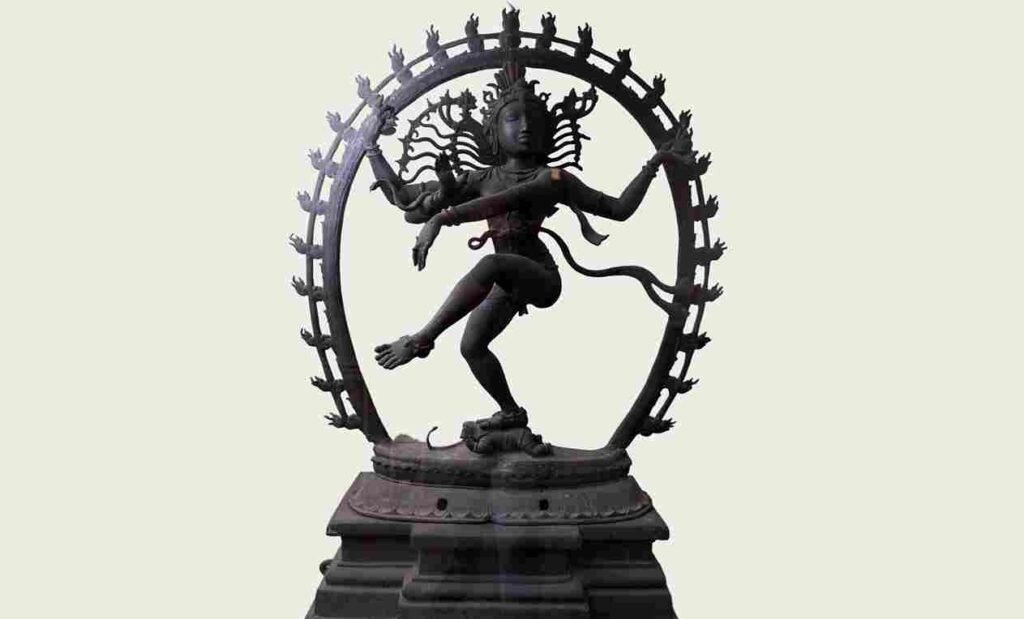
What you see in front of you is one of the most iconic representations of Shiva. Here, Shiva is portrayed as Nataraja or the ‘KING of Dance.’ Yes, Shiva, the powerful god of destruction is also the god of dance. Nataraja plays the role of destroyer in Hindu mythology.
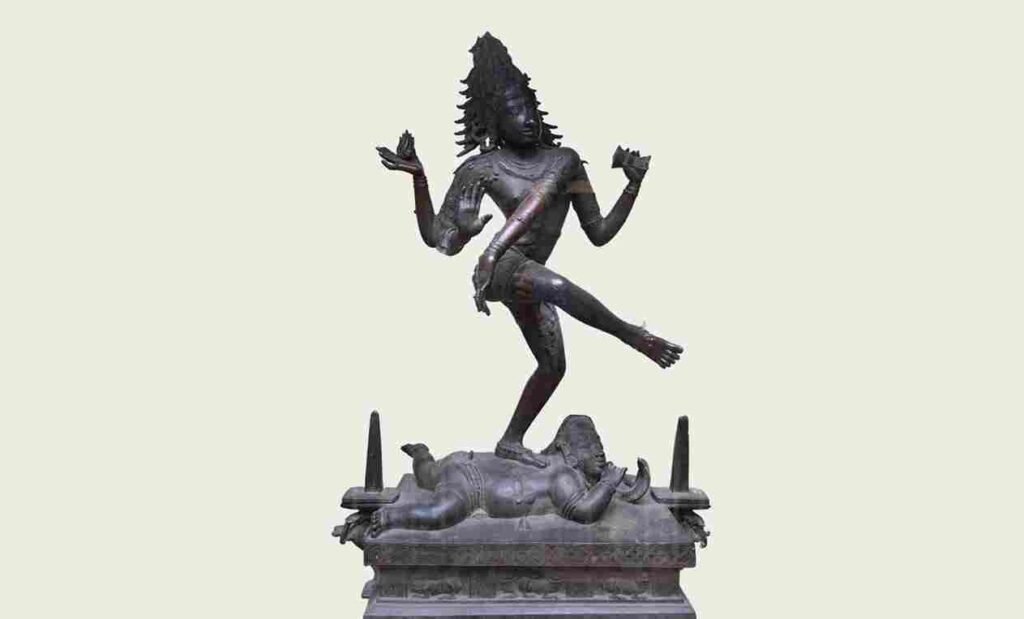
Story goes that there was once a group of rishis, or sages, who were in deep meditation in a forest. Shiva wanted to test the strength of their devotion and decided to distract them. The rishis were enraged and sought to destroy Shiva. Using their spiritual powers, they first created a tiger to attack him. Then, they unleashed a terrible serpent. But Shiva killed the tiger, wrapped its skin around his waist, and wore the snake around his neck like a garland. And then he began to dance. The furious rishis now set a demon dwarf on him - a dwarf called Muyalakan or Apasmara. But Shiva simply stepped on to his back, held him down, and continued his dance. The rishis finally realised that the person who they were fighting was Lord Shiva himself and accepted defeat. This dance of Shiva is called the thandavam. It is this dance that is replicated in countless bronze statues.
Symbolically, the dwarf Apasmara represents ignorance. Nataraja is shown with 4 hands, one of which directs your attention to the dwarf underfoot, while another holds a 2-headed drum said to sound the note of creation of the world. The third hand holds fire, symbolising destruction while the fourth is meant to convey a sense of protection by symbolically saying ‘do not fear.’ Overall, Shiva is said to destroy, control and keep the world in balance through his dance.
The earliest known sculptures of Nataraja are from the Gupta kingdom - dating back to between the 3rd and 6th centuries. After that, the icon travelled to south India and was adopted by the Pallava and Chalukya kingdoms. But it was the Cholas who made the icon of Nataraja immensely popular. Until the 10th century, the only temple in Chola territory to house an image of Nataraja, was the Thillai Nataraja temple in Chidambaram in Tamil Nadu. In the 10th century, Sembiyan Mahadevi, the then Queen Mother of the Cholas, built numerous temples with stone sculptures of Nataraja. She also sponsored a bronze workshop to make processional icons of gods, particularly of Nataraja. Soon, the Cholas mastered the art of working with bronze. You can see that the entire weight of this statue is carried on only one of the legs. And yet it seems perfectly balanced. The sense of movement in the sculpture makes us forget that it is cast in bronze, and therefore, quite heavy. It is no wonder that sculptures like these are highly prized by museums and art collectors worldwide.
Despite all its popularity, this image is almost never kept in Hindu homes. Because many believe that to keep a statue representing destruction is to bring negativity into one’s home. However, Nataraja is the first god who is invoked during classical dance performances such as Bharatanatyam.

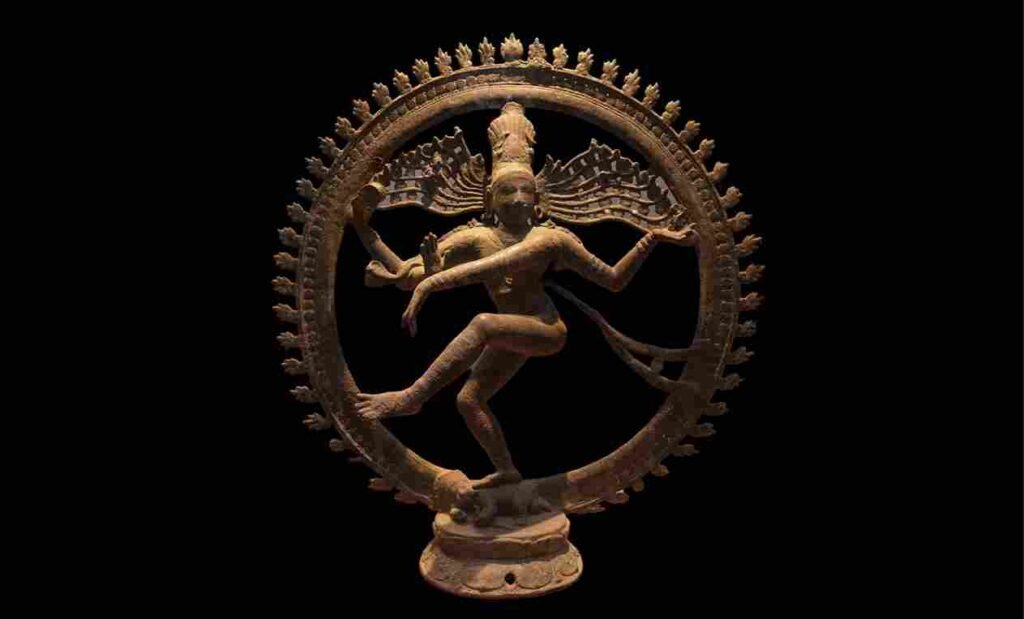
Bronze sculpture of Nataraja, 13th century CE