Introduction to the Bronze gallery
An introduction to the Egmore bronze gallery - considered one of the finest collection of bronze sculptures in the world.
Exit the Anthropology building, walk past the Archaeology building and turn left towards the Bronze Gallery building. Play this next story there.
Welcome to the Bronze gallery of the Egmore Museum, considered one of the finest collections of Chola period bronzes in the world.
Bronze is a metal made by combining tin and copper. It has been used since ancient times by many civilizations to make tools, weapons, coins, medals and precious objects. There is even a period in proto-history known as the Bronze Age.
In India, bronze tools and artefacts were being produced as early as 5000 years ago. We have evidence of this from the Indus Valley excavations in present-day Pakistan and northwest India. As a metal, bronze is not easy to use. The Cholas mastered the art of making sculptures in bronze and this art form reached its peak during the reign of the Imperial Cholas, roughly between the 10th and 13th centuries.
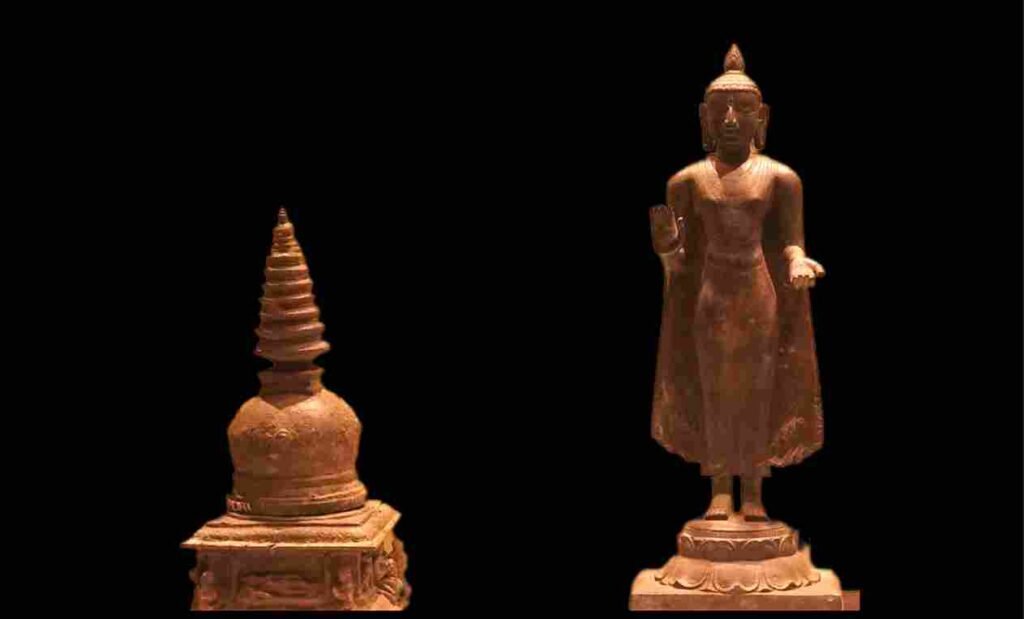
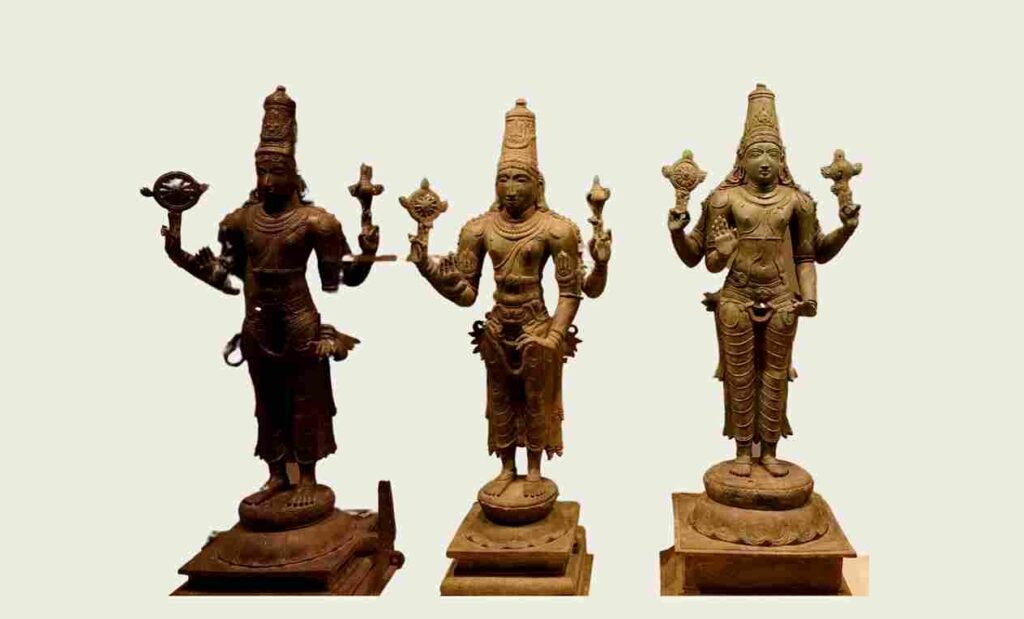
The exhibits in this gallery represent gods, goddesses, celestial beings and saints venerated in South India. Often, they depict a particular moment from a mythological event and demonstrate the prevalence of Hinduism, Buddhism and Jainism in South India. This gallery is divided into Saivite, Vaishnavite, Buddhist and Jain sections. At first glance, many of these sculptures may look similar. But experts can identify them by reading the symbolism in the sculptures. What does an ornament signify? Or what does a hand gesture or posture really mean? Just like other artists and painters, bronze sculptors of that time strictly followed ancient manuals of art and craft called Shilpa Shastras. These manuals dictated how a god should or should not be depicted. This grammar of symbolism is called iconography and it helps experts definitively identify each antique sculpture.
The oldest objects in this gallery are the four figures of Buddha, dating back to the 3rd century CE, excavated from Amaravati in Andhra Pradesh. Another priceless sculpture is the large Jain Tirthankara dating back to the 10th century CE. It was found near Madurai, and serves as evidence for the prevalence of Jainism in those parts at that time. But the finest exhibits are the figures of Nataraja from Tiruvalangadu and Velankanni, the Rama group from Vadakkuppanaiyur, Vishnu as Srinivasa, the inscribed Kali, and the exquisite Arthanarishvara from Tiruvenkadu. These are from the Chola period.
This free audio tour is brought to you thanks to the generous support of Pando. Visit pando.ai to learn more about them.

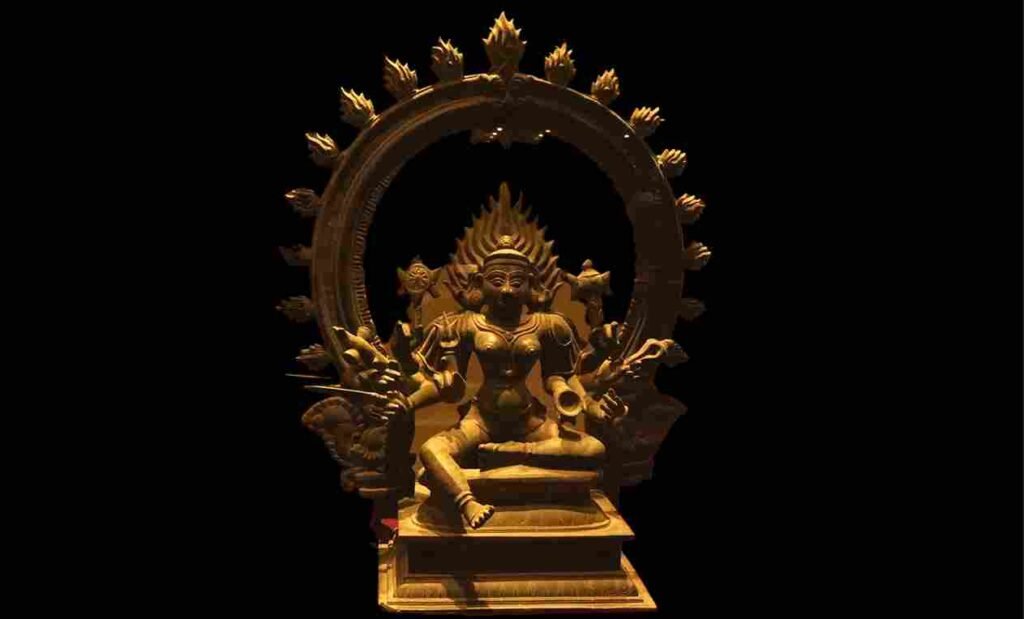
Bronze sculpture of Bhadrakali, 14th century CE