Life in the Indus Valley
What did the people of Indus Valley do for a living? Who did they worship? What were their lives like?
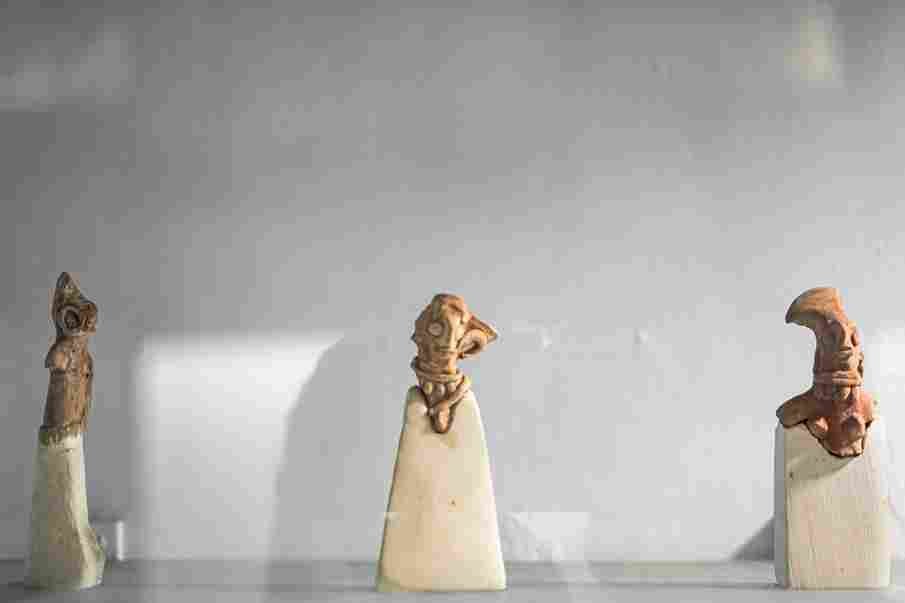
Look for a showcase marked 'Figurines of mother goddesses' in the Indus Valley Civilisation Gallery. Play this story there.
What do we know of the lives of people in the Indus Valley? Till date, about 1400 sites of the Indus Valley have been excavated. They have yielded many artefacts, some of which are displayed in this room.
We know that people of the Indus Valley practised agriculture and trade. The cities had an enormous granary in which surplus grain was stored. People stored wheat in large pots, which they buried in the floor of their houses. You can see such storage urns displayed here.
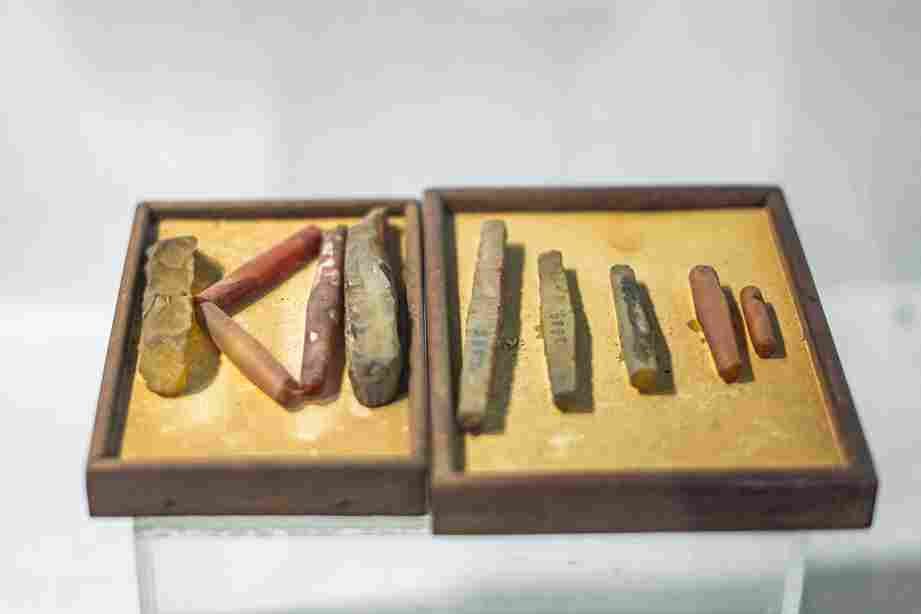
The Indus Valley civilisation was a chalcolithic culture, meaning that its people knew the use of copper and bronze, but iron had not been discovered yet. They were good at working with stone and clay. In this gallery, you can see weights and measures made of polished stone, toys and ritual artefacts, and many ornaments. These artefacts hint at an urban society that was structured and civilised; one that had the time and stability for leisurely pursuits. Their ornaments were made of semi-precious stones, shells and teracotta. We know that they imported gold from Karnataka, amethyst from Maharashtra and lapis-lazuli from Persia.
Among the most common clay artefacts discovered were figurines of the mother goddess. This was an age when people revered nature and the mother goddess was a female personification of nature. It is significant that similar mother goddess figurines are seen in ancient cultures across the world.

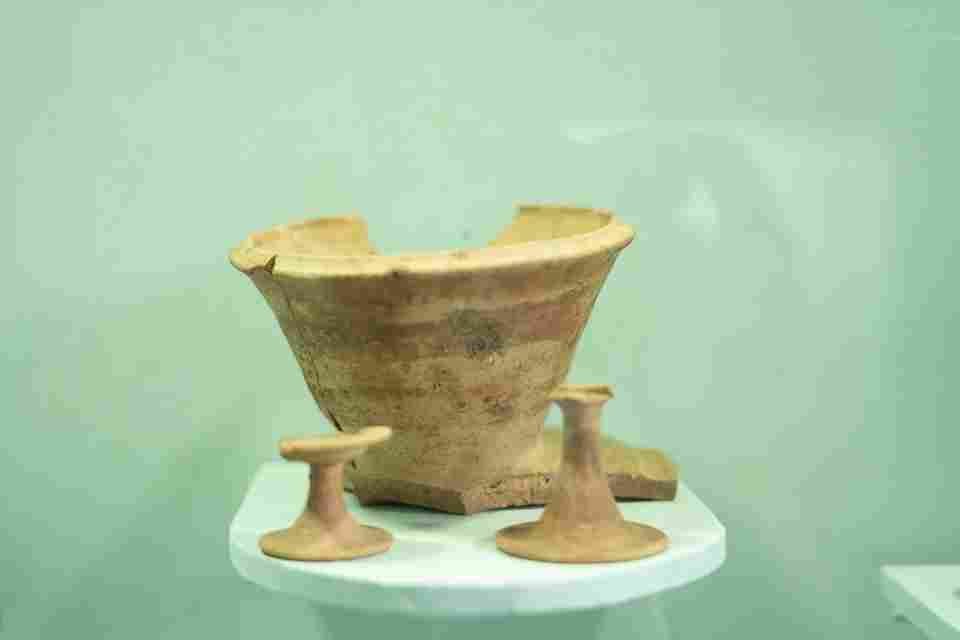
Terracotta articles of ritual use, Indus Valley