The Indus Valley Civilisation
The story of the oldest civilisation of India.
Walk up the stairs of the Anthropology Gallery and turn left into the Indus Valley Civilisation Gallery. You can play this story at the entrance to this gallery.
Welcome to the Indus Valley Civilisation Gallery. The artefacts you will see in this gallery tell the stories of a truly remarkable ancient civilization that was far, far ahead of its times.
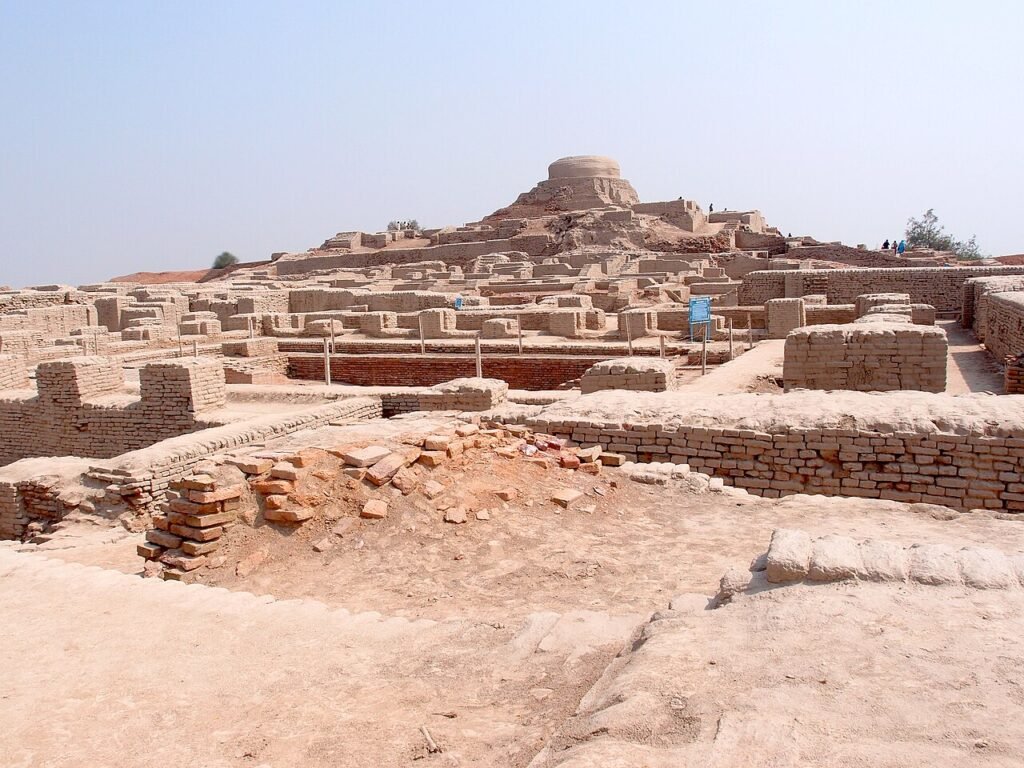
Over five thousand years ago, the Indus Valley civilisation flourished all along the banks of the River Indus, covering large chunks of north west India, Pakistan and parts of Afghanistan. At its peak, it was one of the largest in the world, much bigger than its contemporaries like the Egyptians and the Mesopotamians. At a time when large ancient cities had about 10,000 people living in them, the Indus Valley cities of Mohenhodaro and Harappa had a population of 35,000 each! Ships travelled out from their port, Lothal, to trade with Egypt and Mesopotamia.
About five thousand years ago when Egyptians and Sumerians were building magnificent tombs and temples, but living in mud huts, the people of the Indus Valley lived in well-planned cities, with streets laid out in a neat grid pattern. Every house was made from standardised bricks and the city had well-planned sewerage systems. The houses had separate bathrooms and even flush toilets!
How old is this civilization? It is the oldest we know of in India. It is estimated that the civilisation began around 3300 BCE, and started declining by 1700 BCE. By 1300 BCE, it had completely disappeared. We do not know why. Was it due to a foreign invasion? A natural disaster? Or an epidemic? Perhaps the river Indus changed course and the Indus valley cities were too large to adapt to that change? The answer remains a mystery.

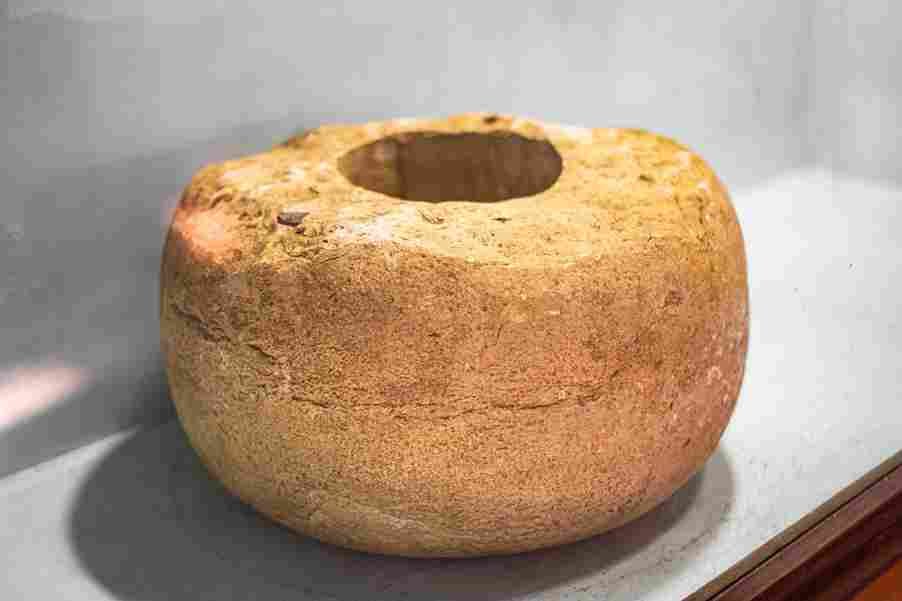
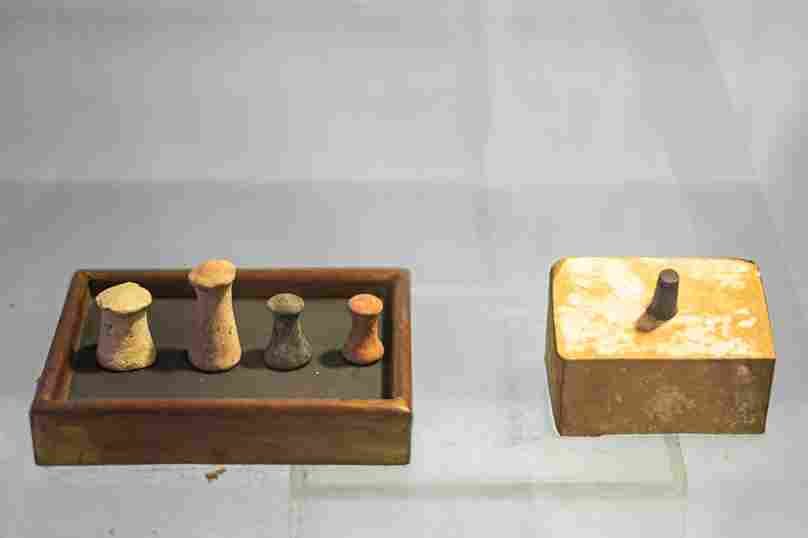
Stone used for pillar support, Indus Valley
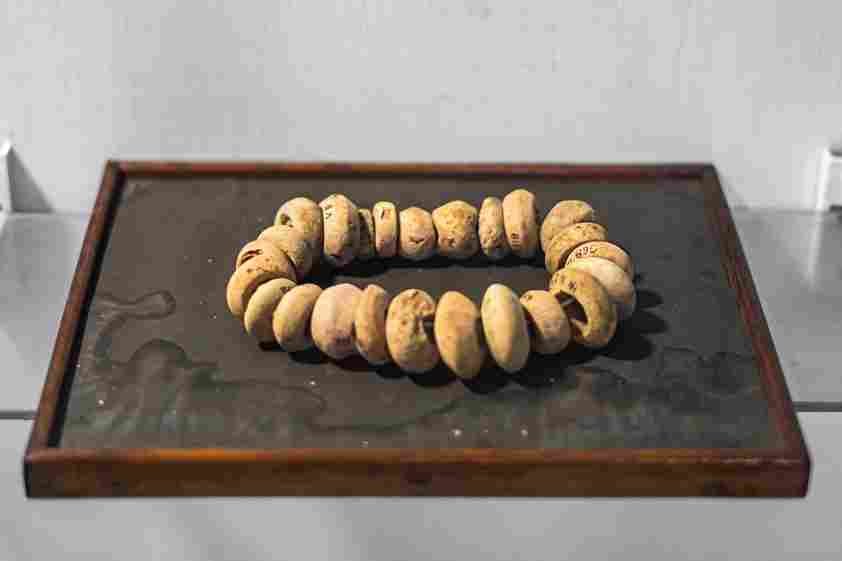
Terracotta ornament, Indus Valley