The oldest settlements in south India
An introduction to Adichanallur, one of India's most ancient settlements.
Walk into the Adichanallur Gallery and play this story at the entrance.
How old are the oldest settlements in India? The Indus Valley Civilisation, the oldest Indian civilisation that we know of, goes back to at least 2600 BCE. It spanned the north-western parts of India, Pakistan and Afghanistan. You can see artefacts from this civilisation displayed on the first floor of this building. Sometime around 1600 BCE, the Indus Valley Civilisation faded away. We still don’t know why. It was followed by the Vedic civilisation - another vast civilisation that centred around the Gangetic plains of North India, lasting until about 500 BCE.
But what about south India? Weren’t there ancient civilisations in south India too? For a long time, people assumed that civilisation in South India was no more than 2300 years old. That’s because there was no concrete evidence of any older settlement - no ruins of a city for example.
But many archaeologists have now rejected this notion. Backing them up was an ancient corpus of Tamil literature called the Sangam period literature. These poems, composed roughly between 300 BCE and 300 CE, talk about a grand ancient Tamil civilisation. But where was the physical evidence for that civilisation?
In 2015, in a little village called Keeladi on the banks of river Vaigai, near Madurai, archaeologists unearthed ancient artefacts dating back to the 6th century BCE. This created a flutter among scholars because now there was evidence of a structured, literate and advanced Tamil society that was at least as old as the 6th century BCE.
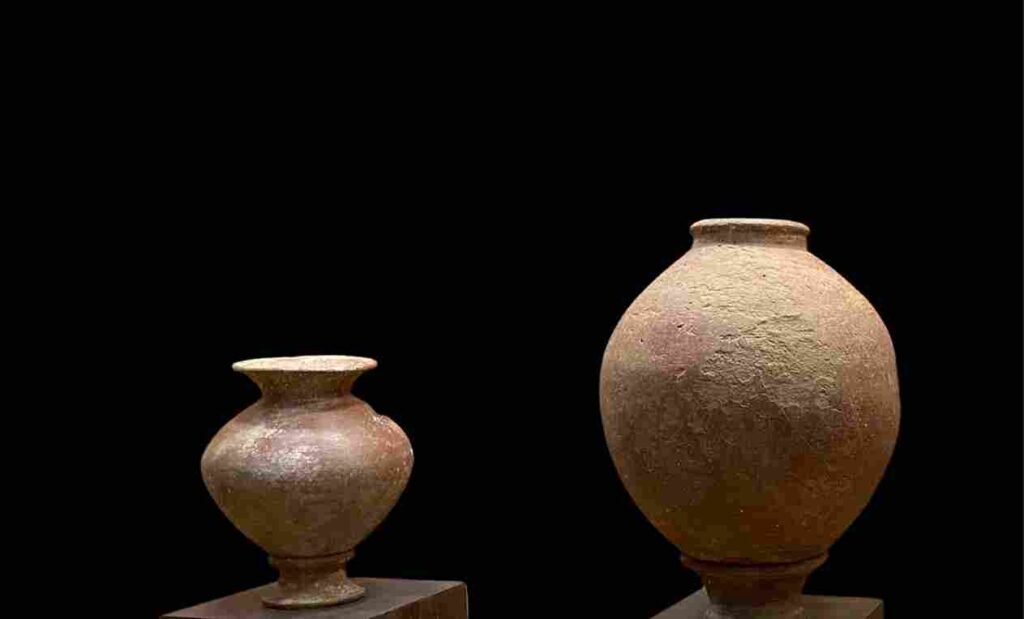
But surely, Tamil civilisation was far older than that? Ironically, the evidence had been right under the nose of the Archaeological Survey of India for nearly 120 years. Between 1899 and 1904, an archaeologist named Alexander Rea unearthed many ancient artefacts in a place called Adichanallur, about 200 Kms south of Keeladi, on the banks of the Porunai river. Porunai is also called the Thamirabarani river, and it is mentioned in Sangam Tamil literature as well as in the Ramayana and the Mahabharata. At Adichanallur, they found ancient skeletons, burial urns, gold ornaments, and bronze and iron tools. These are the artefacts you see in this gallery.
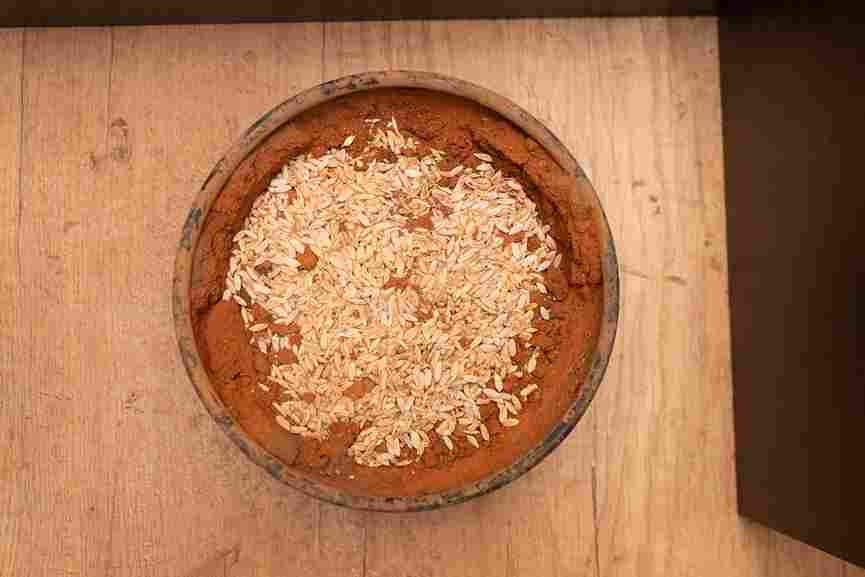
Unfortunately, for the next 100 years, there was no follow up to Rea’s work. In later years there was heavy quarrying around Adichanallur and it is possible that many artefacts were lost forever. But in 2005, the Archaeological Survey of India returned to the site with better tools for excavation and analysis. Carbon dating of the artefacts showed them to be as old as 905 BCE! Recently, a grain of rice found in a burial urn on the banks of Porunai river was scientifically dated to 1155 BCE! It is now suggested that the site could be even 3500 years old. This makes Adichanallur one of the most ancient sites in India.
Let’s walk around this gallery and see what we know of this society - not just from the finds at Adichanallur, but also from other ancient sites in Tamil Nadu like Keeladi and Korkai.

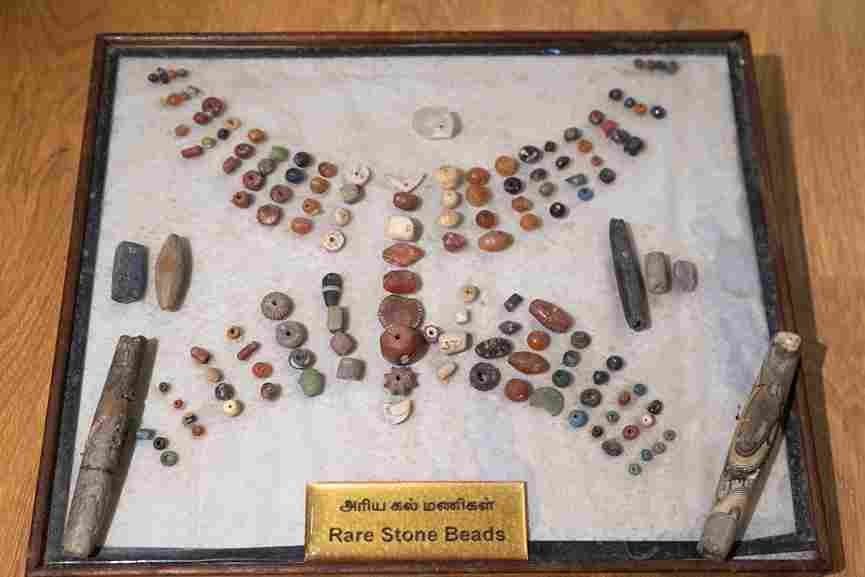
Rare stone beads, Arikamedu, Pondicherry