Sati stones
What is the practice of Sati and was it prevalent in south India too?
As you walk towards the Hindu Sculptures gallery, you can find several Sati stones at the end of the corridor. Play this story there.
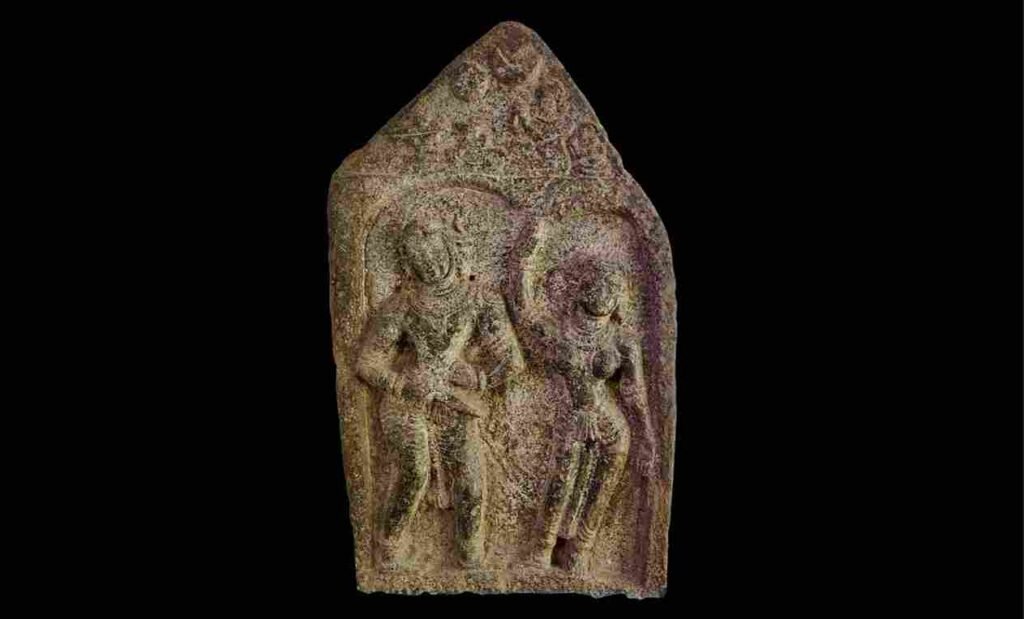
What you see before you is a special kind of a memorial. Such memorials were called Sati stones. Sati was a medieval Hindu custom in which a widow immolated herself on her husband’s funeral pyre.
This obsolete funeral custom was usually considered to be more prevalent in the northern parts of India. But the Sangam period literature of Tamil Nadu, dating between the 3rd century BCE and the 3rd century CE, mentions wives of slain warriors immolating themselves. It is believed the custom originated among the warrior class, and then spread to other communities as well from the 10th century CE.
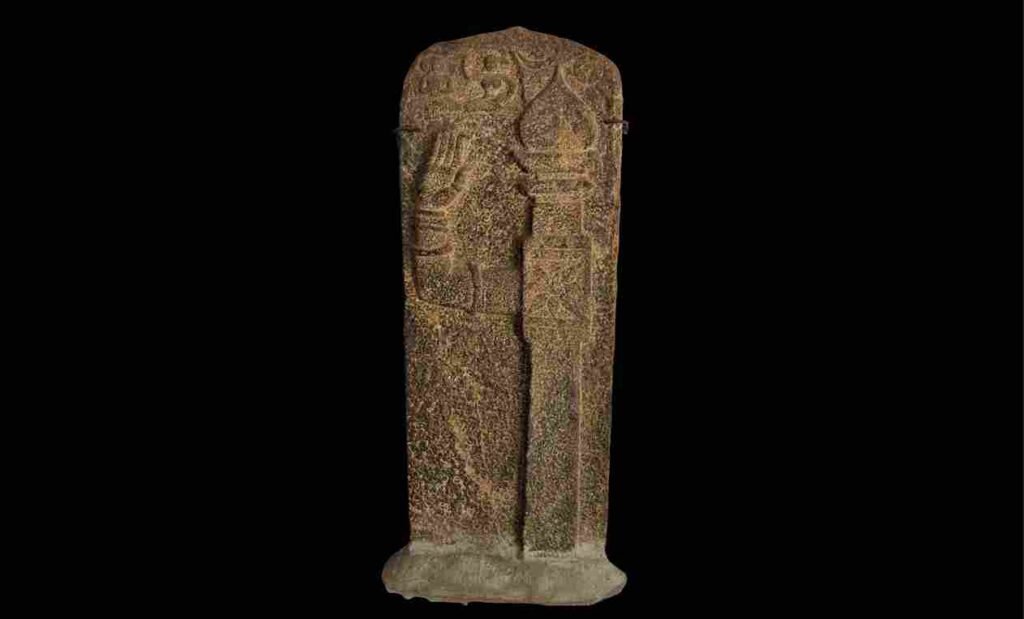
At the end of this corridor, you can see a Sati stone dating back to the 10th century CE. It was found in Andhra Pradesh and shows the forearm of a woman who committed Sati. Can you see the bangles on the forearm? Traditionally, widows were not allowed to wear bangles or other ornaments. This depiction was meant to tell the world that the woman chose Sati over the indignities of widowhood.
One corner of the slab has a carving of the couple, while the other corner depicts the sun and the moon. This is to imply that they would be remembered for as long as the sun and moon exist.
The practice of Sati reached a peak in the early 19th century, with hundreds of such incidents reported every year. British eye-witness accounts of the time indicate that the women were often drugged before they were tied down to the funeral pyre. On the other hand, accounts of women voluntarily committing Sati were common too. In the early 1800s, the British East India Company banned Sati in the provinces it controlled. Indian reformers like Raja Ram Mohan Roy from Bengal also campaigned extensively against the practice. In 1861, Queen Victoria issued a general ban for the whole of India and gradually, the practice faded out. You can still spot old Sati stones in some parts of India, where they are treated with reverence by the local population.