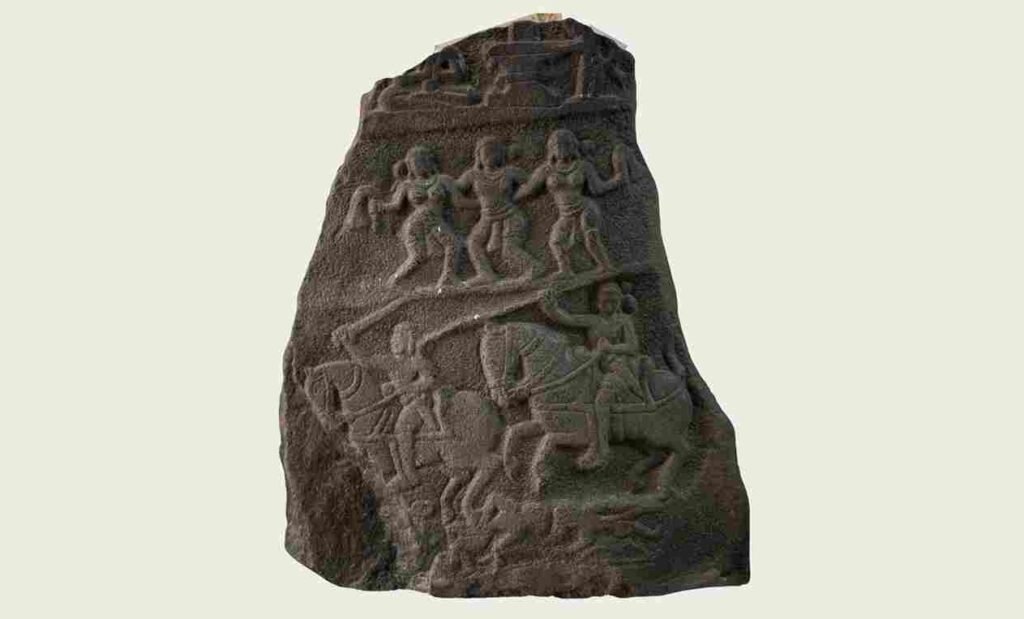
Hero stones
These are stones honouring the brave. But who were these heroes and what did they do?
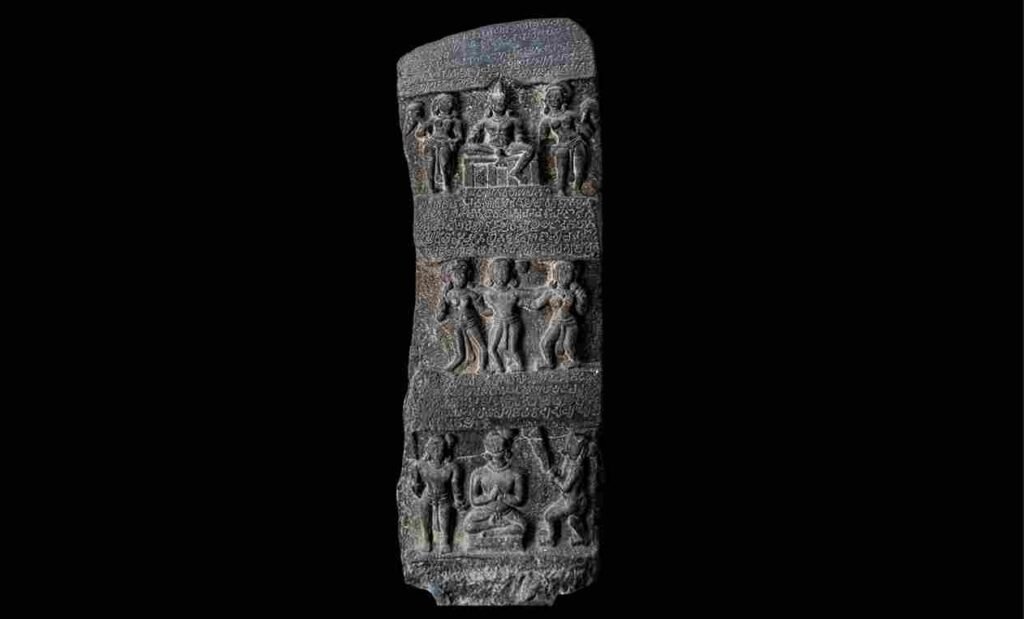
From the Naga Stones Sculptures bay, walk towards the Hindu Sculptures gallery. You can find several hero stones on either side. Play your story there.
Do you see a row of memorial stones placed along the walls of this corridor? Archaeologists have discovered many such stones buried near water bodies across South India. They are called Veerakal, meaning the ‘Stones of the Brave’. These stones are carved in memory of someone who has died a hero’s death. Literary evidence indicates that this custom was common in Tamil Nadu as far back as 1000 BCE.
Who were these heroes?
In the beginning, the stones honoured those men who died protecting cattle. In those days, cattle meant wealth, after all. Several hero stones have been found depicting men wrestling with tigers and other large cats. An inscription on the stone would tell you who the hero was, how he died and who erected the stone.
Later, it became common to erect hero stones for soldiers who were killed in battle. But not every dead soldier was deemed worthy of a hero stone. If a soldier’s wounds were on his back, it suggested that he ran away from the battle field. And so he would be denied the honour of a hero stone.
Some hero stones were memorials for men who had voluntarily offered their heads in sacrifice to the village deity, all for the greater good of the village. These hero stones would depict a man holding a sword to his neck. It was believed that this act brought victory in battle and was practiced during times of war.
If you observe carefully, you’ll see that some of the hero stones have 3 tiers. The bottom panel usually depicted how the hero fought and died. The middle panel showed the hero seated in a palanquin lifted by heavenly maidens. The top panel showed the hero worshiping his favourite god.

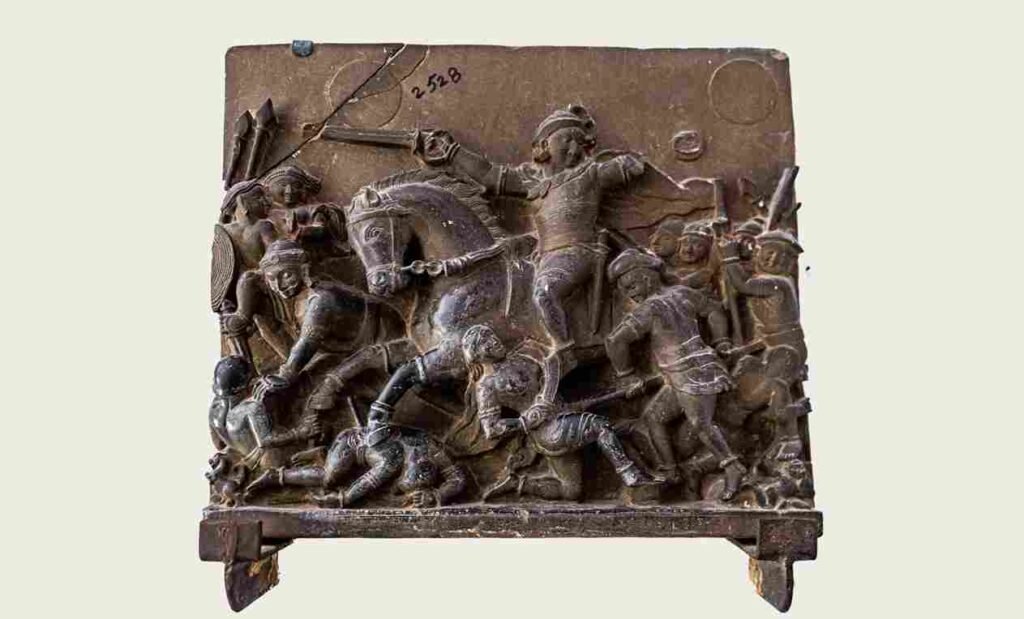
A hero stone depicting a battle and men on horses holding swords and lances, Chippagiri, Karnataka, 10th century CE