Worship of Snake Gods
Why are snakes so revered in Hinduism?

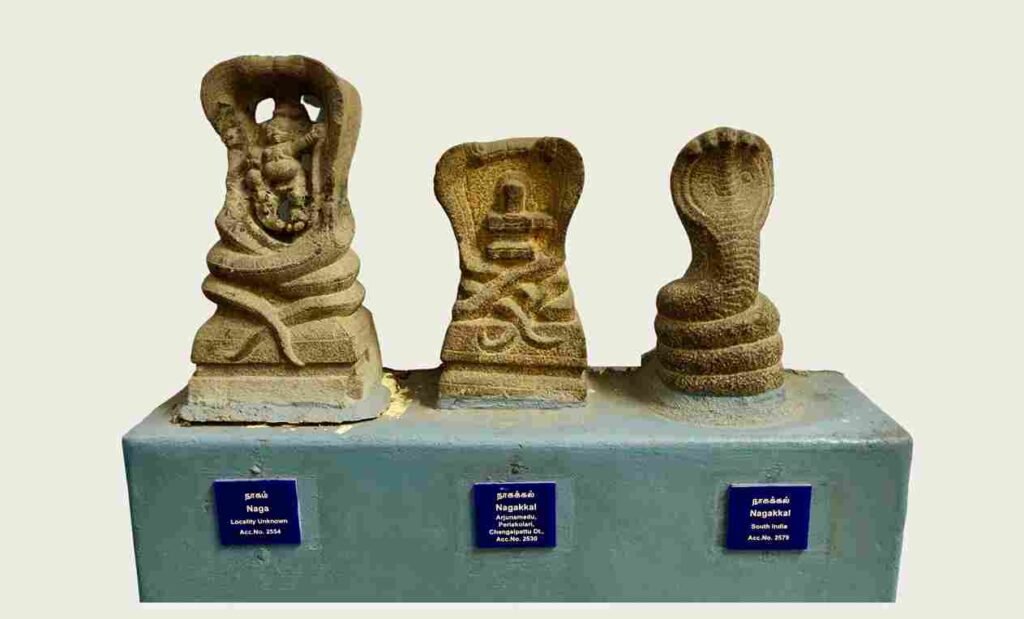
Exit the Epigraphy section, and immediately to your right, you will see an alcove with Naga Stone Sculptures. You can play this story there.
Can you see a set of stones with carvings of snakes on them? Such stones are commonly found in temples all over South India. Snakes have been worshipped across India for centuries. According to Hindu tradition, Nagas, or snakes, are semi-divine beings that inhabit the netherworld. Their land is called Nagaloka – literally the ‘kingdom of snakes’. They are considered guardians of gemstones found deep under the Earth.
Why do Hindus worship them?
Hindus consider snakes as a symbol of rebirth. It is said that snakes are symbolically reborn, every time they cast off their skin. In India, people both fear and worship snakes. They believe that snakes are usually good natured, but if they are ill treated, they can turn vindictive. Annoy a snake, and misfortune will follow, they say. And what if you killed a snake? Many believe that the snake’s spirit will bring hardships to your family for many generations to come.
In South India, snakes are associated with fertility. Women who want children worship a snake idol like this one, which is often placed near a snake pit.
In the south Indian state of Kerala, most houses have a separate area earmarked for snakes. It is called a kaavu, or a sacred grove. Snake idols like the ones you see here are placed in the sacred grove. The snakes that live in these groves are worshipped as the family serpents. If the family sold the land, the transfer deed would specifically mention the sacred grove.
Snake shrines are an integral part of most temples. You may find a shrine to a powerful snake called Anantha nag in most Vishnu temples. And you may spot an idol of Nagaraja, the king of snakes, in Shiva temples.