Copper plates - a mine of historical information
Who created these copper plates and what do they tell us?
From the Graeco-Buddhist Sculptures bay, walk up to the section marked ‘Copper Plates’. You can play this story there.
In this gallery, you will see a collection of copper plates, some of which are over 1,500 years old. Copper was the first metal known to man. Since it doesn’t rust or decay, it was the perfect material for important documents of the time. Most of the copper plates displayed here are records of grants made by South Indian kings and queens belonging to various dynasties. Look at the 31 copper plates to your left as you enter this room. These plates were issued by King Rajendra Chola the first in the 11th century, and they talk about a village that was gifted to a Shiva temple in the town of Thiruvalangadu. While this may not excite everyone, such inscriptions are a gold mine of information for historians about life during the different time periods.
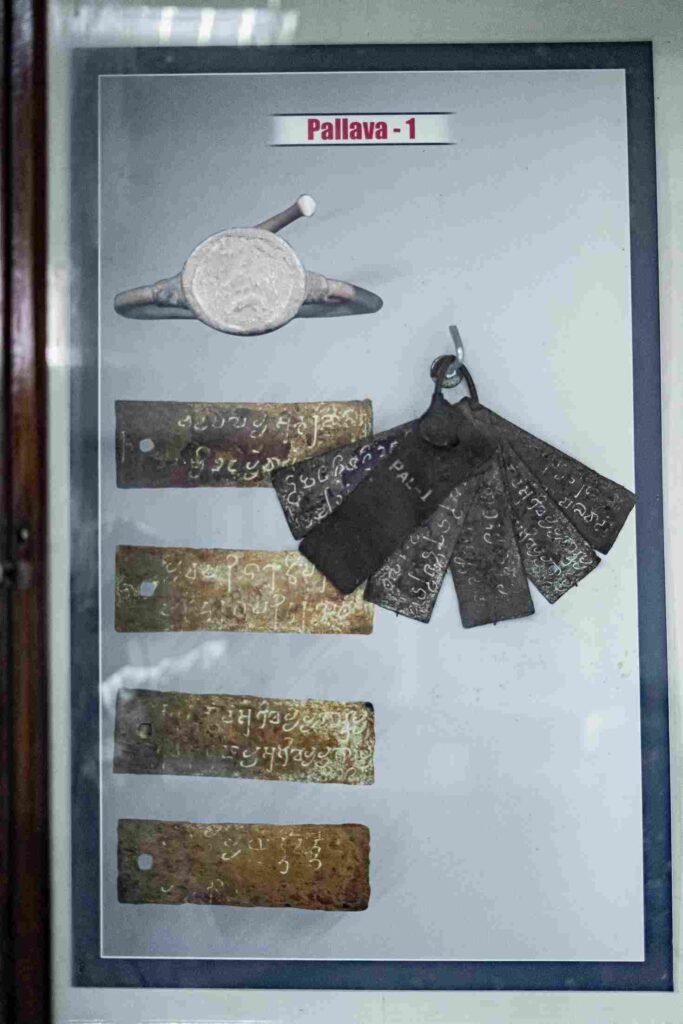
Look for the Maidavolu inscriptions in this gallery. These copper plates are the oldest inscriptions found in this museum, and date back to 305 CE. They are called Maidavolu plates because they were discovered by a farmer in a village called Maidavolu.
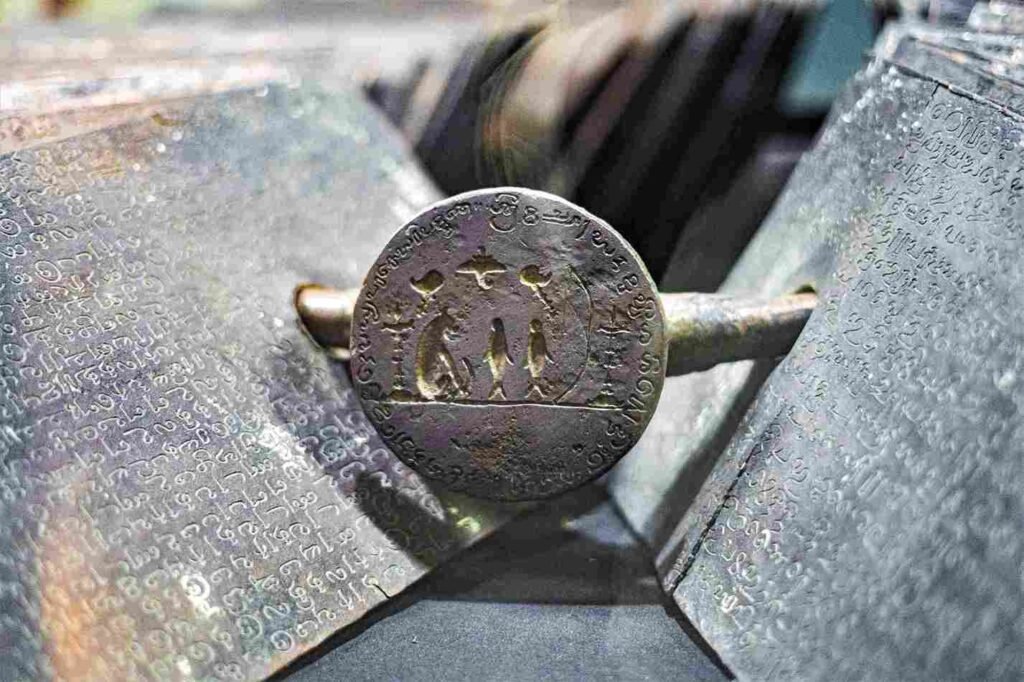
Notice the figure of the bull that holds the copper plates together? This is the Pallava emblem. These 1,700- year- old plates tell you the story of a Pallava king named Sivaskanda Varman. He gifted an entire village to two scholars. It exempted the village from some levies and taxes and threatened any encroacher with terrible punishments.
Sometimes there is a hidden message in a relic. Look at the Uttama Chola plates in this gallery. As the name suggests, these were inscribed under the orders of the Chola king, Uttama. This particular plate is an order issued by Uttama Chola to pay some dues to a temple. The accompanying seal prominently shows a seated tiger which was the royal insignia of the Cholas. But if you look closely you would also see a pair of fish and a bow. These were emblems of the rival kings of the Pandya and Chera dynasty. Why would a Chola king incorporate the emblems of his enemies on his seal? Perhaps it implies that Uttama Chola had vanquished at least some territories of the two enemy kingdoms? It is known that Uttama Chola’s nephew Aditya-II had by then beheaded the Pandya King Virapandya in a gory battle.
The Maidavolu inscriptions are written in an ancient script called Brahmi.
Much of the script in the Uttama Chola inscriptions is in Tamil and just a small portion is in Sanskrit. By the time the Cholas came, Tamil was more popular than Sanskrit, which had flourished during the Pallava period.
We will talk more about the evolution of languages and scripts in south India in the next gallery.

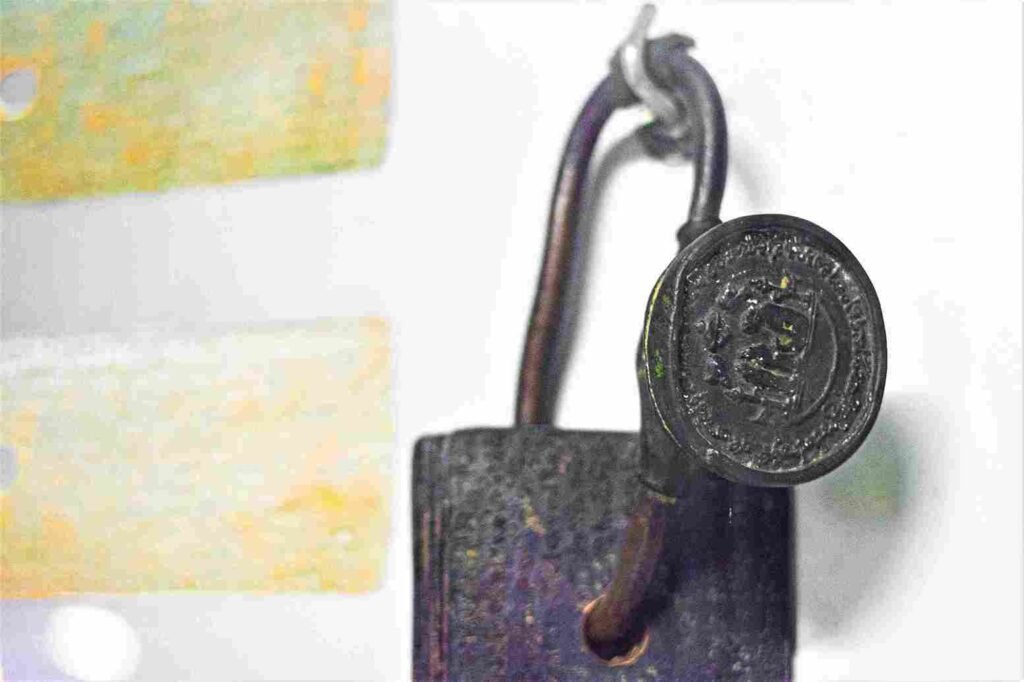
Uttama Chola Seal, Chola dynasty, 10th century CE