Earliest representations of Buddha in a human form
Why is there a Greek hero’s statue amidst Buddhist relics?
Walk along the same corridor from the Kalinga bay and stop at the Graeco-Buddhist Sculptures bay. Play this story there.
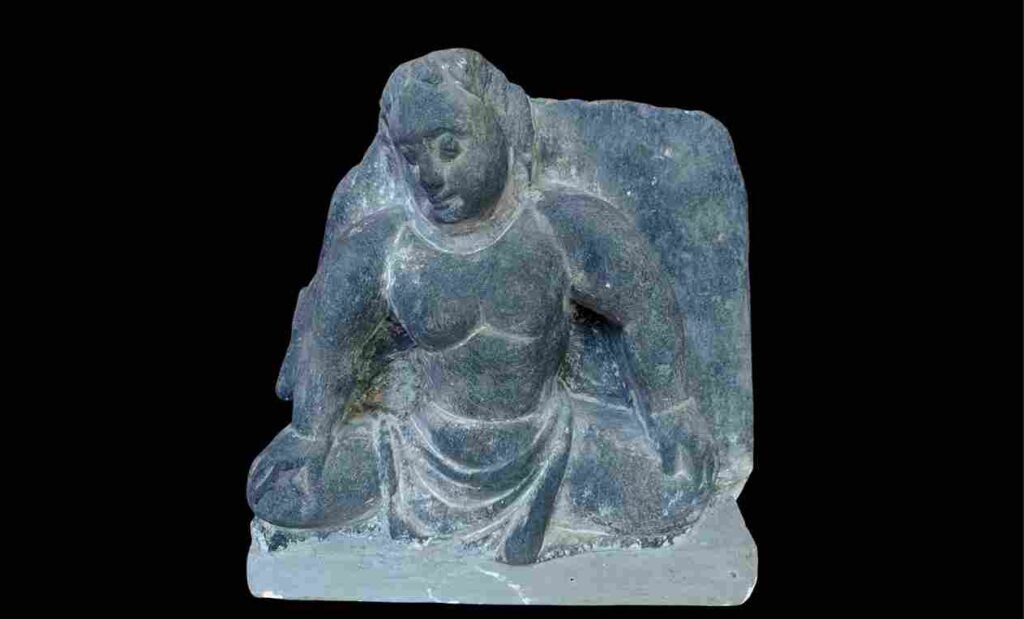
On the third bay in this corridor you will find Graeco-Buddhist sculptures. Can you spot a small one of Hercules in the showcase? Does it make you wonder why a Greek hero’s statue stands amidst Buddhist relics?
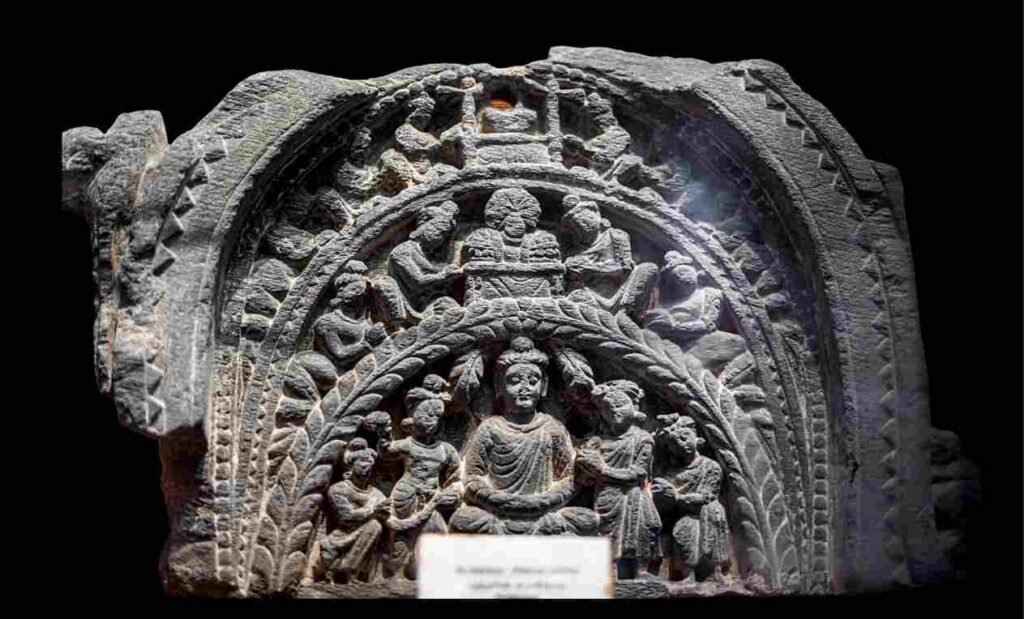
Let’s go back in time again, to about a 100 years before Ashoka. In 326 BCE, India faced a powerful foreign invasion – the army of the Greek king, Alexander the Great. Alexander spent a short time in the Indian subcontinent, but he left behind many of his senior nobles. Their descendants founded the Indo-Greek dynasties which lasted for over two centuries. The most prominent of them were the Kushans. They ruled over a region called Gandhara, present-day Kandahar in Afghanistan. It was here that the Gandhara school of Art developed around the 2nd century BCE. This school of art depicted Buddhist themes in a style that was heavily influenced by Greek sensibilities.
It was also the Gandhara artists who made the earliest statues of Buddha. You can see two beautiful statues of Buddha which were made during this period in this bay.
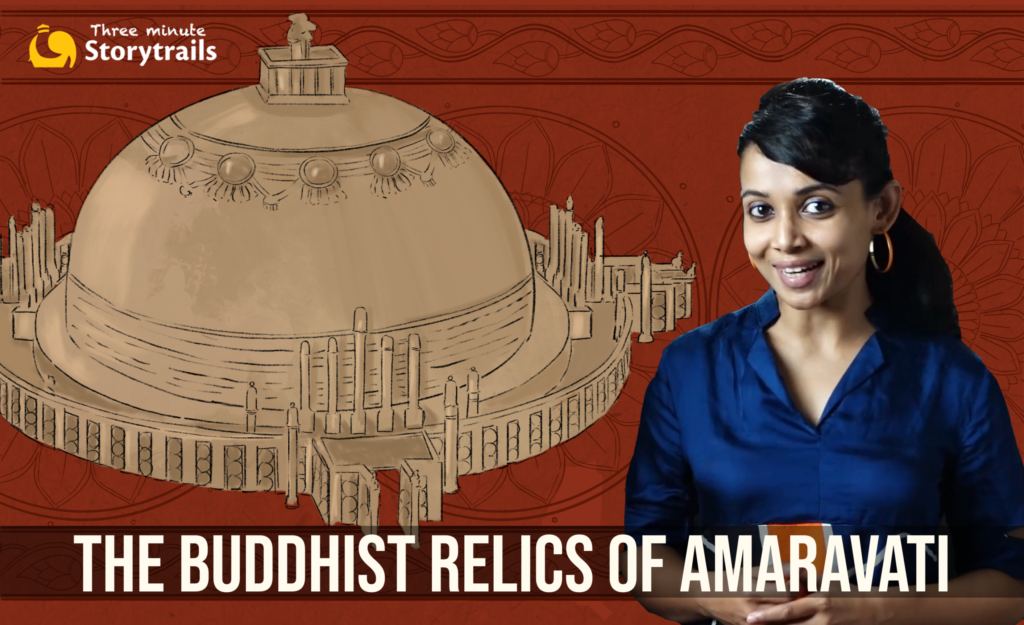
Until that time, it was considered improper to depict the Buddha in his human form and so there is no known image of Buddha sculpted before this period. Earlier artwork had been largely symbolic, with motifs like the wheel of life and footprints of Buddha. This is the style of art you will largely see in the adjoining gallery - the Amaravati gallery. We’ll get there shortly. The Amaravati school of art is the oldest style of Buddhist art in the world, dating back to the 2nd century BCE.
But between the 3rd and 6th centuries, Gandhara art, where Buddha was depicted in his human form, reached its peak. During this time the Gupta dynasty ruled much of North India. Theirs is considered the Golden age of Indian civilisation and it witnessed tremendous advancements in the arts and sciences. Some of the most famous intellectuals of ancient India like Kalidasa and Aryabhatta lived and worked under the Guptas. You can see some examples of Buddhist sculptures from this period in the second bay in this corridor - the Gupta period sculptures bay.
While the Gandharan style developed in North-west India and the Amaravati style flourished in South-central India, another unique style that developed in North India during the same period is the Mathura school of sculpting. You can identify this style by the red sandstone that they largely used. You will see examples of sculptures from this period in the last bay of this corridor.