Story of the Egmore Museum
How did the British come to build the many structures in the museum complex?
Our trail begins at the Egmore Museum ticket counter. You can listen to the first story as you walk towards the museum buildings.
This free audio tour is brought to you thanks to the generous support of Pando. Visit pando.ai to learn more about them.
Welcome to the Egmore Museum. It was established in 1850, almost a century after the world’s first museum, the British museum of London, opened. It is the second oldest museum in India.
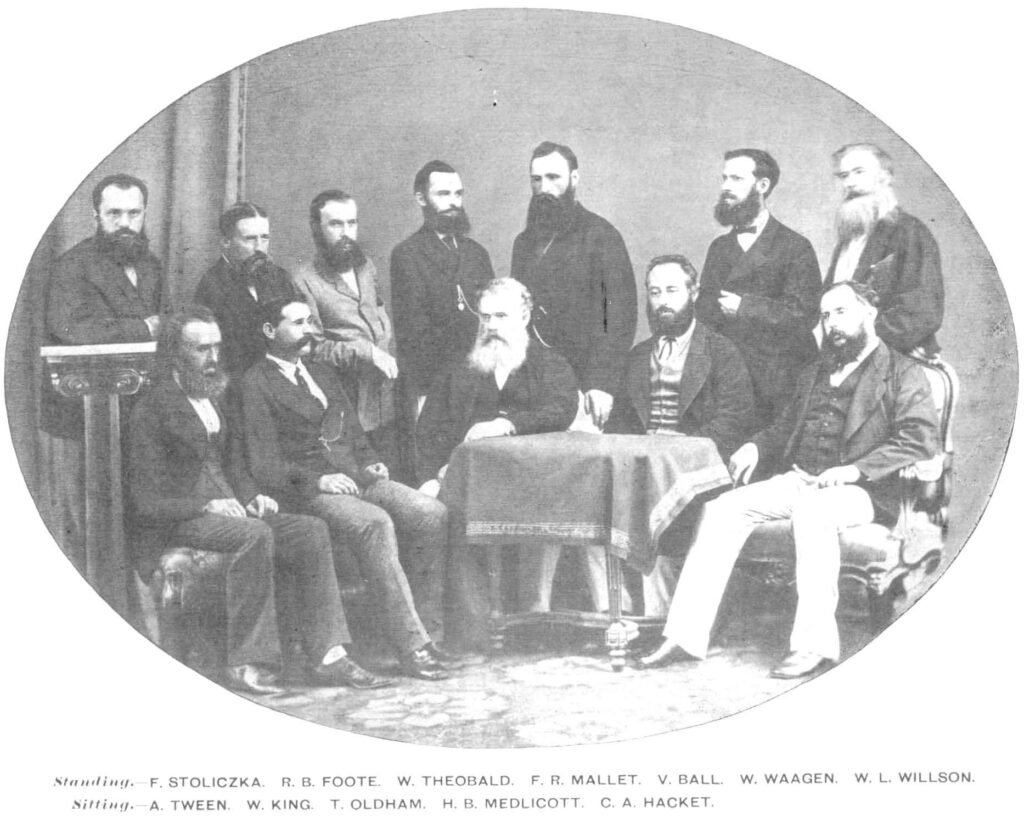
How did this Museum come to be? By the mid-1800s the British had already colonised large parts of India. The British officials who came to India were not maverick adventurers anymore, but mostly educated professionals. Many of them had a genuine desire to learn about Indian heritage and culture. In 1817, a group of such intellectuals formed the Madras Literary Society, not far from here. Initially, it was an elite whites-only club, which published scholarly papers on many themes including Indology.
In the 1850s, a respected army surgeon named Dr. Edward Green Balfour took over as the president of the Madras Literary Society. He believed that access to knowledge should be free. So in 1851, he persuaded the government to approve his proposal for a public museum. Many individuals and organisations came forward to donate exhibits. Soon, the museum began to overflow with visitors. In 1854, it was moved to this campus, and the next year, this museum had over 300,000 visitors - higher than the visitors to the great British Museum in London!
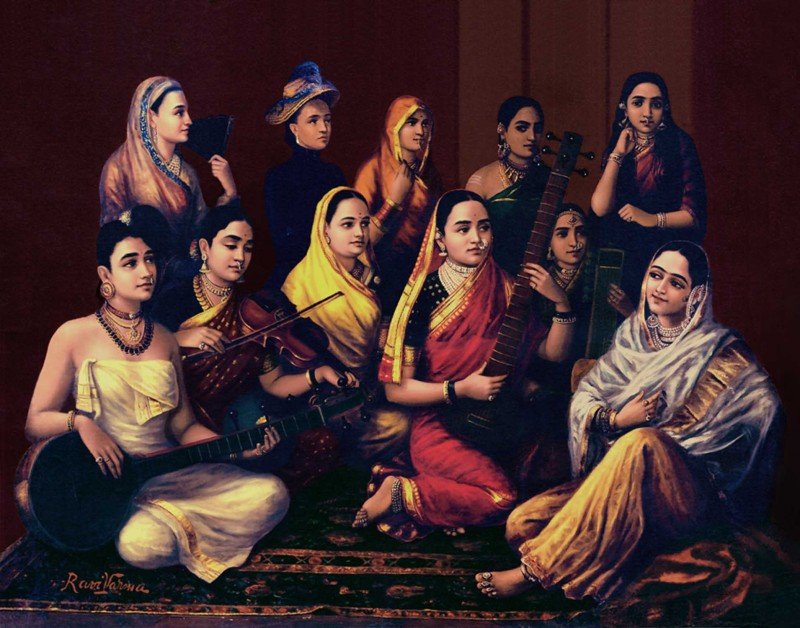
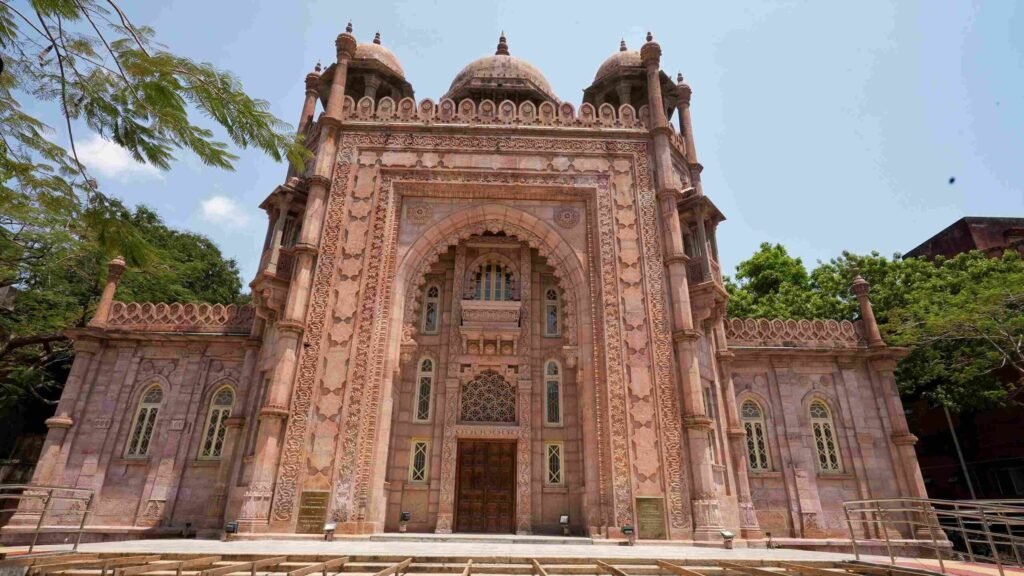
Back then, this campus was called the Pantheon and the estate had large open spaces. Over the next few decades, these spaces were filled with beautiful buildings by a brilliant engineer named Henry Iwrin. He was the chief government architect of Madras Presidency in the late 1800s and he was a pioneer in a style of architecture known as Indo-Saracenic architecture - a fusion of Hindu, Muslim, and European styles. One of the finest specimens of Indo-Saracenic tradition is the National Art Gallery built in 1906. You can see it right next to the museum ticket counter. Its onion shaped domes, minarets and pointed arches are all typical of Indo-Saracenic style. It is believed that Irwin drew inspiration for this building from the Mughal monuments at Fatehpur Sikri. Originally named the Victoria Technical Institute, it was established to promote Indian artisans and crafts. In 1851 it became the National Art Gallery. Today you can see a priceless collection of paintings here including the works of the Indian master Ravi Varma.
We’ll talk about other interesting buildings you can see here, as we walk through this campus.

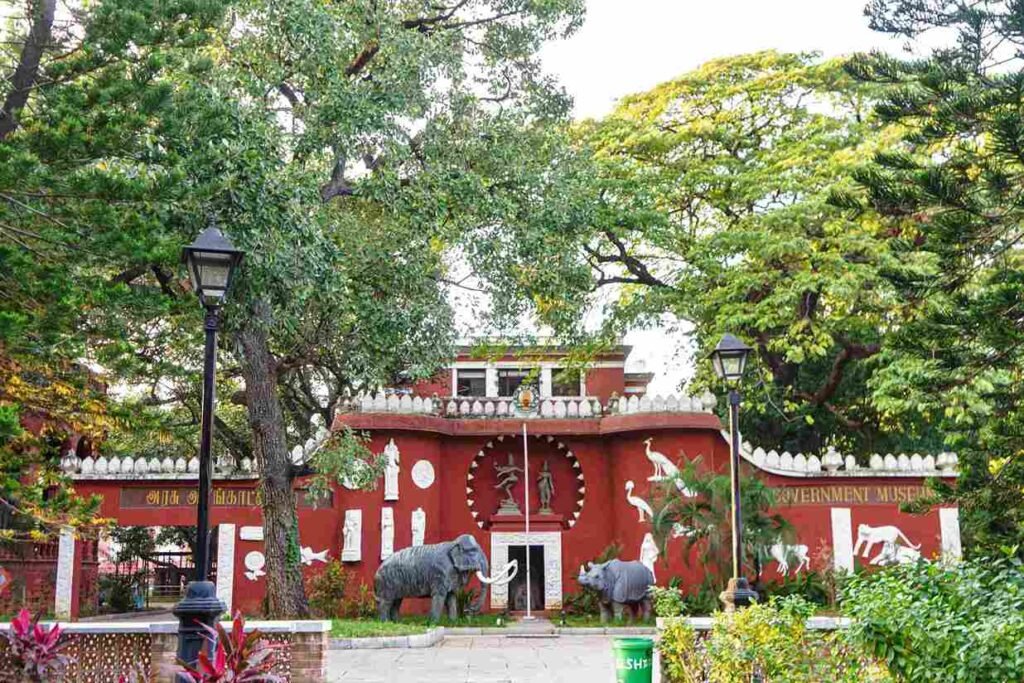
Egmore Museum
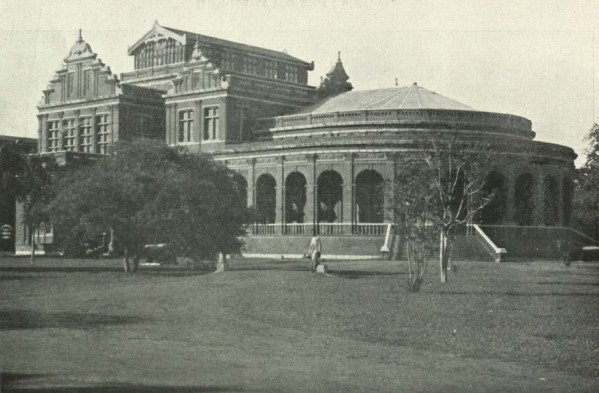
Egmore Museum, 1905
Wikipedia. Photo by India Illustrated