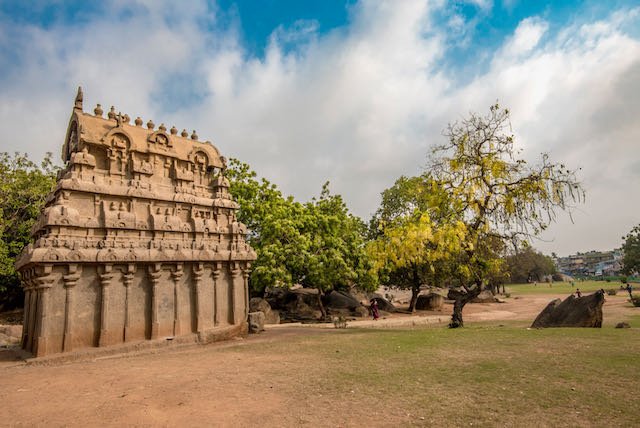
Ganesha Ratha
The Ganesha Ratha is a monolith, meaning that it is a monument made from a single rock. How did the masons of the past achieve this?
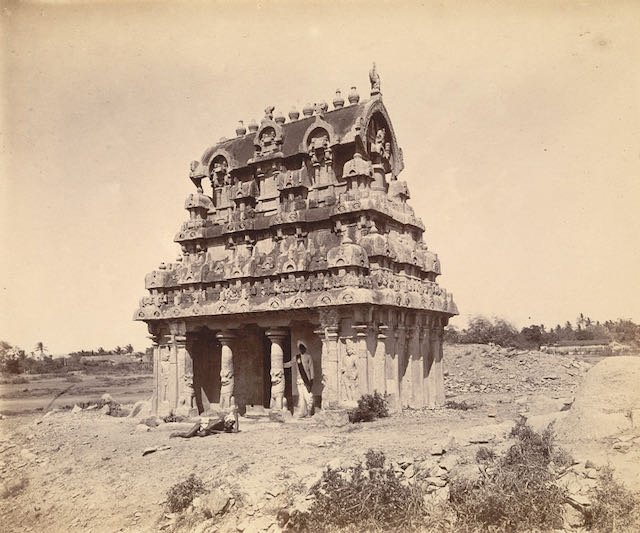
Take the path behind Trimurti Cave that leads you back towards the Butterball. Continue further on that path for another 50m. To your left is a monument called the Ganesha Ratha. Play the next story there.
This monument is called the Ganesha Ratha. It is a short walk from here to the Arjuna’s penance bas-relief, but it reflects a completely different treatment of rocks. In this case, sculptors selected a large granite boulder, and carved it into a temple from top down. And then they gouged the insides of the temple to create a perfect chamber for the shrine. Just like the Pancha Pandava rathas, the Ganesha Ratha is also a rock-cut temple made from a large piece of free-standing rock or monolith. This beautiful temple is over 28 ft tall, 20 ft long and 12 ft wide; so the original granite boulder must have been massive.
Like the Pancha Pandava Rathas, the name Ganesha Ratha is also a misnomer. Ratha means a chariot but this is clearly not a chariot. It is said that the original ratha was made of wood and this stone structure is only a model of the original wooden chariot. Nor was this temple originally dedicated to Ganesha. Archaeologists believe that the original sanctum only had the Somaskanda wall panel that was worshipped. As we saw earlier the Somaskanda panel is a divine family portrait of Siva, Parvati and their son Muruga. Later a lingam was installed as a representation of Shiva. However,that Lingam disappeared over time. In the 1880s, the villagers installed a new Ganesha idol inside and started worshipping it instead. And this has been the GANESHA Ratha ever since.
Can you spot nest like openings on the structure, with human faces peering out? The opening is called a ‘koodu’ and you can see it in Buddhist Stupas too. At the time this monument was built, Buddhism was still a popular religion in these parts; and the Hindu and Buddhist styles influenced each other. Architecturally, the Ganesha Ratha resembles the Bhima Ratha of the Pancha Pandava rathas. But unlike the Bhima Ratha, the finials of this temple are intact, which means it was in active worship. Among all the rathas in Mamallapuram, this one is the most complete; so archaeologists think that this might be one of the older rathas in Mamallapuram.

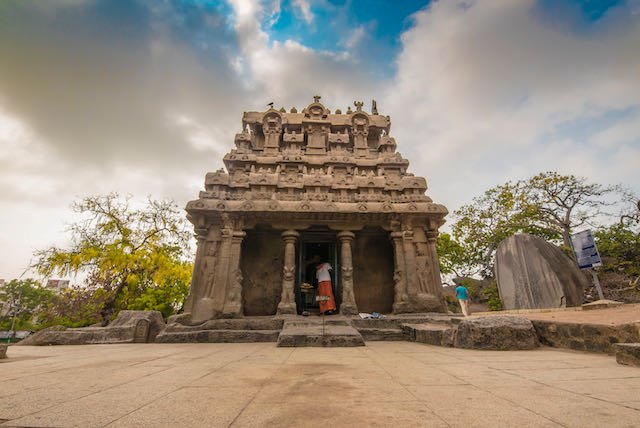
Front view of Ganesha Ratha. The shrine now houses Ganesha, not Shiva
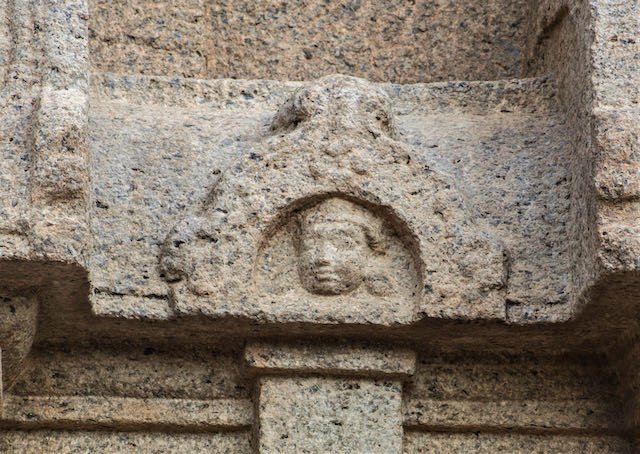
Buddhist influence on Ganesha Ratha. Note the human face peering from a decorative arch. The opening is called 'koodu'.