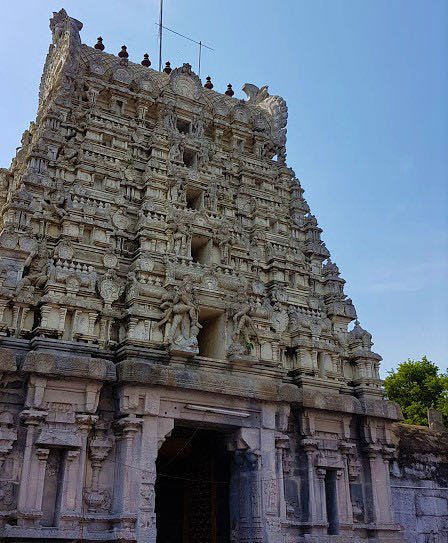
Pundarika
Have you heard the story of the devotee who drained an entire ocean to please Lord Vishnu? The depiction of the deity of this temple commemorates the divine legend.
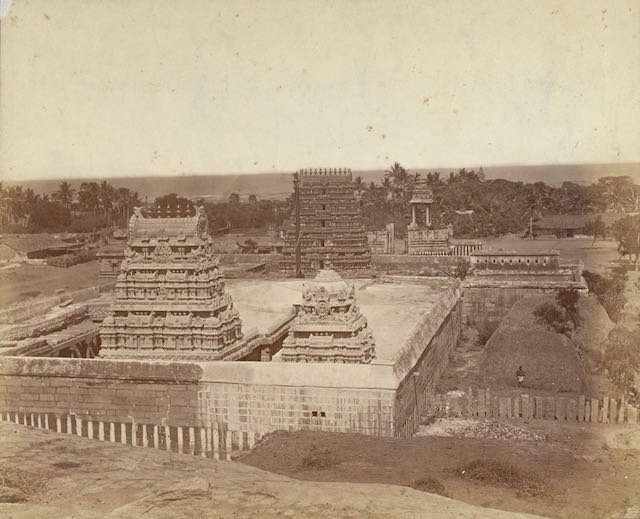
Every ancient Hindu temple has a sthala purana, or a legend associated with the temple. This temple is associated with the story of Pundarika.
A long time ago there lived a saintly man named Pundarika in this very town. He was an ardent devotee of Vishnu, and found happiness in constantly chanting his name.
Early one morning, he discovered a lake with incredibly beautiful lotus flowers. Pundarika decided to pluck the flowers and personally hand deliver them to Vishnu at his residence. But there was a logistical challenge.
As per the scriptures, Lord Vishnu resided in a sea of milk somewhere in the heavens. Vishnu’s home could be reached only by crossing the limitless ocean. Pundarika decided that it would be quicker to simply drain the Ocean, bucket-by-bucket.
But this job had to be done fast before the lotuses withered. Pundarika toiled hard but by mid-day, he realised that he could do with some help. Just then, a frail old man appeared out of nowhere and offered to help. Any assistance was welcome and Pundarika happily accepted. However, the old man was hungry and wanted something to eat first.
Pundarika entrusted him with the custody of the lotuses and went home to get lunch. When he returned, he found the old man was happily lying down, wearing a garland made of the lotuses that Pundarika had so lovingly set aside for Vishnu! But as he came closer, he realised that the reclining man was none other than Lord Vishnu in all his golden splendour, wearing a garland of Pundarika’s flowers. He had specially come down to receive Pundarika’s gift of love.
This temple commemorates that divine legend. The deity of this temple is called ‘Sthalasayana Perumal’ or ‘the Lord who is reclining on the spot’ – exactly as Pundarika found him!
This story is one of the finest in the Bhakti tradition, and it tells you that if you truly seek God, he will personally come to you.
There is a reference to this legend in the works of two Alwars: Boothath Alwar and Thirumangai Alwar, both of whom lived around the 7th or 8th century CE. That tells us that this temple was in existence during the height of Pallava rule, if not earlier. We also know from 11th and 12th century stone inscriptions that Chola kings contributed to this temple.

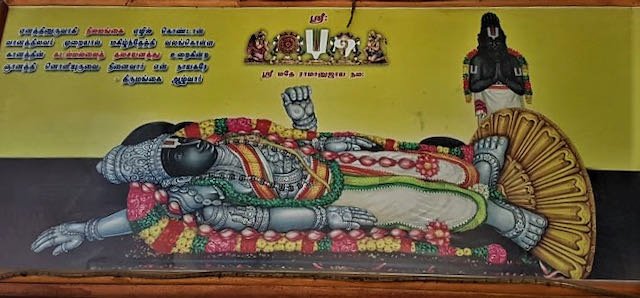
Portrayal of Vishnu in calm repose, Pundarika is standing by
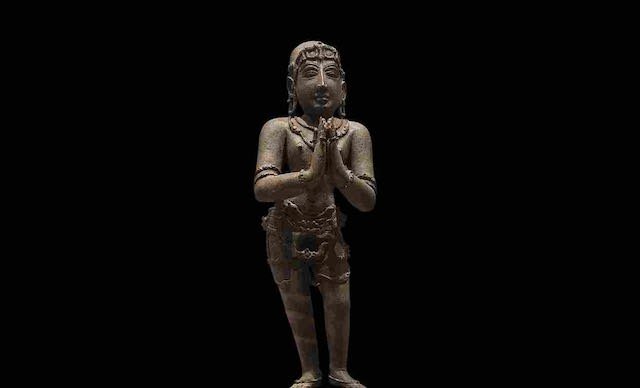
Bronze sculpture of Tirumangai Azhwar, South Arcot dist., TN, 14th century CE, Egmore Museum, Chennai