
Manickavasagar
The story of Manickavasagar - one of the four greatest Shaivite poet-saints.
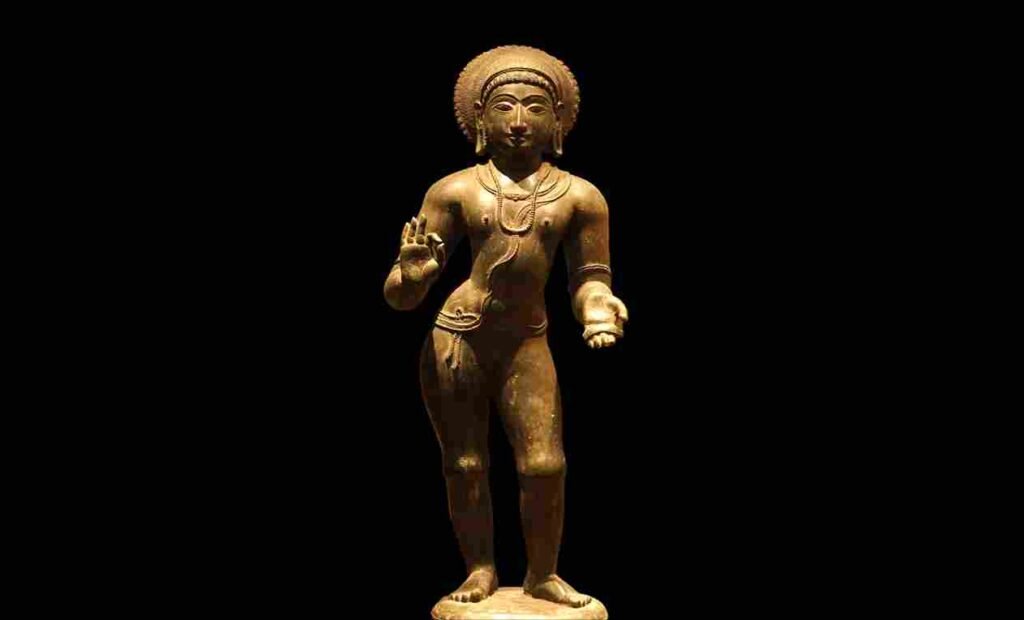
Almost all big Shiva temples in Tamil Nadu house idols of 4 great Shaivite saints. Three of them – Appar, Sundarar and Sambandar – were among the 63 Nayanmars we spoke of in an earlier story. The 4th one, Manickavasagar is not one of the Nayanmars but is considered an equally important poet-saint. These 4 poets, who were a class apart from the other saints, are known as ‘Naalvar’ literally, ‘THE four’. Their stories and songs are recited in religious discourses even today.
All four are historical figures. But their stories also have a charming infusion of miracles and divine interventions. Manickavasagar’s story is a classic example.
Manickavasagar was a trusted minister of the Pandya King, Arimarthana who ruled in the 9th century CE. The king needed horses for his army and so he sent Manickavasagar off with a huge sum of money to buy them. One night, in a small village named Tiruperunturai, he happened to meet a Saivite monk. The meeting affected Manickavasagar so deeply that he became a spiritual person overnight. It struck him that the king’s money was better spent on building a temple to spread love, rather than buying horses for war. And so he began building a temple.
Months passed. When King Arimarthana learnt that Manickavasagar had not yet purchased any horses, he was furious. But soon a man came to the palace leading a string of magnificent horses. He said he was delivering Manickavasagar’s order. The story goes that this man was none other than Lord Siva himself. To save Manickavasagar, he had temporarily transformed all the jackals of the nearby jungle into horses and brought them over to the king. The king was delighted, and Manickavasagar was saved, for the moment. Unfortunately, at midnight, the horses turned back into jackals and ran away into the jungle!
The king was outraged and immediately ordered the execution of Manickavasagar. That night Lord Siva appeared in King Arimarthana’s dream and explained the entire sequence of events. The king realised that his minister was a holy man and released him. Manickavasagar became a monk and spent the rest of his days travelling the kingdom and composing hymns.
Most of the events in this story, barring the divine interventions of course, have been corroborated by historians. Arimarthana is believed to be another name of the Pandya King Varaguna Varman II, who ruled Madurai in the 9th century CE. The Perundurai temple that Manickavasagar built exists even today as the famous Avudaiyar Koil. Manickavasagar wrote his greatest work, Tiruvasagam, while overseeing the construction of the temple. In 2014, archaeologists discovered stone inscriptions in the temple confirming that Manickavasagar had indeed built its sanctum sanctorum. The original temple was renovated and expanded many times by later kings.
It is usually easy to recognize the statue of Manickavasagar. The sacred thread across his body denotes that he is from a priestly class. The palm leaf manuscripts in his left hand show that he was a prolific writer. His right index finger and thumb are joined in a pose called Upadesha Mudra, indicating that he was a teacher. In some sculptures Manickavasagar is portrayed with a thick shock of hair, and in some other sculptures with a clean-shaven head. They probably depict the two stations in his life - first as a royal minister and later as an enlightened monk.
