Bhakti Movement and Nayanmars
The story of the Bhakti movement - a Hindu renaissance movement that started around the 6th century CE.
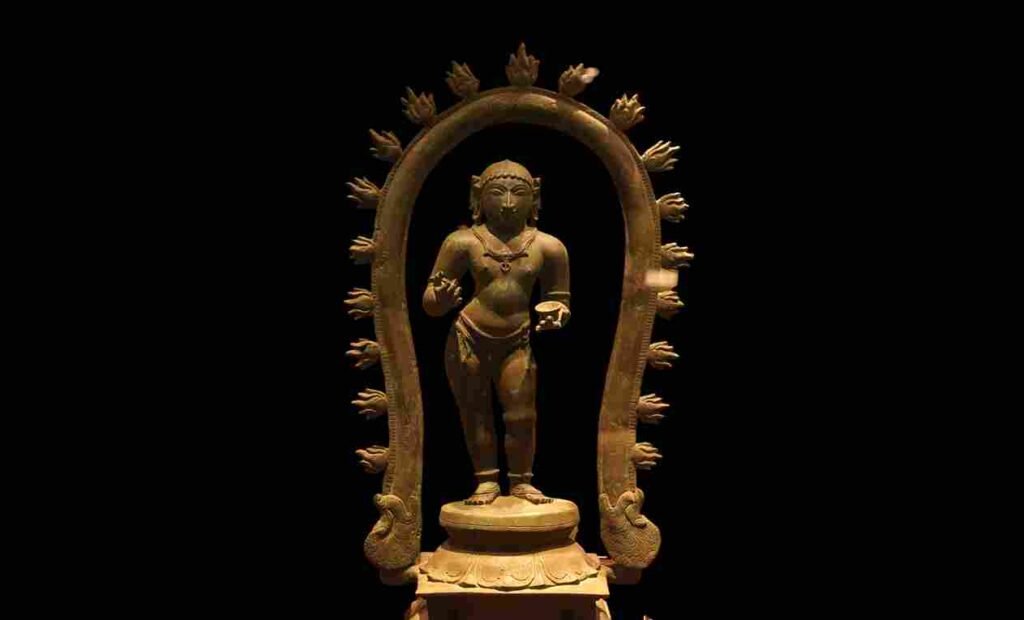
Next to the showcases with the sculptures of Hindu goddesses you can see statues of prominent Nayanmars. Play this story there.
Hinduism is one of the oldest religions in the world. But about 2000 years ago, it faced tough competition from two younger religions that emerged from the subcontinent - Jainism and Buddhism. For the next few centuries, all three religions co-existed in many parts of India, and it wasn’t uncommon for kings of the time to switch allegiance from one religion to the other.
Around the 6th century CE, a Hindu resurgence movement, called the Bhakti Movement began in South India. Bhakti means ‘devotion’ and this movement emphasized unconditional devotion to god over arcane rituals. It attempted to simplify Hinduism for the masses and downplayed caste and social distinction.
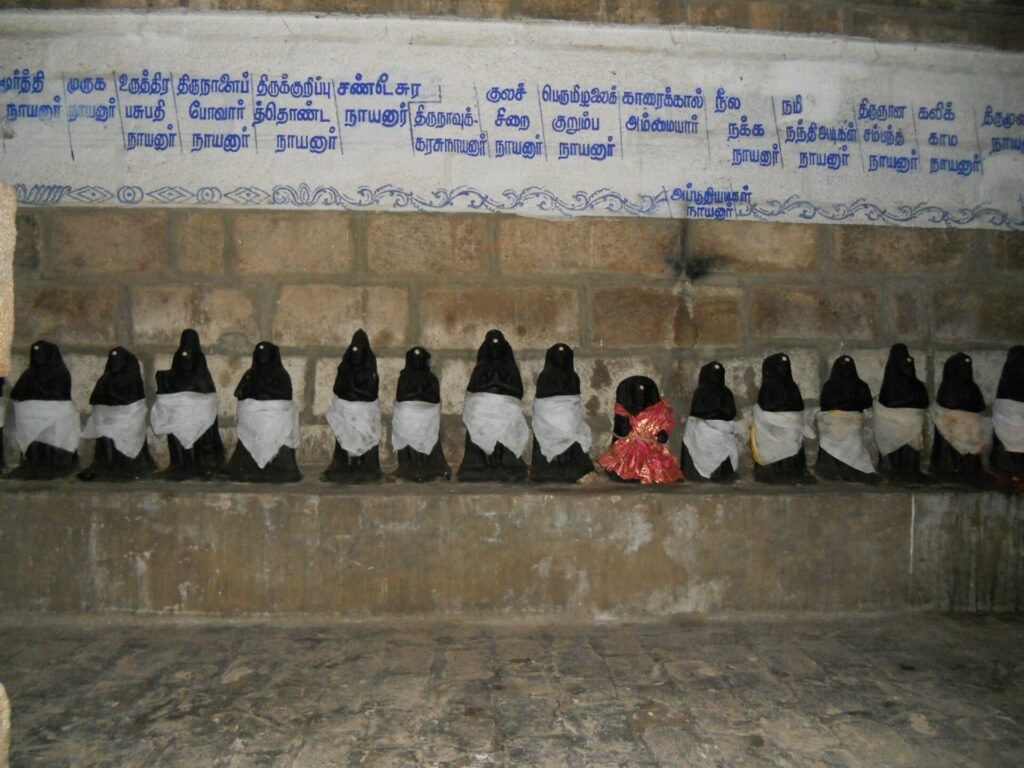
At its peak during the 6th- 8th century CE, the movement was championed by two groups of saints from Tamil Nadu. One group called the Alwars consisted of 12 saints who wrote beautiful hymns praising Lord Vishnu. Another group called Nayanmars was a group of 63 saints, who worshipped Lord Siva. Some of the Nayanmars wrote moving poetry; while others led such exemplary lives that they were held in high esteem, and praised in literature.
The Bhakti movement then spread from Tamil Nadu to other parts of India too. Eventually Hinduism regained its popularity and overshadowed the other two religions.
But by the 10th century, most of the manuscripts of the Nayanmars were lost. That’s when a king named Raja Raja Chola I happened to hear some of their hymns in his court. He was so charmed by them, that he ordered his minister - Nambiyandar Nambi – to locate and compile the original manuscripts. The manuscripts were found in a locked chamber of the Chidambaram temple. He compiled the hymns of the 3 most prolific Nayanmars into a text called the Tevaram. Later, others added more works to the compendium.
And then, in the 12th century, another minister of the Chola kingdom - Sekkizhar – wrote the history of these 63 saints. That too became part of this literature and these Shaivite texts are collectively known as the Tirumurai.
Sekkizhar compiled this history several centuries after the saints had died. So it is embellished with charming folklore and it has some unresolved questions about the exact date of events. Even so, it reveals much about life in those times.
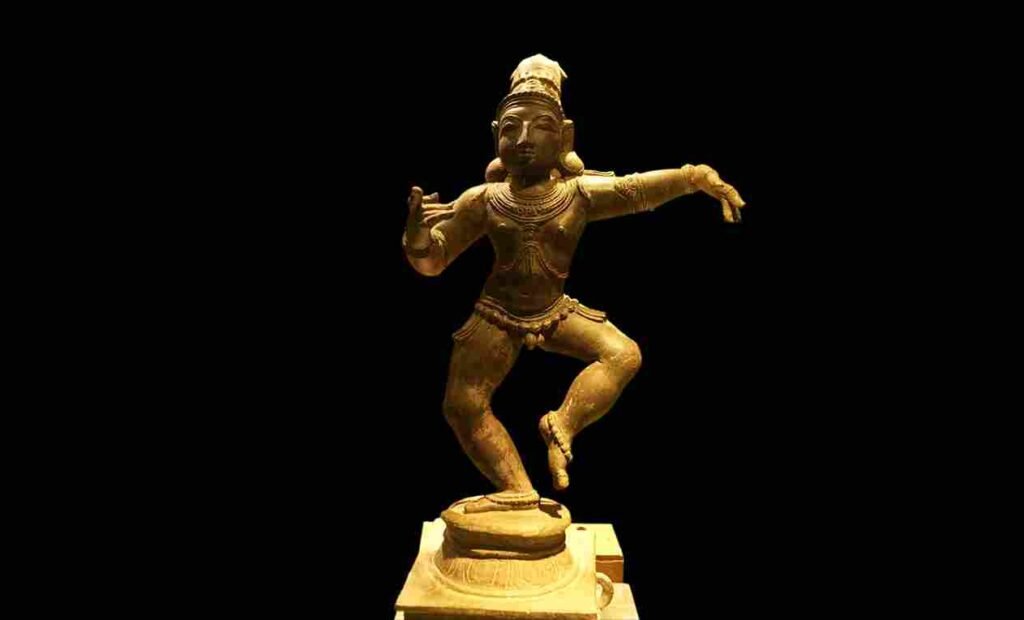
Today, you can see idols of all 63 Nayanmars in most Shiva temples in Tamil Nadu. This gallery showcases sculptures of some of the most prominent Nayanmars. You can view more statues of the Nayanmars on the first floor of this gallery.
This free audio tour is brought to you thanks to the generous support of Pando. Visit pando.ai to learn more about them.

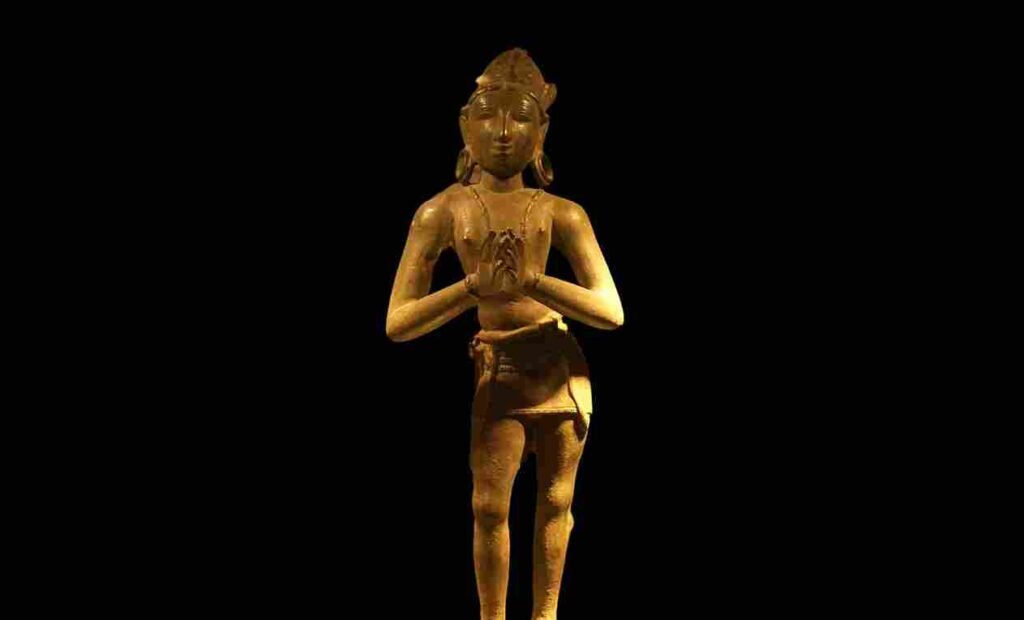
Bronze sculpture of Kannappanayanar, Tiruvallore dist., TN, 15th century CE