Mahishasura Mardhini
The story of Mahishasura Mardhini - the warrior goddess and the goddess of protection.
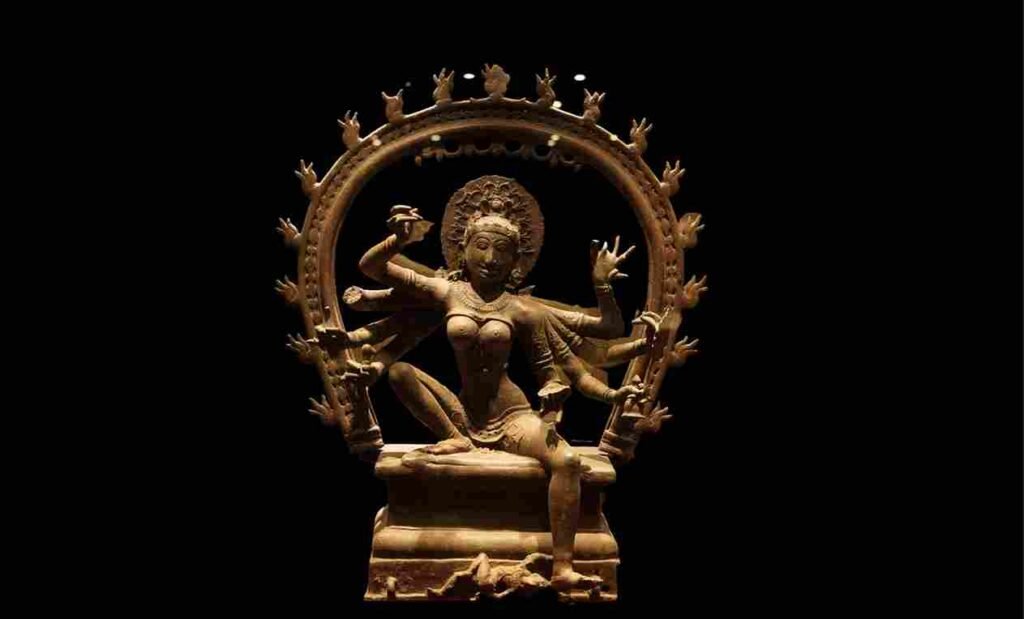
Walk up to the set of showcases next to the Natesa statue, depicting sculptures of Hindu goddesses. Play this story there.
In the stone sculptures gallery, we spoke about Shakti, the all-powerful goddess in Hinduism. And we spoke of Kali, the fiery and terrifying form of this goddess. You can see representations of Kali in this gallery too. But Shakti also takes gentler and more loving forms, and in this gallery, you can see her represented as Parvati, Maheshwari, Devi and Sivakamasundari. One other popular form of the goddess is Durga. She is commonly depicted as a very beautiful woman - one who is gentle to her devotees but merciless to the wicked.
Durga is a warrior goddess, and the goddess of protection. She too goes by many names, and here you see her as Mahishasura Mardini. Mahishasura Mardini literally means ‘Vanquisher of Mahisha.’ Her story is narrated in an ancient Hindu text called the Devi Mahatmyam, meaning ‘the glory of the Goddess’.
The stories of Kali, and Durga as Mahishasura Mardini essentially stem from the same narrative. Once upon a time, there lived a powerful demon king named Mahishasura. Like most demon kings, he too was power hungry. So he sat and prayed to Lord Brahma, the God of creation. Brahma, pleased with his prayers and lengthy penance, appeared before him and asked him to make a wish. And Mahishasura asked that he should not be killed – not by man, nor God, nor beast nor demon. And Brahma, in a weak moment perhaps, granted him his wish.
Mahishasura went back to his own world, smug and arrogant. Very soon he attacked the Earth and then the Heavens and conquered them both. The gods approached Shiva for help and Shiva found a loophole staring them in the face. Mahishasura could not be defeated by Gods, by men, by beasts or by other demons. But the boon made no mention of a woman! So the gods put their energies together and created an amazingly powerful woman. And thus was born Durga. The gods gave her all their weapons and sent her down to destroy this evil demon.
And that’s how they say, Durga came to earth, riding a lion, all primed for battle. Mahishasura was a buffalo-headed demon who could shape-shift at will. Durga fought him fiercely and continuously for nine days and nine nights. Finally, on the tenth day, Durga pinned Mahishasura under her foot and cut off his head.
This victory of good over evil is still celebrated all over India. In most parts of South India, the festival is called Navaratri – literally meaning nine nights. It is believed that this is when the Gods come down to earth and take up ringside seats to witness the mother of all battles – the battle between Durga and Mahishasura. So, many households in South India celebrate the festival by setting up a display of earthen dolls of the gods. It is called the golu. These dolls and figurines usually recount a thematic story or many stories ranging from mythological ones to everyday realities. It is an occasion for friends and extended family members to get together, to admire the elaborate golu arrangements in each household.

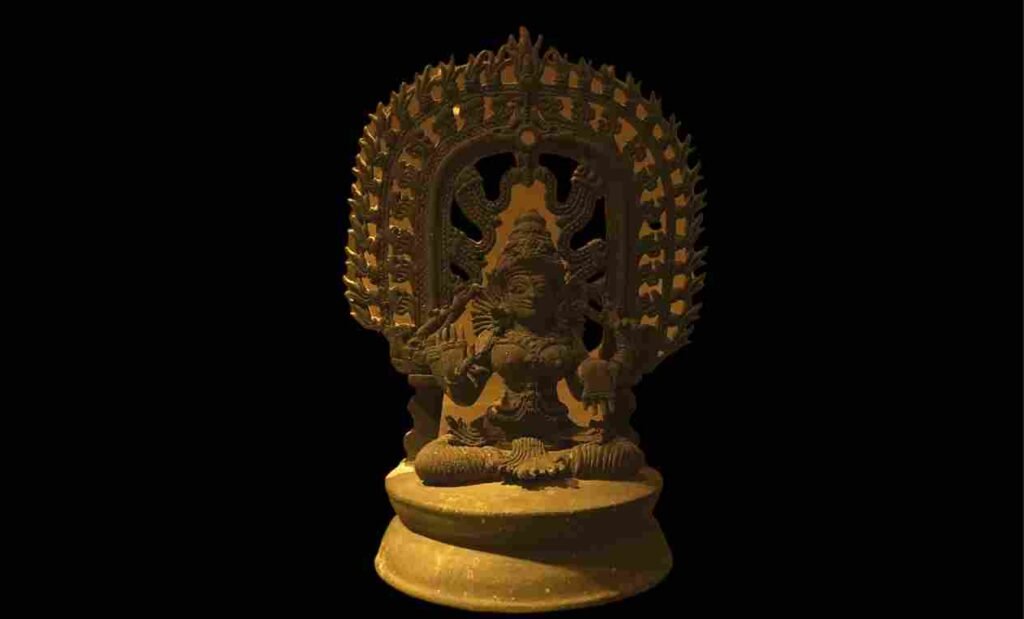
Bronze sculpture of the goddess Parvati, undivided Thanjavur dist., TN, 15th century CE
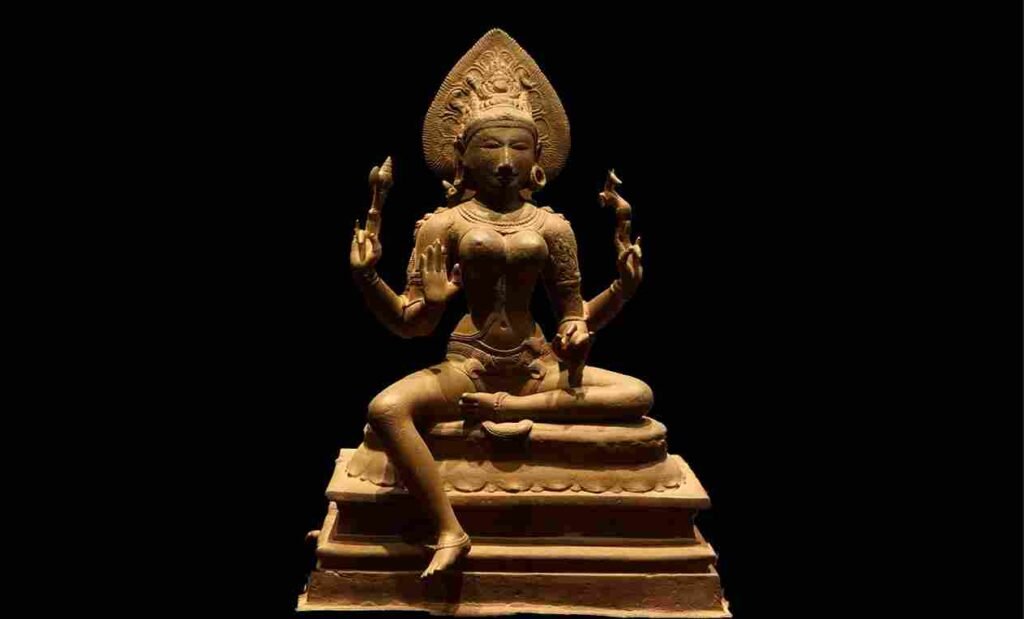
Bronze sculpture of the goddess Maheshwari, Nagapattinam dist., TN, 11th century CE
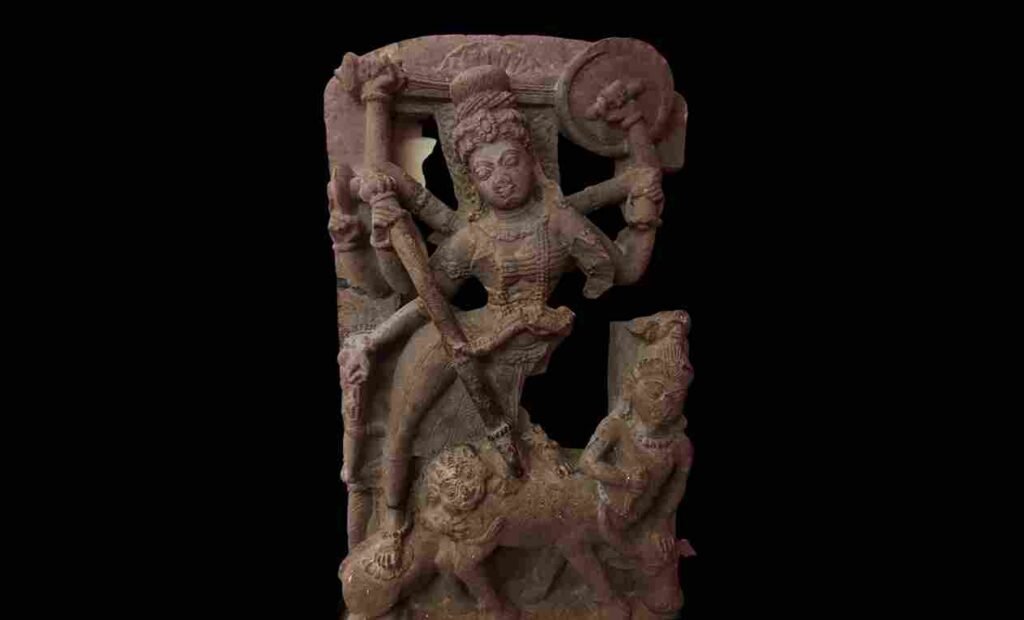
Sculpture of Mahishasura Mardhini killing the buffalo demon, Hindu temple ruins, Sirpur, Chhattisgarh, 8th– 9th century CE
Wikipedia. Photo by Ms Sarah Welch