
The Lambani tribe
The story of the Lambani tribe.
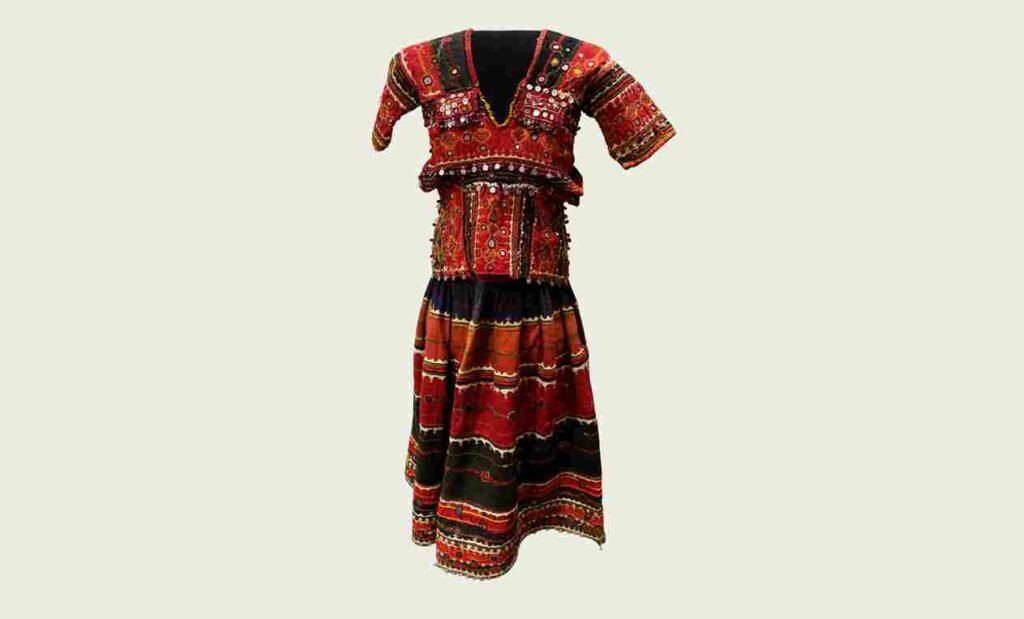
In the Ethnology Gallery, spot the free standing panel marked 'Lambadi'. Play this story there.
A large part of Northern Karnataka is semi-arid and the houses there are usually made of stone. But occasionally, you will see a splash of vivid colour in the landscape - in the costumes of Lambani women dressed in heavily embroidered outfits, such as the ones displayed here. This is their story.
In the mid 1800s the British in India were grappling with the problem of bandits who looted villages and robbed travellers. They concluded that many of these bandit-groups belonged to nomadic communities. So, in 1871, they passed the Criminal Tribes Act. It identified a long list of castes and tribes that were on the fringes of society and labelled them as Criminal Tribes. Every member of these communities was considered a born criminal. Their movements were monitored and they could be arrested if found outside their prescribed area. One of these marginalised groups was a nomadic community called the Lambanis.
Lambanis are also called Banjaras. They are believed to have originally come from Marwar in Rajasthan, in north-western India. The word Banjara comes from the Sanskrit ‘vana chara’, meaning wanderers of the jungle.
They first came down south in the 1630s, when the Mughal army invaded the Deccan region. The Lambanis accompanied them as food suppliers and coolies. In those days, few Indian kings could wage a war without the help of the Lambanis. They carried everything for the soldiers, food, water, tents and every other essential item you can think of. They owned vast herds of pack animals and were well respected. They also travelled between the coastal regions to the interior parts of India, transporting salt and other commodities. The Sanskrit word for salt is Lavana, and ‘Lambani’ comes from that.
Today you can find Lambanis in Andhra, Telangana and Karnataka. Karnataka alone is home to about a million Lambanis. The Criminal Tribes Act passed by the British did considerable damage to this community. Though it was repealed after independence, it still continues to haunt the Lambanis. In some places, they still face social alienation. Many modern Lambanis have taken advantage of benefits of education and worked their way up.
If you observe the statue of the Lambani woman, you will at once notice the embroidery with its distinctive stitches, mirror work and decorative beads. Traditionally, this embroidery was considered a respite from work, and the embroidered garments were a part of a bridal trousseau. Today, this distinctive style has become fashionable and is used on clothes, bags and even shoes.

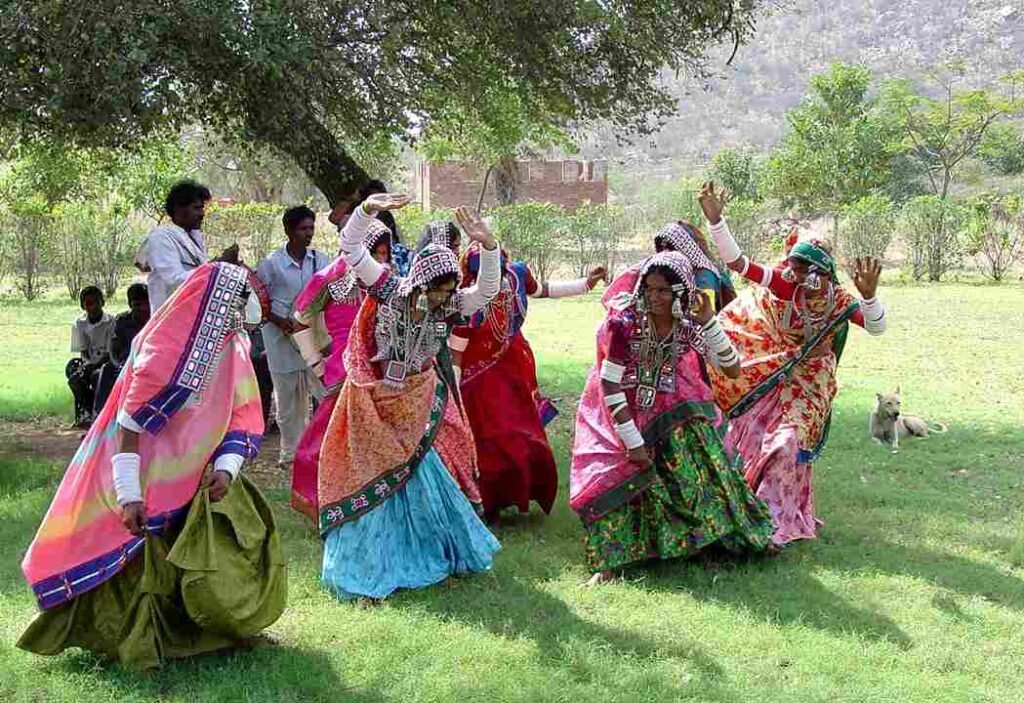
Lambadi Tribal Dance, Anupu Village, near Nagarjunakonda, AP
Wikipedia. Photo by Michael Gunther