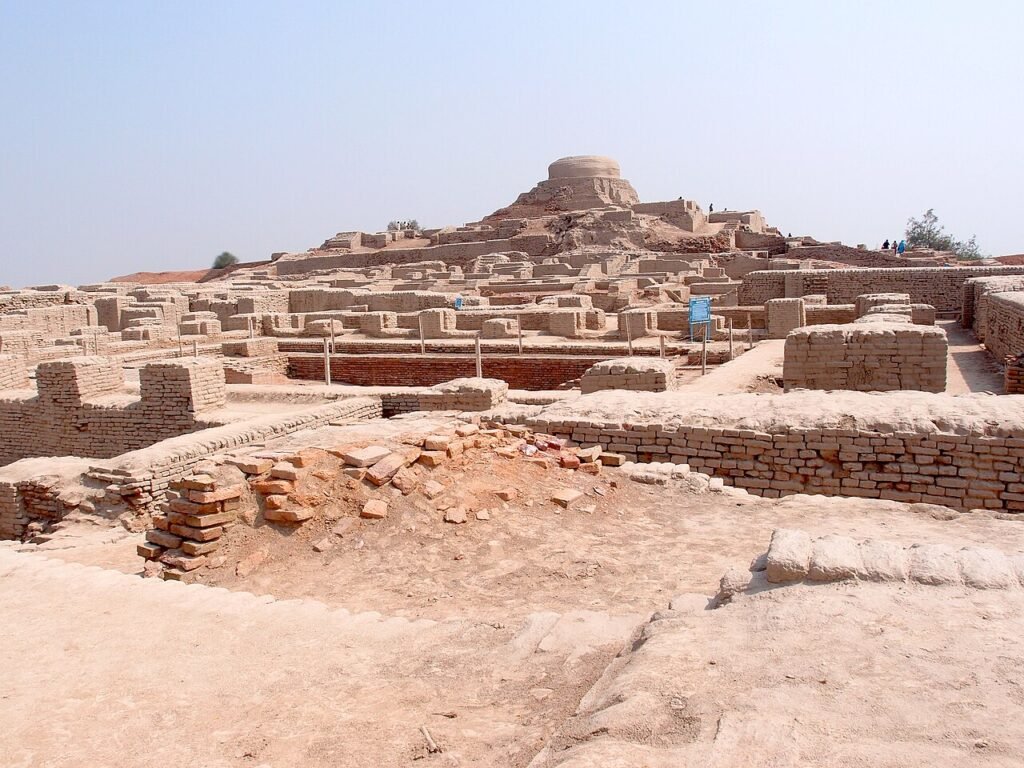
The Discovery of Indus Valley Civilisation
What led to the discovery of the Indus Valley Civilisation?
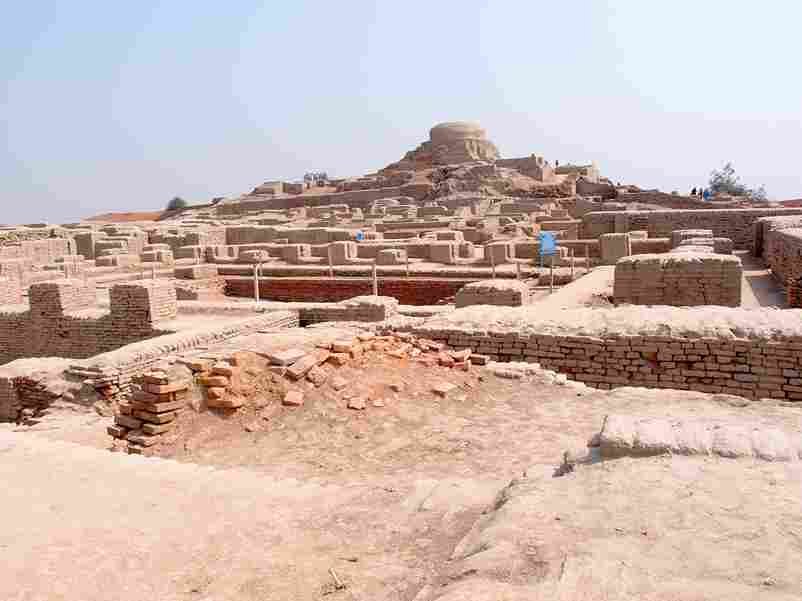
Look for a showcase displaying Bricks from the Indus Valley. Play this story there.
Until the 1920s, western historians did not consider Indian civilisation very ancient. The discovery of the Indus Valley civilisation changed that. But interestingly, this discovery had actually happened a 100 years earlier, quite by chance.
In 1828, Charles Masson, a deserter from the British Indian army, was running away from his unit. On his way, he stopped at Kalat, about 100 Kms from Mohenjo-Daro. There he stumbled upon the ruins of the Indus Valley civilisation. Masson was a linguist, numismatist and a maverick scholar, who immediately understood that he was looking at something significant. When he eventually returned to England, he published a travelogue about Kalat and many other historic sites. No one took him seriously. The academic establishment was not yet ready for the revolutionary idea that Indian civilisation was so ancient. And Masson’s lack of formal academic credentials and his reputation as an army deserter did not help. So Indus Valley remained unknown.
In the mid-1840s, the British Indian army surveyors were inspecting the region around river Indus. They were surprised to find a huge supply of readymade bricks in the area. But they didn’t give it a second thought. A few years later, when the British laid railway tracks between Multan and Lahore, they used these bricks as ballast for the rails. No one realised that these bricks were antiques from many thousand years ago! Amazingly, the bricks were perfectly usable even after 4000 years! But Indus Valley continued to be buried in obscurity.
The first serious recognition of the Indus Valley civilisation came when Alexander Cunningham, the first Director-General of the Archaeological Survey of India published his findings in 1875. But it was only in the 1920s that a systematic effort was made to study the Indus Valley sites. John Marshall, the then Director General of the Archaeological Survey of India and many brilliant Indian archaeologists worked tirelessly on establishing the size and significance of the Indus Valley civilisation. By 1947, when India became independent, 40 Indus Valley sites had been investigated. Today we know of about 1400 Indus Valley sites, of which about 475 are in Pakistan.
This free audio tour is brought to you thanks to the generous support of Pando. Visit pando.ai to learn more about them.

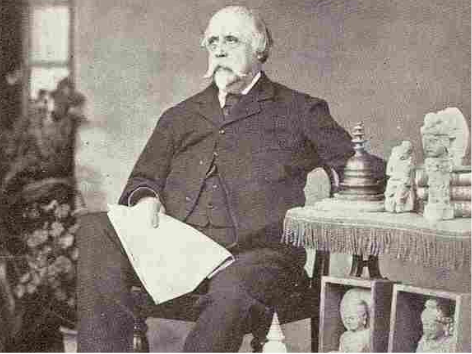
Alexander Cunningham, the first director general of the Archaeological Survey of India (ASI)
Wikipedia