The mysteries of the Indus Valley seals
The mystery of the Indus Valley script - a script that still remains undeciphered.
Enter the Indus Valley Civilisation Gallery and turn left. Look for the showcase marked 'Seals'. Play this story there.
Archaeologists have been studying the Indus Valley Civilisation sites for over a hundred years. Strangely though, we still have more questions than answers. What language did they speak in the Indus Valley? Who were their rulers? How were they appointed?
Most advanced civilisations have left behind some written records, usually in the form of inscriptions, and that helps experts piece together their history. The people of Indus Valley left behind some written records too. But till date, their script remains undeciphered.
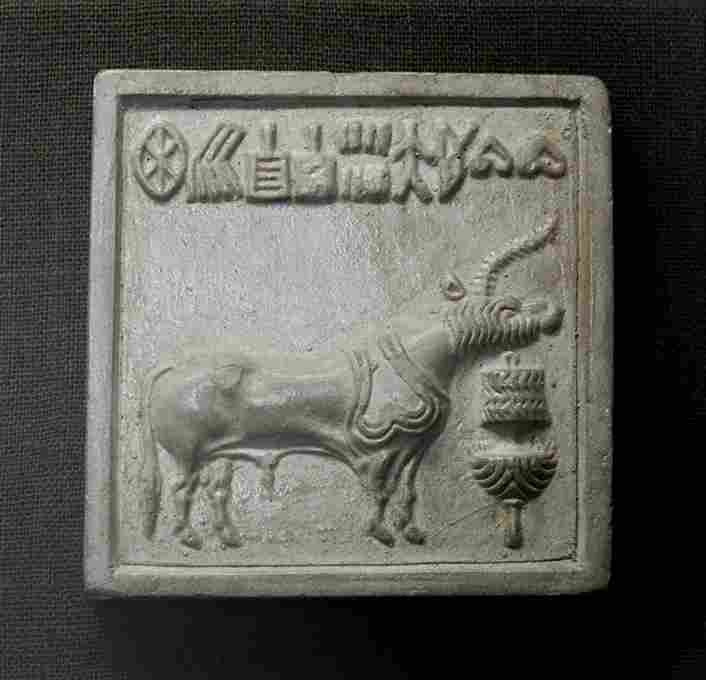
You can see their seals on display here. Most of them are in the form of square tablets. Many contain an image - usually a humped bull, unicorn, rhino or a water-buffalo. Next to the image, there are a few characters which could be letters. These cryptic marks are possibly the oldest script in all of Southeast Asia! Similar writings were also found on copper plates and potsherds. Till date, archaeologists have not succeeded in breaking that script. They simply call it graffiti, literally meaning “scratch marks”! It is believed that this graffiti evolved into the Brahmi script, from which most of the present day Indian scripts evolved.
We don’t even know what languages were spoken by the people of the Indus Valley. But we do know that their script reads right to left, unlike modern Indian languages which read left to right. We know this because in some of the potsherds the writing is cramped on the extreme left – as though the writer had underestimated the space required and improvised at the end.
Over 4000 such seals have been unearthed so far. What was the function of these seals? Researchers have suggested that these were probably symbols of merchants who controlled trade. After all, Indus merchants traded with countries thousands of kilometres away. Mesopotamians, in their texts continuously refer to a place called ‘Meluhha’ with whose people they traded. Some scholars think that the fabled ‘Meluhha’ refers to the Indus civilization.

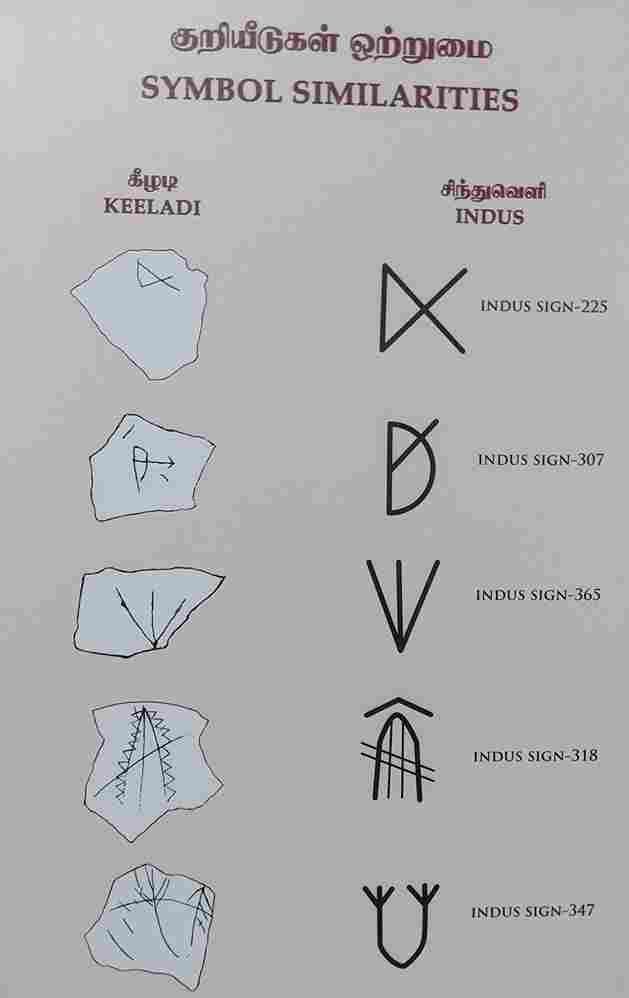
Comparison of scripts from Indus Valley Civilisation and Keeladi, Keeladi Museum, Keeladi, TN
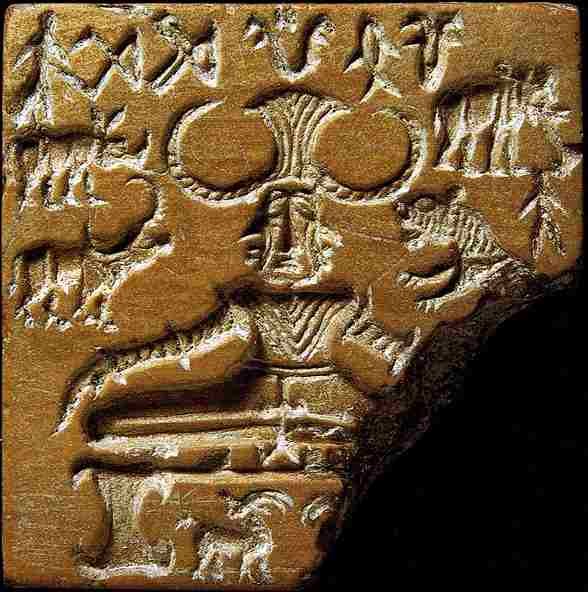
The Pashupati seal, showing a seated and possibly tricephalic figure, surrounded by animals, Indus Valley, circa 2350–2000 BCE
Wikipedia