Sallekhana - The practice of fasting unto death
What is the Jain path to breaking the cycle of life and death?
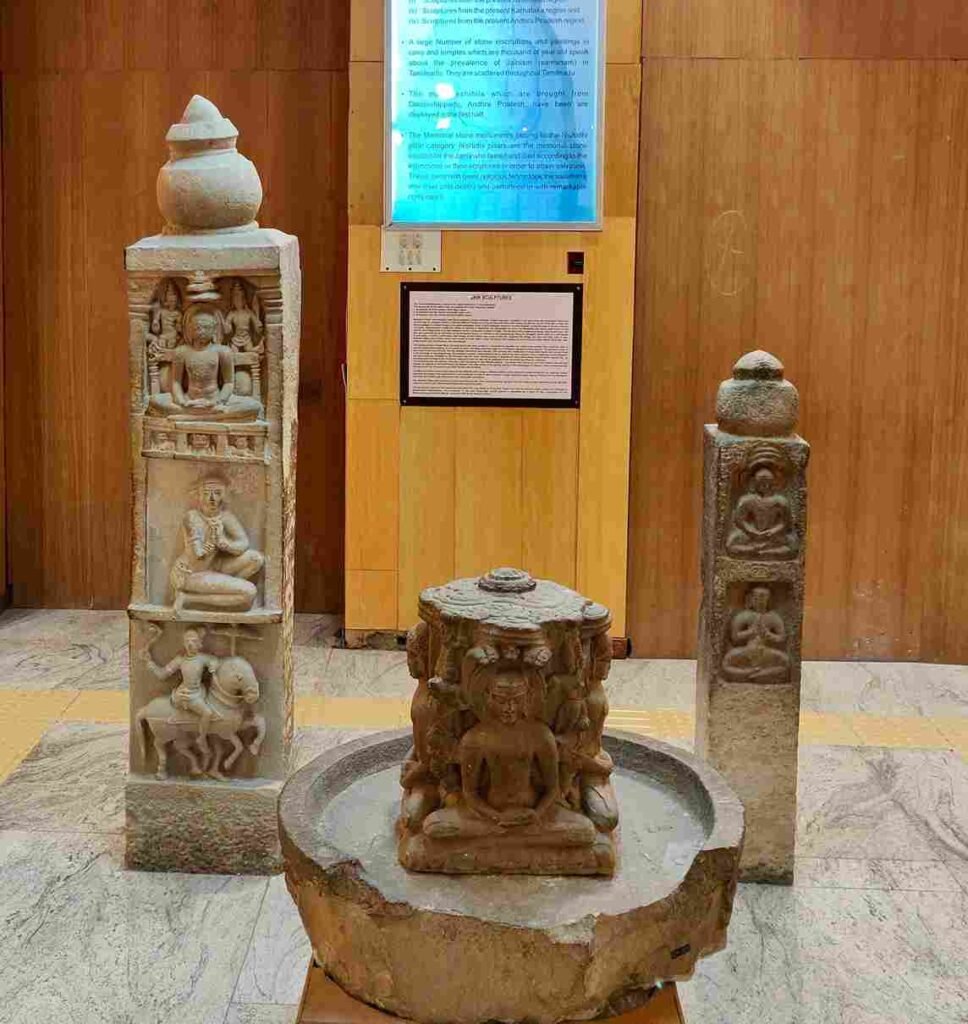
From the sculptures of the Tirthankaras, walk to the other end of the Jain Sculptures Gallery, where you can see stone pillars with intricate carvings all over them. These are the Nishidhi stones, the subject of this story.
The pillars you see in front of you are called Nishidhi pillars. What do they symbolise? To understand that, we have to talk about some of the core principles of Jainism.
The ultimate goal in Jainism is to break free from the cycles of birth and death. Jains believe that this can be achieved by living an austere life. They live by five rules that dictate their lifestyle: Never lie, never steal, don’t own more than you need, live a chaste life and most importantly, never kill another living thing. This last principle is the reason why all Jains are strictly vegetarian.
The Jain lifestyle emphasises self-discipline. So one of the customs practised by all Jains is Fasting. Fasting is a practice where one chooses to go without food for long periods. One may fast at any point in time but most Jains fast during festivals and holy days. Fasting is encouraged at other times as a way to absolve oneself of sins. The most extreme form is the practice of fasting unto death. This custom is called Sallekhana and Jains believe that it is a way to break away from the cycle of birth and death.
This practice of Sallekhana is recorded in ancient Jain texts dating as far back as the 3rd century BCE.
A person who undertakes this vow would slowly and methodically keep reducing the amount of food and water he/she consumed. Once the vow is taken, the practice can go on for many years, until the person is no more.
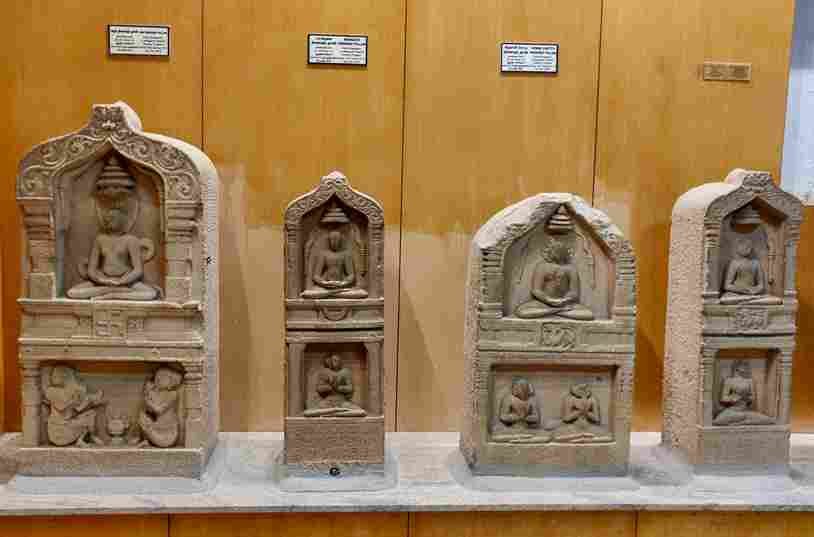
People who end their lives in this way are considered enlightened souls. The practice was so highly regarded that the place where they breathed their last would become a sacred spot and a stone would be erected in memory of that person. Such stones are called Nishidi stones, and they are worshipped.
Archaeologists have found Nishidhi stones dating back to the 7th century CE. The largest number of them have been found in Karnataka, in a place called Shravana Belgola, a Jain pilgrimage center even today. The earliest Nishidhis were just inscriptions on rock surfaces. They recorded the name of the person who took up the vow of sallekhana along with the type of sallekhana ritual adopted. Later Nishidhis were in the form of inscribed slabs or pillars with carved panels.