Tirthankaras
Who were the Tirthankaras? How was Mahavira's story similar to Buddha's? This is the story of Jainism.
Enter the Jain Sculptures Gallery. To your right you will see many sculptures of Mahavira and the other Tirthankaras. You can play this story there.
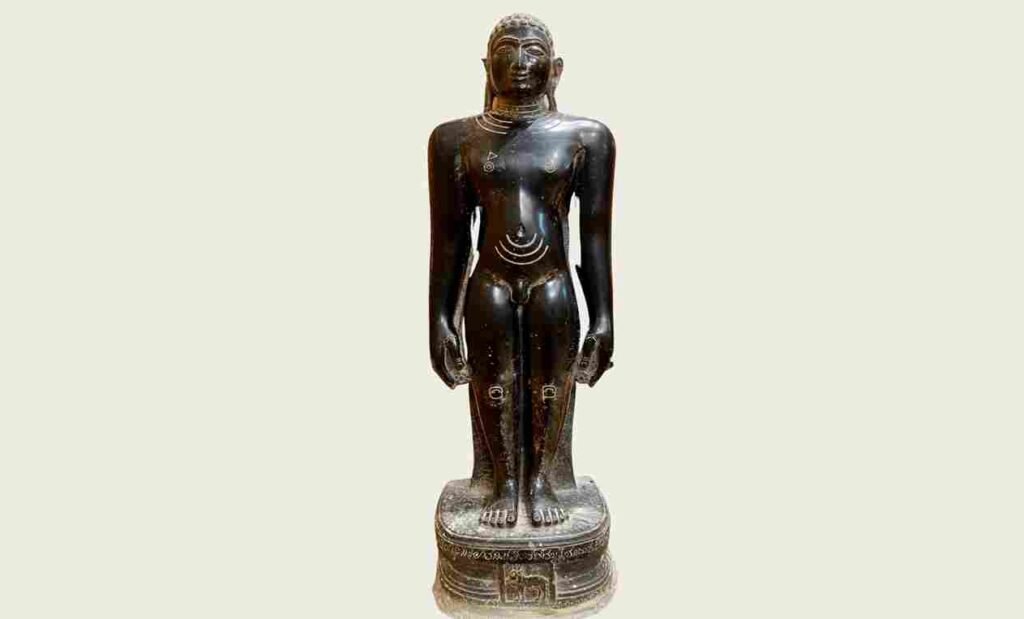
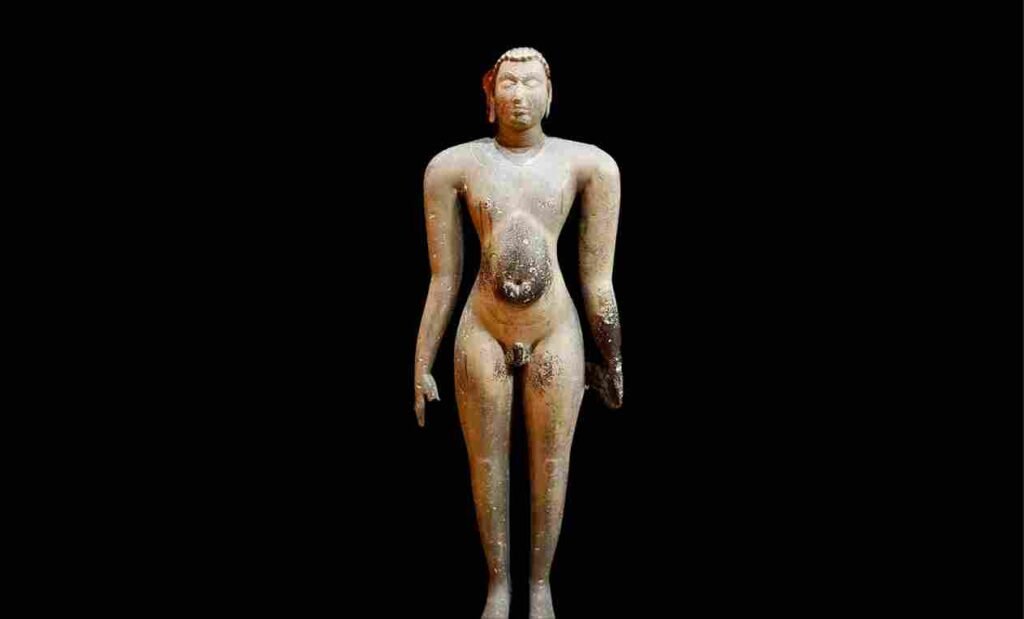
This gallery displays many statues of Jain Tirthankaras. Tirthankaras were Jain teachers who act as bridges between the Spiritual and Material world. Unlike Buddhism, which has one great teacher — the Buddha— Jainism has 24. Of these, the last 2 are believed to be historical figures— Parshvanatha, who lived around the 8th century BCE and Mahavira, who lived in the 6th century BCE. It was Mahavira, the last Thirthankara who spread this religion to the masses.
Did you know that both Mahavira and Buddha had almost similar lives? Just like Buddha’s mother had a dream about Buddha’s prophetic birth, Mahavira’s mother Trishala too had one. She dreamt that her son would either be an emperor or a Tirthankara.
Mahavira was born into a royal family. But just like Buddha, Mahavira too gave up his royal life in his thirtieth year and began a spiritual journey. He wandered for 12 years seeking answers to questions that plagued him. When Mahavira finally achieved enlightenment, he preached this knowledge and slowly started attracting many followers. He died at the age of 72, leaving behind a religion whose core tenets continue to be a big influence on Indian values till today.
You may have noticed that these sculptures look rather similar to the statues of Buddha you saw in the other room. How does a historian tell them apart? There are some clues. A Jain Thirthankara would usually have three umbrellas or Mukkudai in Tamil, carved over his head. This is to depict that the Tirthankara has spiritually mastered the three worlds. It is also considered as a sign of honour, respect and spiritual sovereignty. Can you spot a small triangular mark carved on his chest? That is called a Shrivatsa, an ancient Indian symbol commonly seen on Jain statues, and also statues of Lord Vishnu. If the statue is shown wearing an upper garment, it is most likely to be Buddha. Statues of Mahavira are always bare chested, symbolising that he renounced all material comforts.

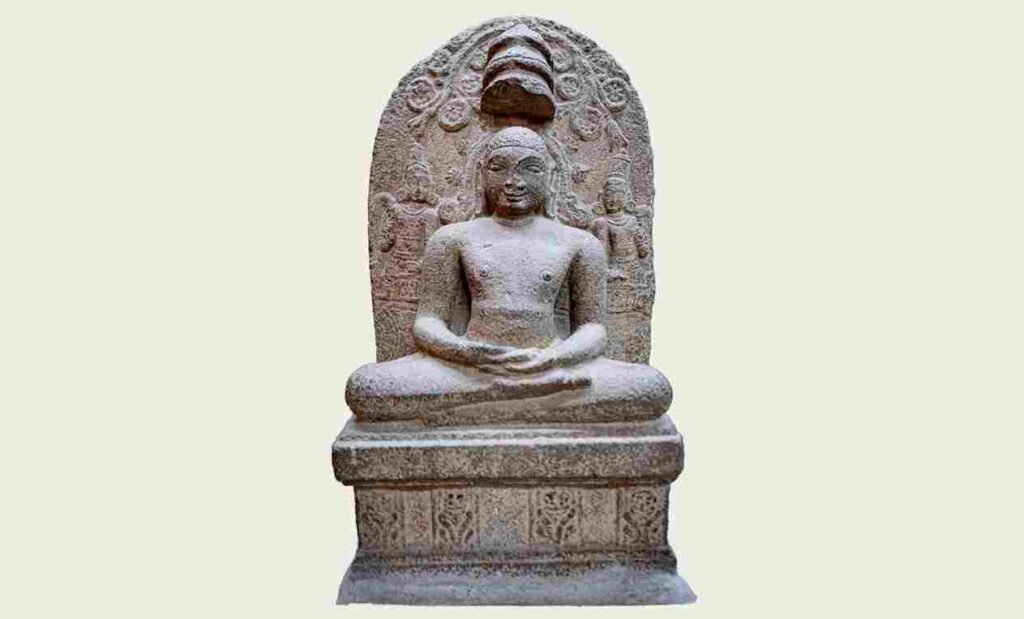
Statue of a Jain Tirthankara, North Arcot dist., 10th century CE