Jataka Tales - Vessantara Jataka
What are the Jataka Tales? This is the story of Vessantara Jataka, and it is a part of local folklore across South-East Asia.
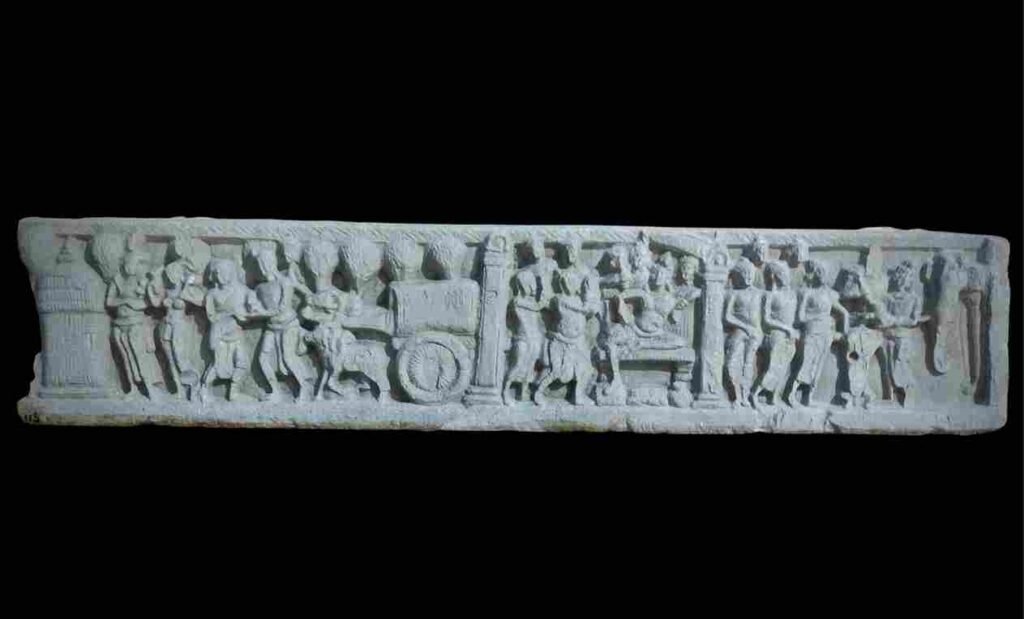
Look for a sculpture depicting Buddha’s feet in a corner of the room, next to the three large statues of Buddha. This story is about the sculpture displayed in the adjacent showcase. It is called the Vessantara Jataka.
In this gallery, you will find that many of the sculptures have a narrative style, almost like a story-book carved in stone. They are stories from Buddha’s life and Buddhist literature; the two sculptures you see in front of you are good examples.
A popular part of Buddhist literature consists of a series of moral stories called the Jatakas. It is believed that Buddha narrated these tales himself. They are accounts of Buddha’s previous incarnations where he took the form of an animal, a bird or a human. Such incarnations of Buddha are called Bodhisattva.
There are around 550 Jataka Tales. Most of them are set in and around Varanasi and are dated between 300 BCE and 400 CE. The first sculpture you see here, tells the story of a Bodhisattva named Vessantara. Vessantara was the prince of a kingdom called Sivi. On the day of his birth, a white elephant calf was brought to the palace. This magical elephant brought rain wherever it went. Very soon, the kingdom of Sivi had abundant rainfall and prosperity followed.
Vessantara grew up to be a very generous prince. He had a reputation for giving away anything that was asked of him. One day, the neighbouring kingdom of Kalinga begged for the magical elephant, so that rains would be plentiful in their lands too. Vessantara didn’t hesitate and gave the elephant away. This scene is depicted in the rightmost corner of the sculpture.
But the people of Sivi were very unhappy and complained that Vessentara was a thoughtless and uncaring leader. They demanded that he be banished from the land. This scene is depicted in the central panel of the sculpture. Vessantara willingly left the palace with his wife and two children in a magnificent carriage drawn by four horses. Along the way, Vessantara donated the horses and the chariot as well. You can see this scene depicted in the left panel. The leftmost corner of the sculpture shows Vessantara and his wife carrying their children to a hut in the forest.
One day, a sly old brahmin named Jujaka came to their hut. His young and pretty wife wanted some slaves. Jujuka was aware of Vessantara’s inability to refuse a request. So he brazenly asked Vessantara for his two children. Vessantara was shocked and dismayed, yet he calmly gave his children away.
The gods watched this scene unfold from the heavens and were impressed. They decided to set things right. As Jujaka walked away with Vessantara’s children, the gods made him take the wrong road - one that led straight to the royal palace in Sivi. The king immediately recognised his grandchildren, and paid Jujaka a fortune to get them back. The ecstatic Jujaka celebrated with an enormous feast, but he ate too much, too fast, and collapsed on his plate, dead. The king brought Vessantara and his wife back from the forest. Meanwhile, the elephant too was returned to Sivi by the grateful kingdom of Kalinga. And the gods left Vessantara with a boon that he would never run short of funds for charity.
This story of Vessantara is a part of local folklore across south east Asian countries and is celebrated as a major festival in countries like Thailand and Cambodia.

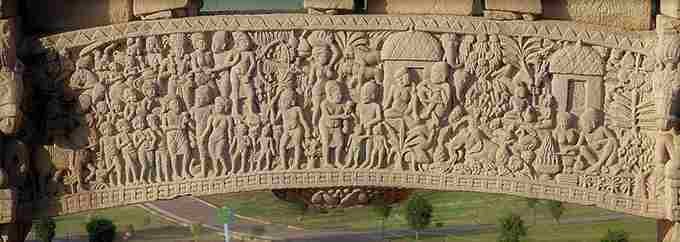
The carving of the Vessantara Jataka at the northern gate of the Sanchi Stupa, 1st century BCE
Wikipedia. Photo by Photo Dharma
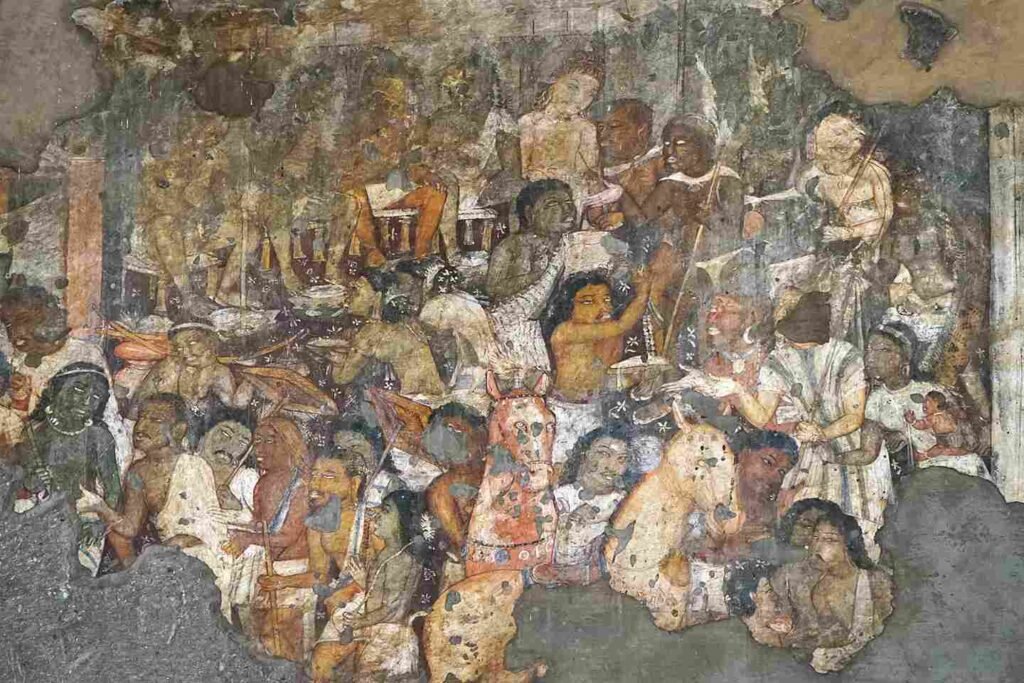
A scene from the Vessantara Jataka, Ajanta Cave no 17, Maharashtra
Wikipedia. Photo by Jean-Pierre Dalbéra