Caskets that stored Buddha’s mortal remains
What happened to Buddha's remains after his passing?
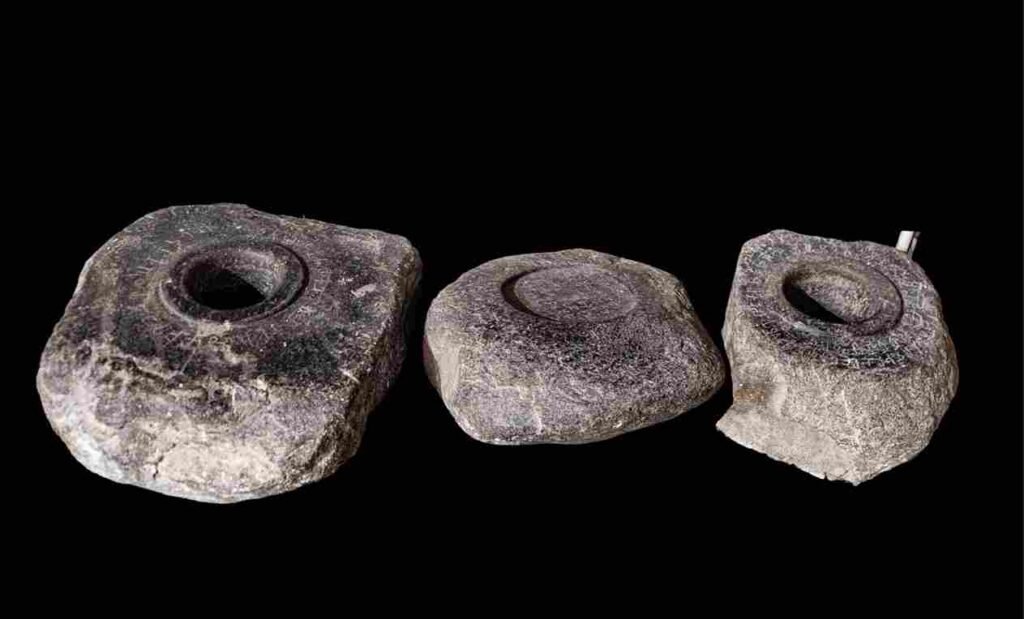
Walk up to the three large statues of Buddha at one end of the Amaravati Gallery. Look for stone caskets placed on the floor next to these statues. Play this story there.
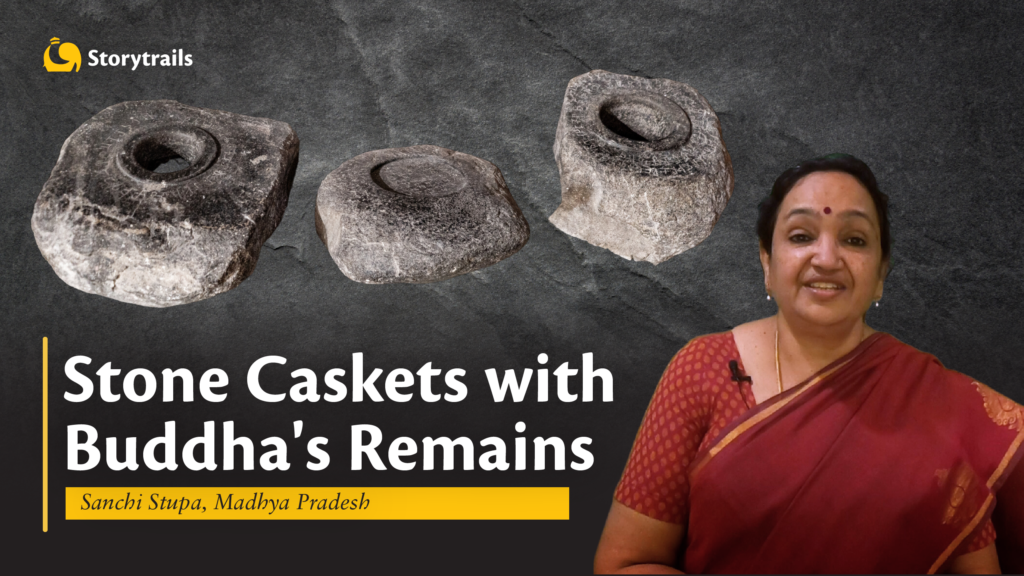
Can you spot the large stone caskets on the floor in one end of the gallery? Way back in the past, caskets of this kind were used to store the cremated remains of Buddha himself. Sounds incredible? Here’s the story.
During his time, Buddha never called himself God. All his followers looked up to him as an enlightened teacher. Buddha taught the importance of living a righteous life, but did not speak about praying to gods.
Which is why early Buddhists never worshipped his image. Instead, sculptors of the time used symbols to inspire devotees. Common symbols included Buddha’s footprints, the Lotus and the Wheel. You can see a sculpture of Buddha’s feet in the corner. You can also see the Lotus and wheel symbols in various sculptures displayed in this room.
After the passing of Buddha, his followers started using sacred relics and symbols as objects of worship. His cremated remains like teeth, ashes and hair were distributed among the princes of eight provinces. They in turn kept these relics in sealed stone caskets like the ones you see here. These caskets were stored deep inside stupas called Mahachaityas or ‘memorials’.
300 years later came King Ashoka, determined to spread the message of Buddhism. He decided to redistribute these remains over 84000 Stupas that he was constructing across the country. Ashoka is said to have opened seven original stupas but left the eighth one untouched. That is the Ramagrama stupa in modern-day Nepal. According to Buddhist tradition, this stupa was guarded by a fierce race of Nagas who flatly refused to part with their casket. Story goes that Ashoka could not break their resistance and so, till date, that continues to be the only stupa with the original casket still intact.
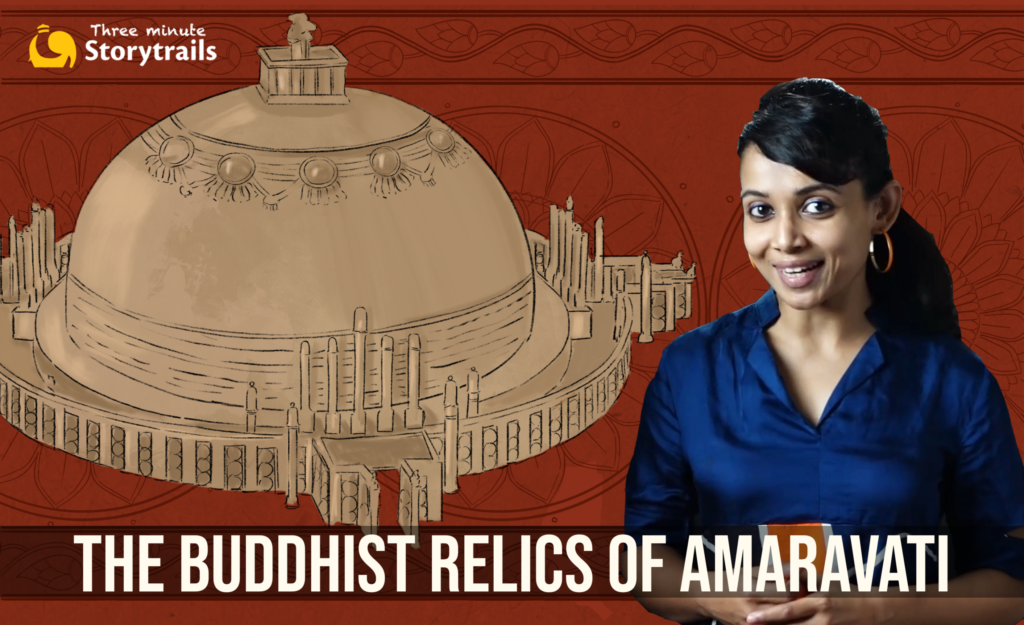
You can see a model of the Amaravati Stupa near the exit of this room. And you can see the Ramagrama Stupa depicted in the panel behind that model.
Unfortunately, by the time Amaravati was discovered, the relics stored inside were already lost, and we will never know what the caskets in this room contained.
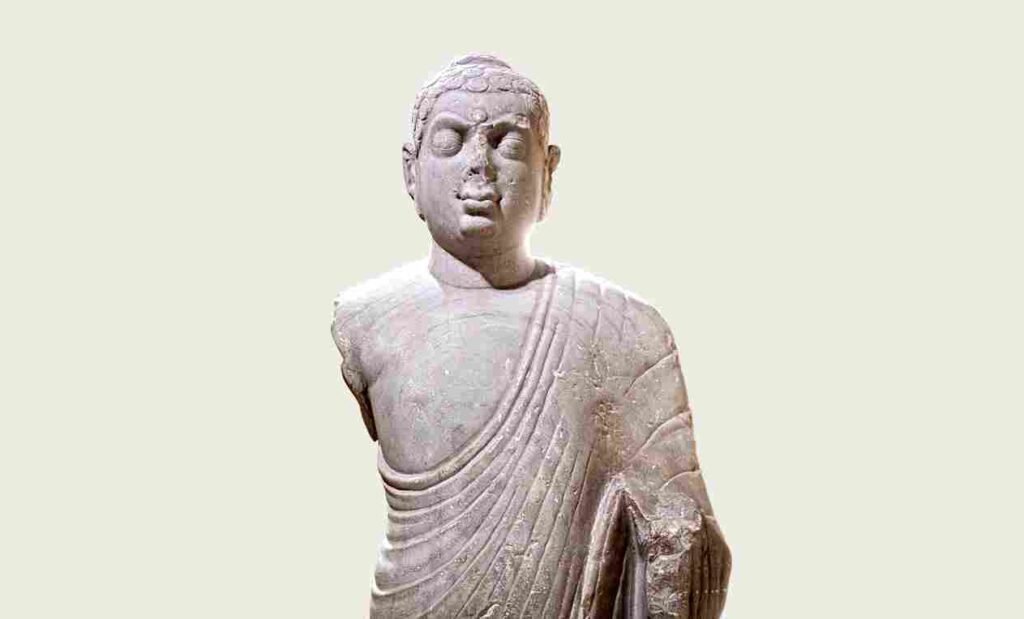
Some of these ideas changed in later Buddhism. By then, it became acceptable to depict images of Buddha. Look at the two statues of the standing Buddhas on either side of the casing slab near the room’s entrance. They belong to the Gandhara school of art, a style that was heavily influenced by Greek notions of beauty. While most of the carvings in this gallery are done in the older Amaravati style, some elements like these statues of Buddha show the Gandhara influence.

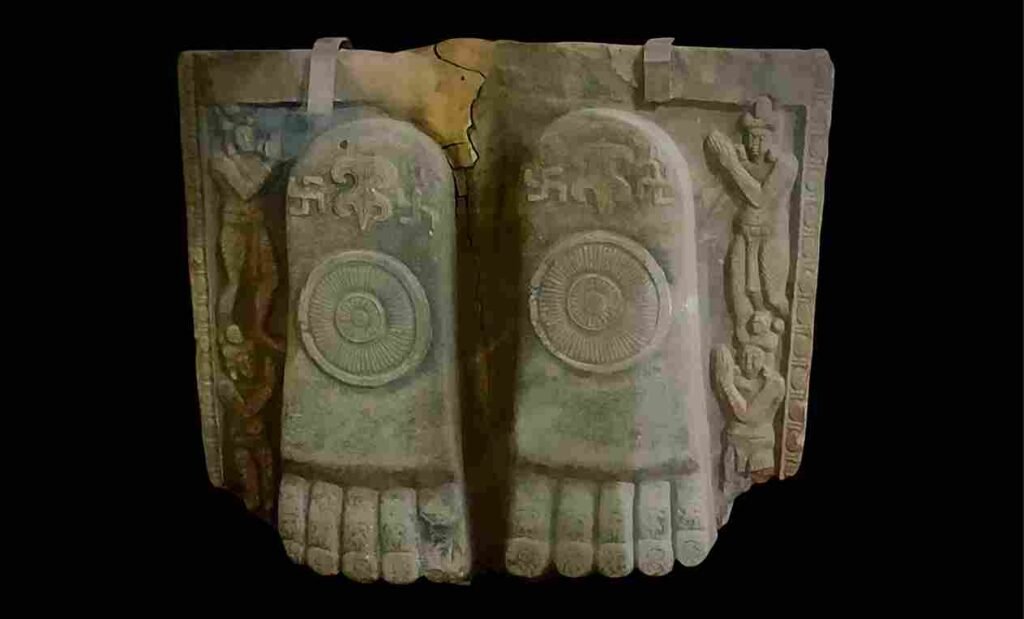
Sculpture of Buddha's feet, with wheels in the centre and the holy symbol Swastika carved on it, Amaravati, AP, 100 BCE
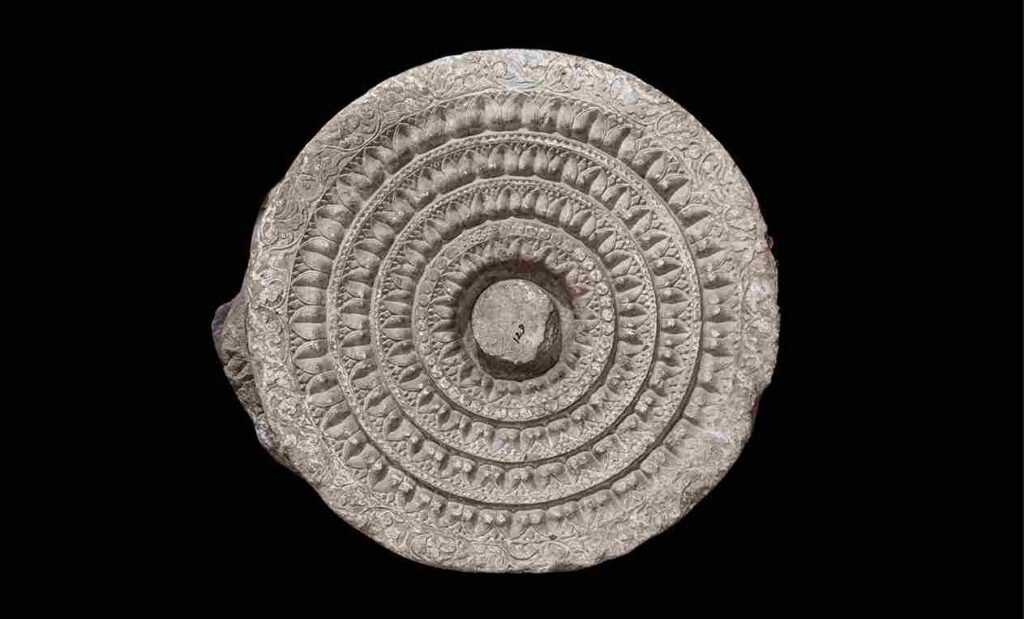
A portion of the cross-bar containing the lotus motif, limestone carving, Amaravati, AP
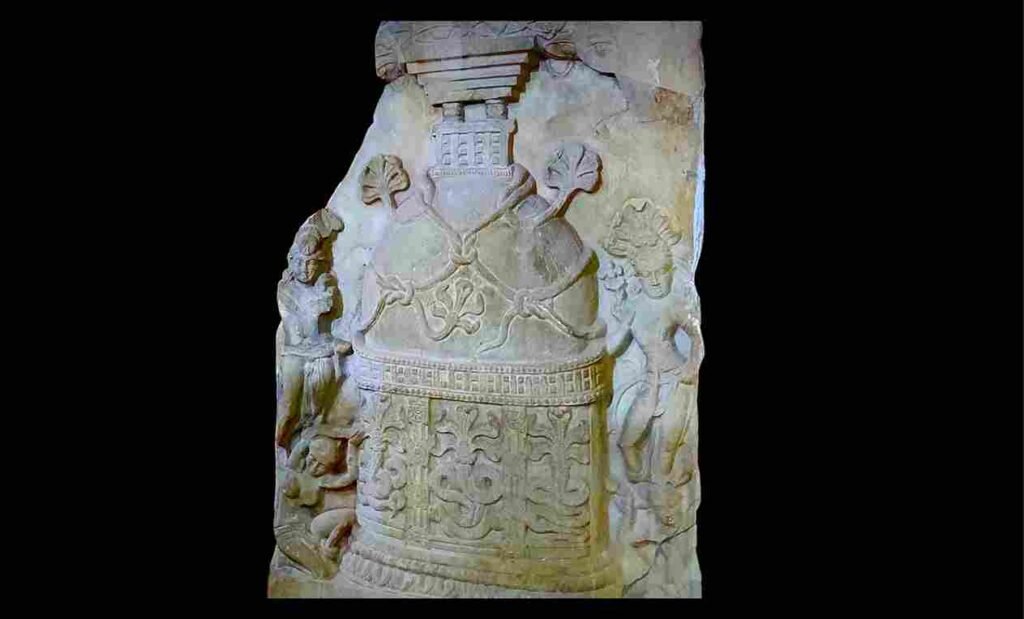
Fragment of the casing slab depicting the Ramagrama Stupa in Nepal, believed to be the only original stupa containing Buddha's relics, Amaravati, AP, 200–250 CE