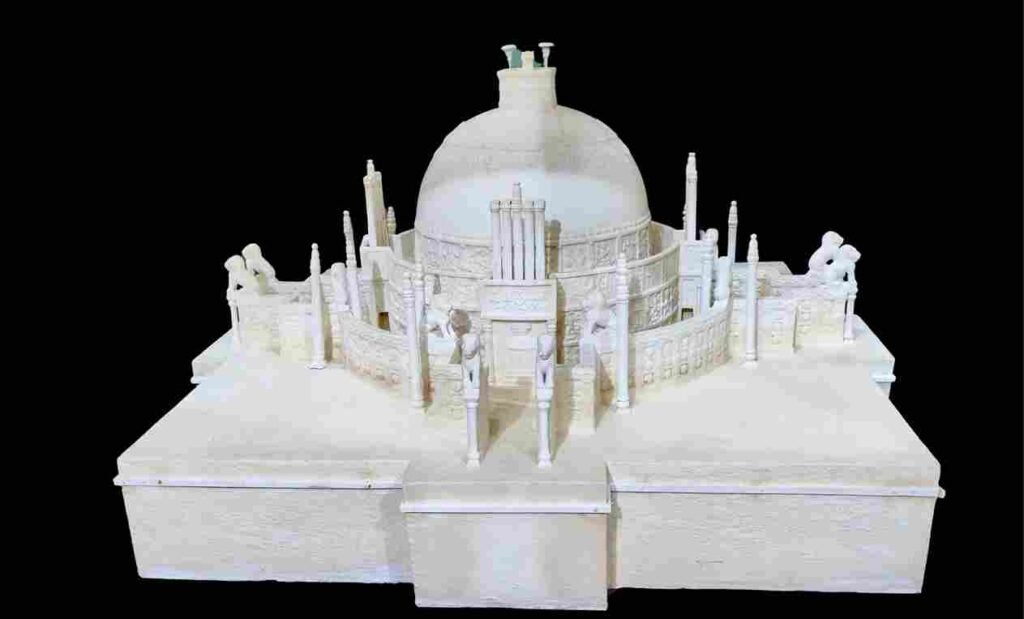
The discovery of Amaravati
How was the ancient city of Amaravati discovered? Why was it a significant discovery?
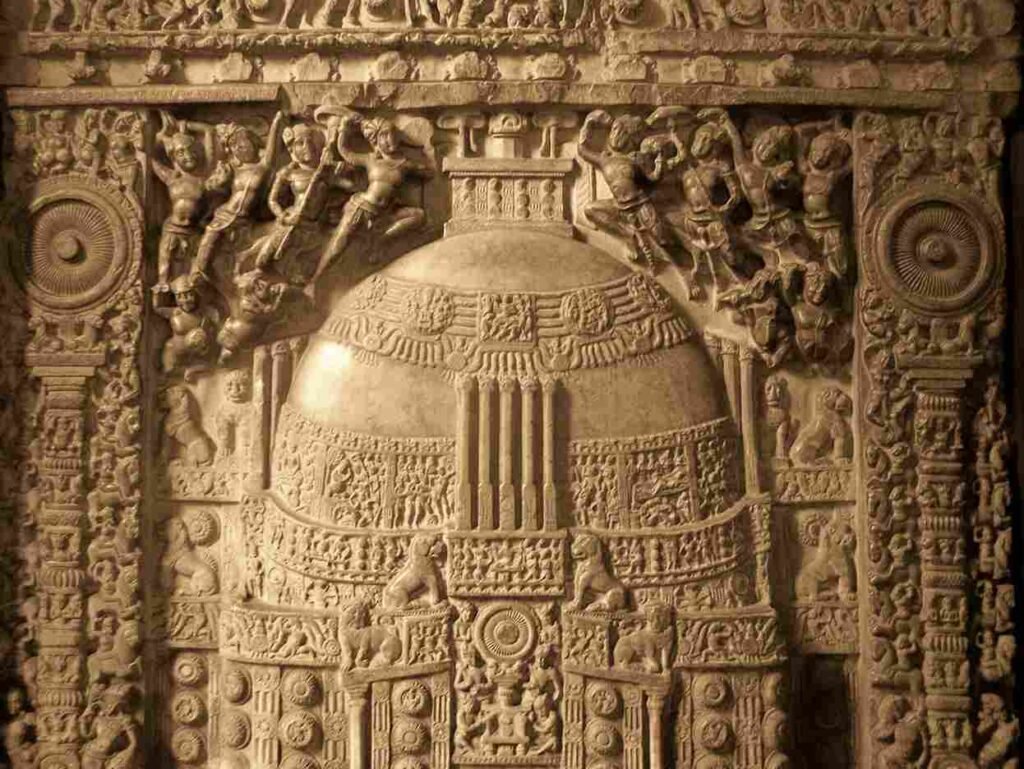
From the Hindu Sculptures gallery, step into the room marked 'Amaravati Gallery'. You can play the next story at the large casing slab facing the entrance to this gallery.
In 1798, in a sleepy village called Deepaladimma in modern-day Andhra Pradesh, an Englishman came upon the ruins of an ancient stupa. He didn’t know what it was but he was certain that he was looking at something invaluable. He got another opportunity to visit the site in 1810. But by then, the ruins were vandalised. Unfortunately, the locals had used the stones as building material for their houses. Despite this loss, he saw there were many beautiful pieces still scattered around. This Englishman, Colin Mackenzie, had a deep fascination for Indian history and culture. It also helped that he was the surveyor general of the Madras Presidency. This meant that he had the means and resources to preserve the surviving artefacts. He documented what he saw, and shipped off many of the finer pieces to museums in London, Calcutta and Madras. What you see in this room is the largest collection of those antique stones - the Amaravati collection.
Now why should some carved stones be so significant? Today, we know that they are some of the earliest examples of Buddhist art in the world. Some historians even believe that the stupa discovered by Mackenzie was originally built during the time of Ashoka in the 3rd century BCE, and improved upon by later kings.
And who were these later kings? These kings were part of a later dynasty that traded with Romans, a dynasty whose reign lasted longer than the Mughals, a dynasty that gave birth to a new school of art.
They were called the Satavahanas. The Satavahanas controlled a vast territory in Central India, covering the modern-day states of Andhra Pradesh, Maharashtra and Karnataka. They are believed to have ruled between 230 BCE and 220 CE. One of their many capitals was called Amaravati in modern-day Andhra Pradesh, the very same place where Colin Mackenzie discovered these antique stones.
Some historians believe that the Satavahanas were originally feudatories of the Mauryan empire. After Ashoka’s death, the Satavahanas declared independence in the central part of the Indian peninsula. This central location allowed them to serve as a bridge between North and South India. Religion and culture travelled back and forth across Satavahana lands.
The Satavahanas were Hindu kings but were tolerant of other religions. By the time they came to power, Buddhism had spread to southern India. The Satavahanas even allowed Buddhist monasteries to come up along important trade routes. By the end of the Satavahana reign, there was a trail of Buddhist art all over their territory. This style of sculpting came to be called the Amaravati style.
Most of these sculptures were carved in white limestone and depict Buddhist fables or scenes from Buddha’s life. This Amaravati style is said to have influenced later Hindu art of the Pallava and Chola periods that you can see in the gallery below.
This free audio tour is brought to you thanks to the generous support of Pando. Visit pando.ai to learn more about them.

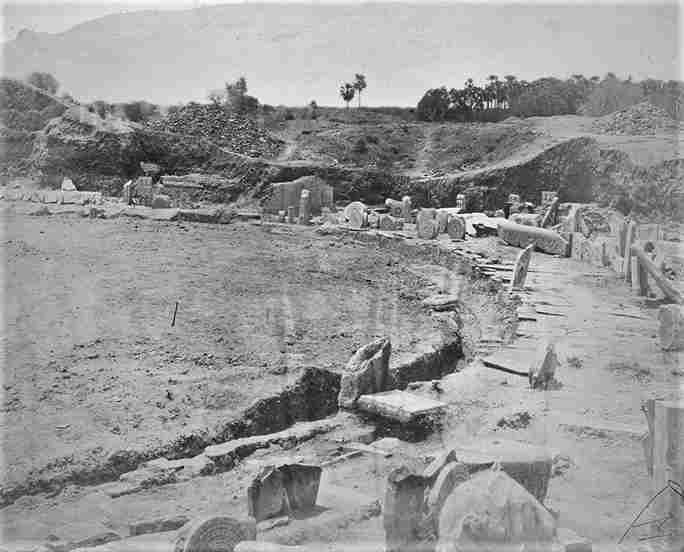
Western part of the Amaravati Stupa excavation site, 1880
British Library Photo by Sergeant Coney
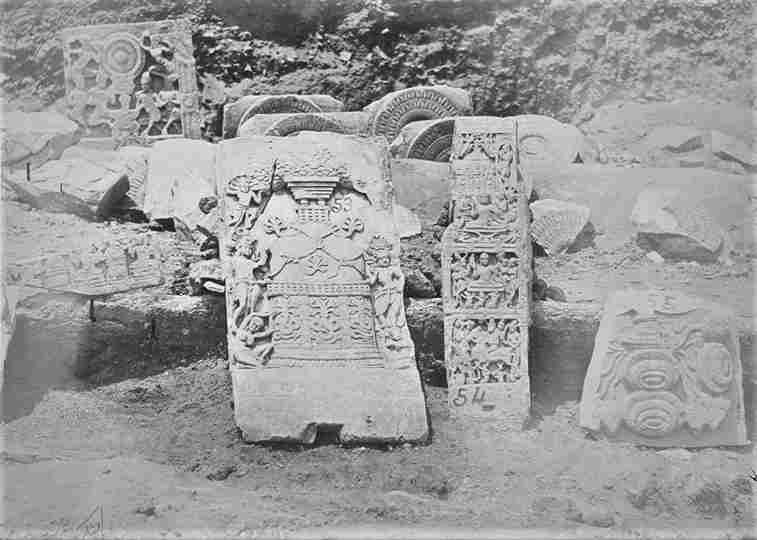
A set of sculpted stone slabs from Amaravati as photographed at the site of the excavations, 1880
British Library Photo by Sergeant Coney