Kali
The tale of the terrifying goddess who destroys evil.
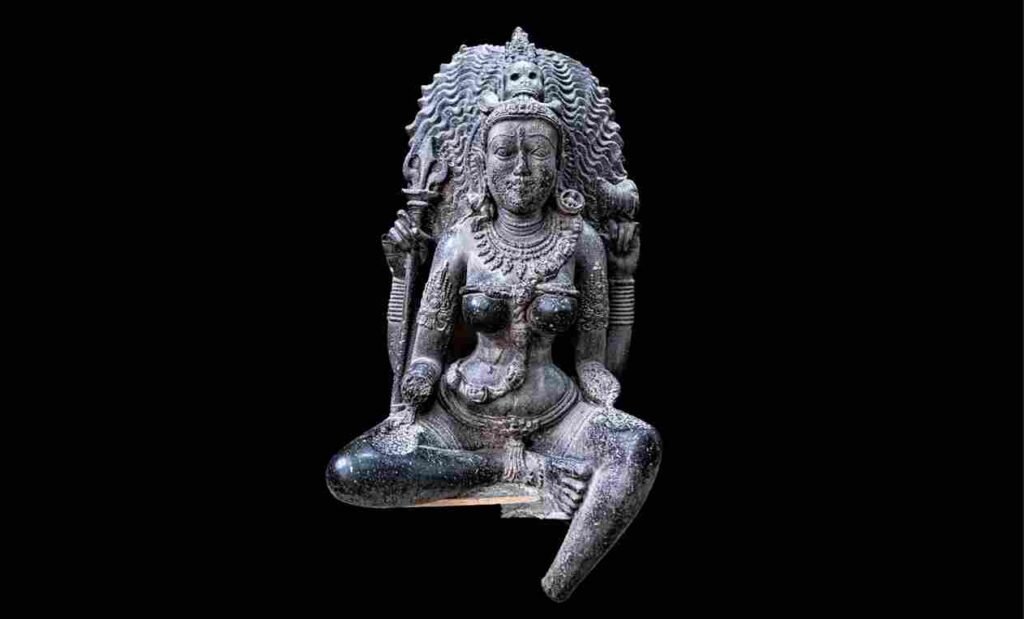
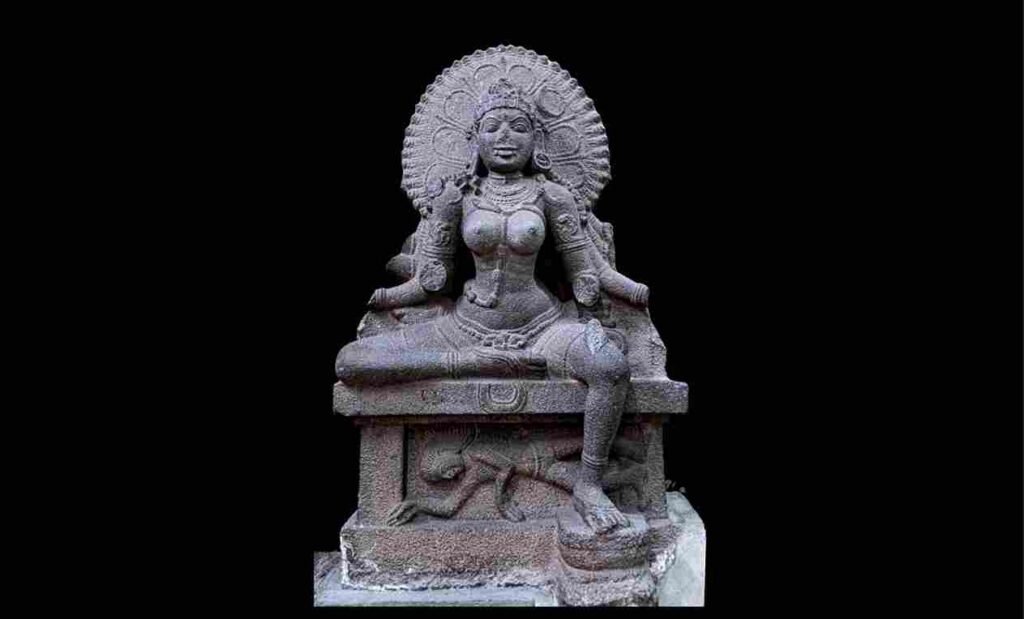
In the Hindu Sculptures gallery, you can see an imposing sculpture of Goddess Kali, depicted with fangs and a garland of skulls. Play this story there.
This gallery showcases stone sculptures of Hindu gods and goddesses in varying incarnations. It also showcases secondary characters from Hindu mythological tales, including guardian figures, animals and other creatures. You may notice that some of the most visually striking sculptures happen to be representations of female divinities. The two granite figures in front of you stand out, with their fangs and garlands of skulls. Who are these terrifying goddesses? And where do they figure in the Hindu pantheon?
Many believe that the Supreme God in Hinduism is really a goddess. She is called Shakti, literally meaning ‘energy’. Shakti gained prominence around the 7th century under the influence of a new Hindu tradition called Tantra. She can be kind and generous or she can be fiery and ruthless. She goes by many different names. As Saraswathi, she is the wife of Brahma, as Lakshmi, she is Vishnu’s consort, and as Parvathy, she is Shiva’s better half.
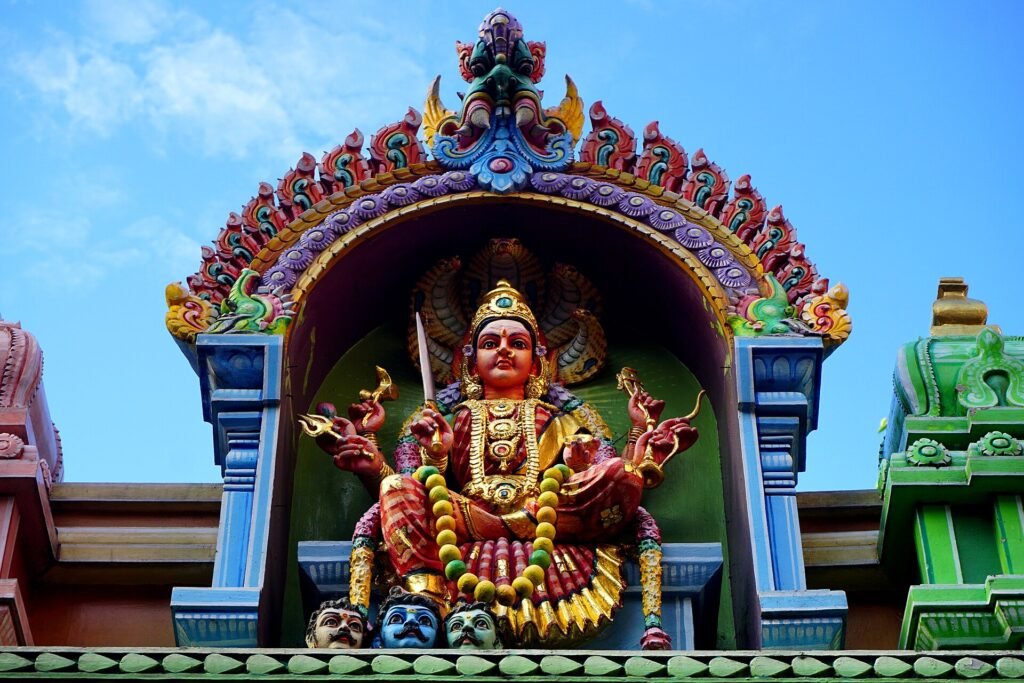
The fearsome figures you see here are representations of Kali or the Black One, the all-powerful goddess of death, time and change. According to an ancient Hindu text called Devi Mahatmyam, there was once a fierce battle between the devas - the ‘good’ demigods - and the asuras, the ‘not-so-good’ beings.
The devas were losing, so they approached the goddess Parvati for help. Parvati agreed and rode into the battlefield on a lion. She took on many different forms - Durga, Ambika and Kaushiki, and the most terrifying of them all - the dark and naked Kali. Kali struck terror with her wild eyes, lolling tongue, and many hands holding deadly weapons. She ruthlessly killed the leaders of the asuras - Chanda, Munda, Shumbha, Nishumbha and a particularly fearsome asura called Raktabija. Every time a drop of his blood fell to the ground, another new Rakthabija sprouted there. So Kali simply licked up every drop of blood there was. Even after killing Rakthabija, her lust for blood did not abate. Then Siva tried to stop her by lying down in her path. But Kali, who was in a state of frenzy, did not see him and almost stamped on him. This is how Kali is usually portrayed, with one foot on Shiva and her tongue stuck out in embarrassment. The lolling tongue is also symbolic of Kali’s dreaded, cannibalistic side. In these 2 sculptures however, the artists have chosen to represent her with fangs instead. Do you spot a garland of male heads on the Kali sculptures? They are the heads of all the demons she decapitated.
Across India, and especially in the eastern states of Bengal, Odisha and Assam, Kali is worshipped as the remover of all evils. The festival of Kali Puja falls on the same day as Diwali. But the festivities begin at midnight and involve offerings of red flowers and sometimes the sacrifice of a goat.
Kali and Durga stand out in the Hindu pantheon, which mainly features all-powerful male deities. These goddesses are honoured in their own right, with no reference to their male counterparts.
We’ll talk more about Durga and other forms of Shakti in the Bronze gallery.