
Padmavati, Shakhambari and Lajja Gauri
This story explores Padmavati, Lajja Gauri and Shakambari - deeply revered goddesses associated with creation, sustenance and protection.
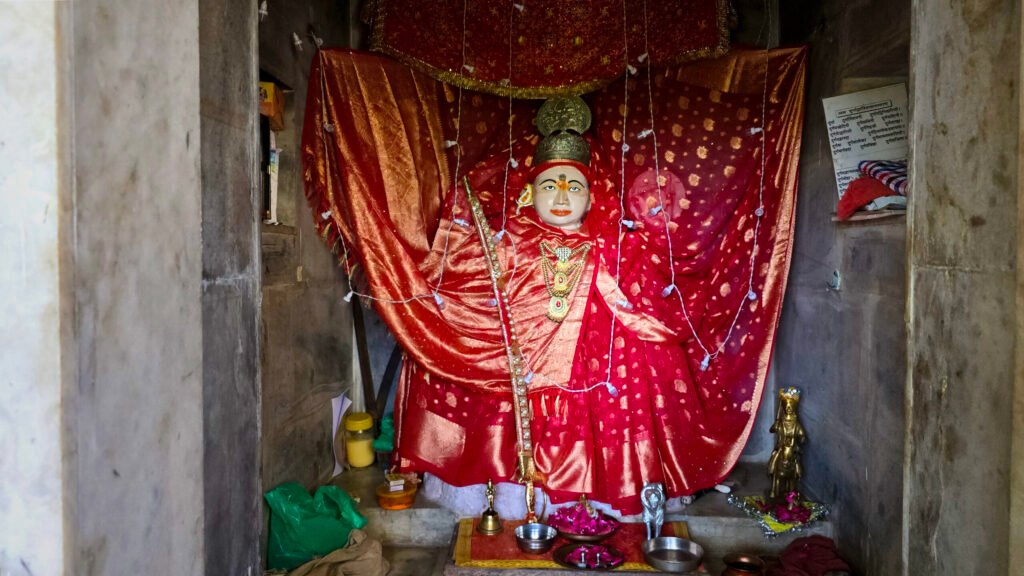
From Tana Riri Garden, drive southwards and take a left about 300 m away to reach the Bhurodia lake and the Padmavati Mata temple.
The shrine you see before you is dedicated to Goddess Padmavati. Her name means ‘the one who emerged from a lotus’. In Hindu tradition, Padmavati is seen as a form of goddess Lakshmi, the consort of Lord Vishnu. She is the Goddess of wealth, and her presence here is no coincidence. For centuries, Vadnagar thrived as a trading town, shaped by merchant communities who created and circulated wealth.
But Padmavati belongs to another sacred world as well. In the Jain tradition, Padmavati is a guardian spirit, or Yakshi, associated with the 23rd Tirthankara of Jainism, Parsvanatha. You can find her images in Vadnagar’s Jain temples. There, she is prayed to, not just for prosperity, but for protection and strength. She is often depicted seated on a lotus, with snakes forming a hood behind her.
The lotus, then, is the shared symbol from which both the goddesses emerge. And this symbolism leads us to another ancient goddess.
Long before there were temples and formal traditions, there was Lajja Gauri. She is one of the most striking forms of the goddess, depicted in a squatting posture, her legs parted in the process of giving birth. Yes, she is the goddess of fertility and birth. She does not have a face, but a lotus blooms from her neck. Sometimes, her head is shown as an inverted pot. That pot signifies the womb, and an overflowing pot is a metaphor for abundance. So Lajja Gauri signifies fertility, well being, prosperity and all good things.
Excavations in Vadnagar have unearthed several stone and terracotta plaques of Lajja Gauri. Across Gujarat, similar images are often found near stepwells.
This village goddess is worshipped all over India by different names and in different forms. The tradition is believed to have originated in South India, and gradually spread to North India too. In some traditions, she became Shakambari, the nourisher. In Vadnagar, some depictions show her holding a sheaf of crops, linking the deity with agricultural abundance. The very name Shakambari means ‘the one covered with vegetation.’
So while Lajja Gauri represents creation, Shakambari represents sustenance. And Padmavati offers protection. Seen this way, these are not separate goddesses, but part of a continuum.
The lake you see in front of this shrine is called the Bhurad Talav. And next to it is the Bhurodia Hanuman temple, dedicated to Hanuman, the embodiment of courage and loyalty from the Ramayan.

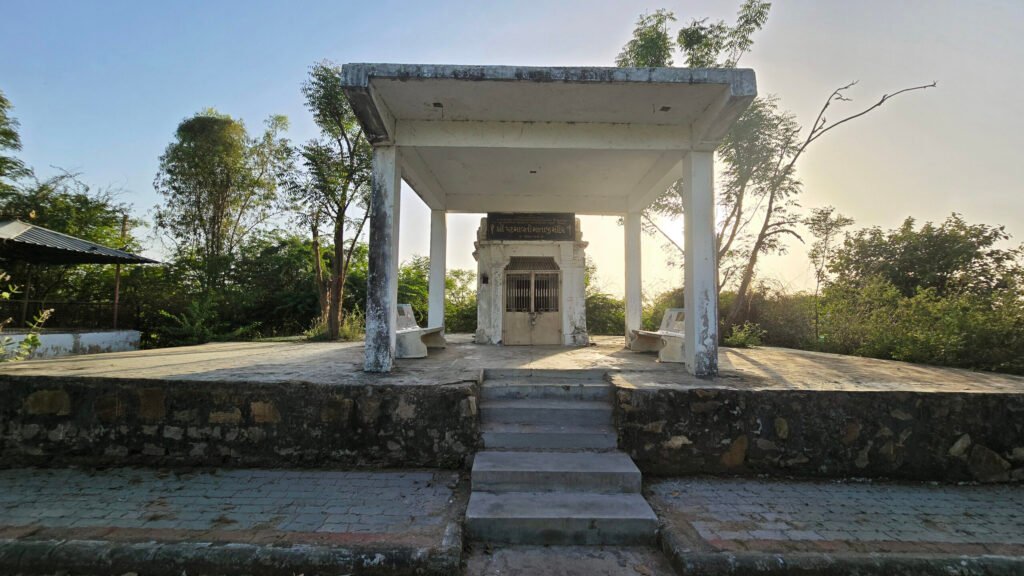
Padmavati Mataji Temple
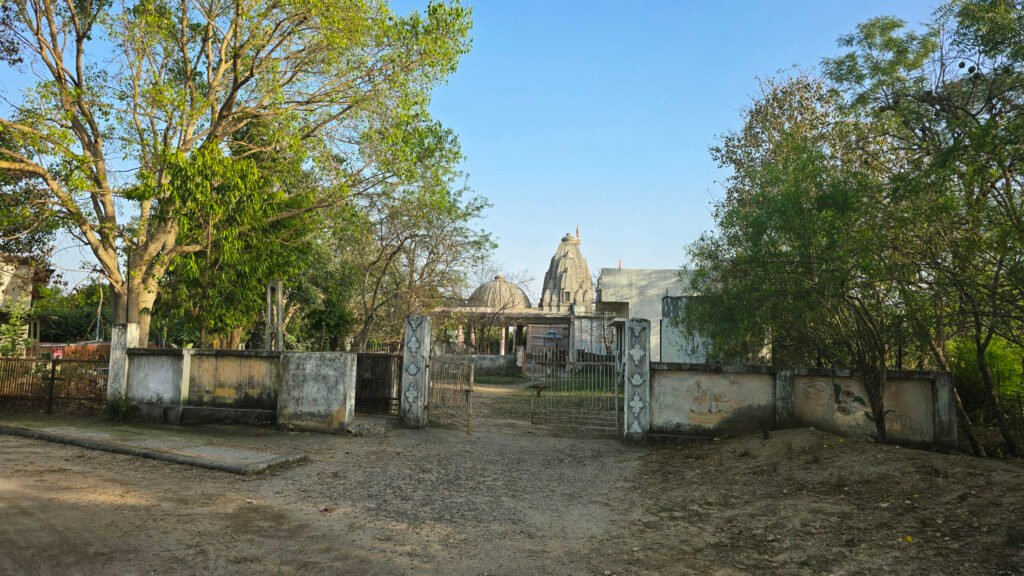
Padmavati Mataji Temple
You Might Also Be Interested In
Explore More
Padmavati | Jainpedia
About Padmavati.