
Kirti Toran
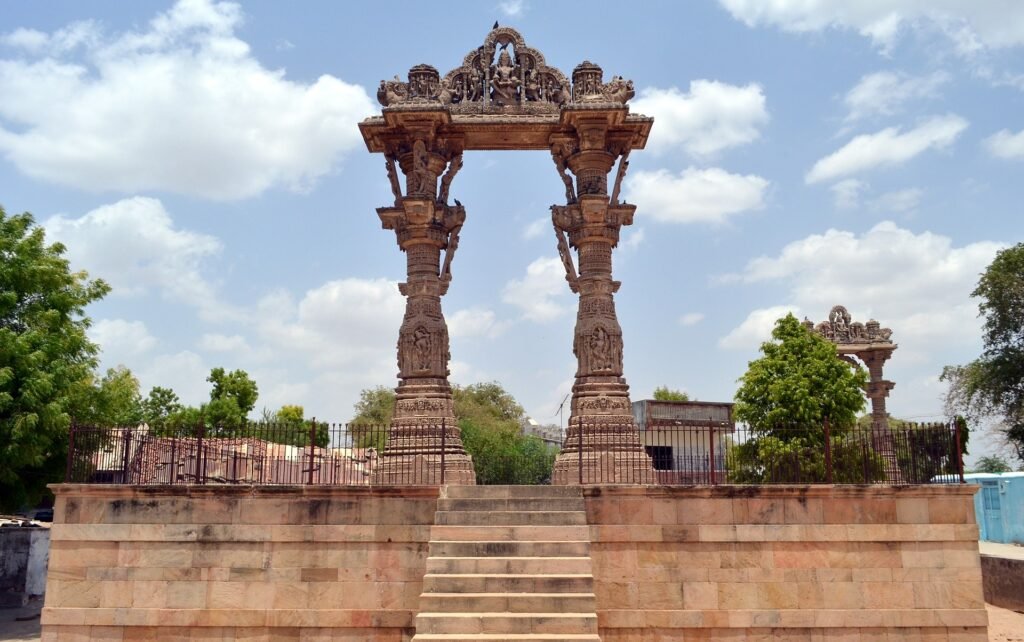
Kirti Toran, elegant ceremonial gateways reflecting the artistic brilliance of medieval Gujarat, are Vadnagar's most recognisable landmarks.
Head south from Jhunjhuniyo Kuo for about 500 m and turn left at Patel cross road to reach Kirti Toran.
These elegant stone structures rising nearly 40 feet high, are Vadnagar’s most recognisable landmarks. The Kirti Torans.
A toran is a ceremonial gateway. In India, it marks a transition, from the everyday world to a sacred space. Hindus, Jains, and Buddhists - they all use them.
Kirti means glory. Together, ‘kirti toran’ suggests that these gateways of glory were built to commemorate and celebrate something. We don’t quite know WHY they were constructed.
Originally, they probably marked an entrance to a temple complex or a ceremonial route. Or perhaps they were put up to celebrate a grand victory in war. The larger complex that they once belonged to has long disappeared. But these gateways remain, still holding their ground.
They are dated to around the 11th or 12th centuries, when the Solanki kings ruled this region. It was a period known for refined temple architecture and intricate stone carving.
Built from red and yellow sandstone, these torans were assembled without mortar or any other cementing material. The structure itself is full of carvings; you can spot celestial beings, dancers, animals and mythical creatures on the torans, all typical of temple art in the Solanki period. The brackets that support the beam are particularly striking. In some sections, you can even spot what look like narrative scenes, though many of the finer details have eroded over time. At the very top sits a sculpted figure, often believed to represent Shiva, with Ganesha and Kartikeya on either side.
Of the two torans, the eastern one has stood here continuously for over 800 years. The other toran lay dismantled and scattered around this place for over a century. Local accounts suggest that in the 19th century, Maharaja Sayajirao Gaekwad III considered relocating the structure to Baroda, as part of a broader plan to preserve heritage. The plan, however, was not pursued and the pieces remained here. In 2007, the Archaeological Survey of India carefully reconstructed the toran at its original site.
Today, they stand side by side once again, keeping a watch over this ancient town.

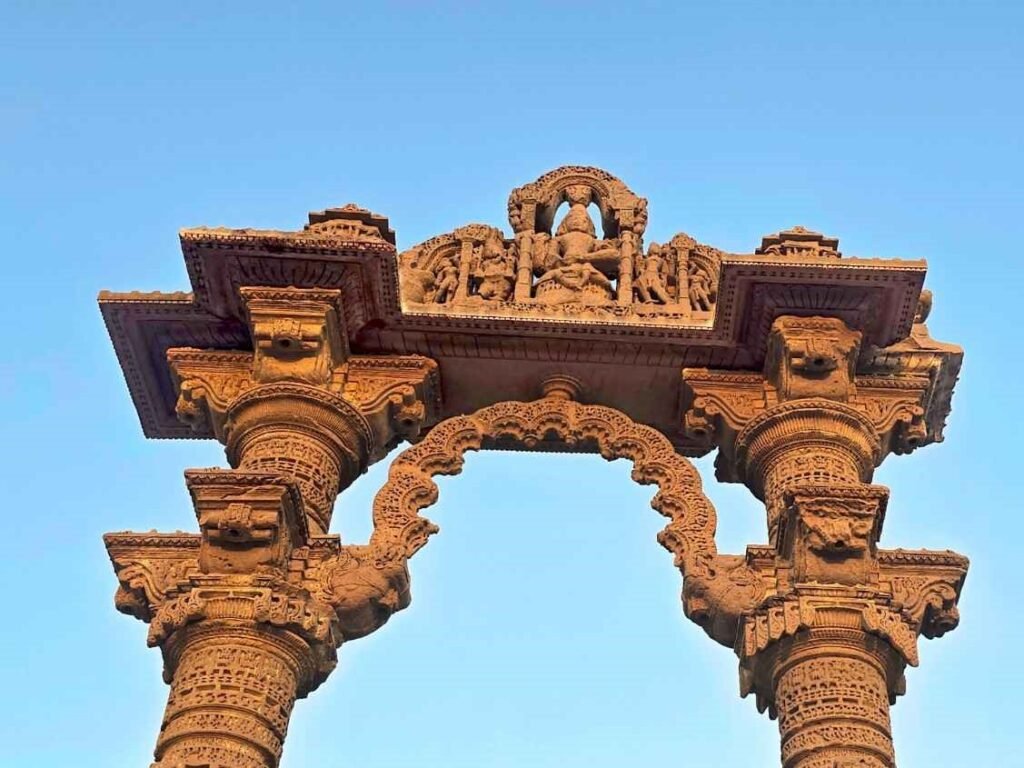
Kirti Toran
You Might Also Be Interested In
Explore More
Toran architecture of Gujarat | Shushmita Senpramanik
A research paper that examines various styles, motifs, and historical contexts of Toranas across different temples.