
Vadnagar Railway Station
The Vadnagar Railway Station is part of a network that is one of the earliest rail initiatives by any princely state in India.
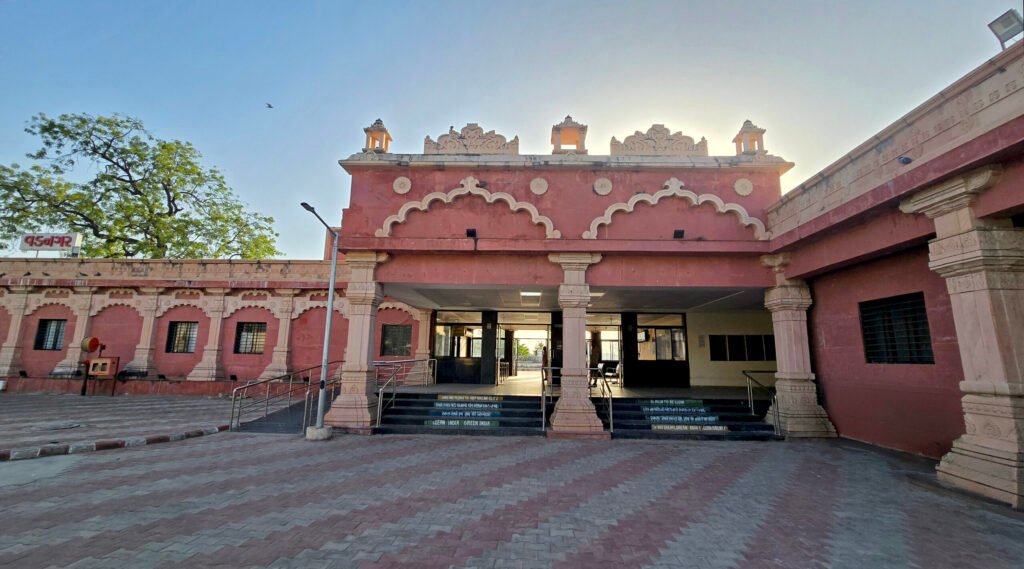
Our tour begins at the Vadnagar Railway Station.
Welcome to the Storytrails audio tour of Vadnagar, brought to you by Gujarat tourism.
Our tour begins at the Vadnagar railway station. The façade of this station, with its arched windows and carved stonework, appears to belong to another era. This structure, however, dates only to 2019. But it is part of a network that is one of the earliest rail initiatives by any princely state in India.
In the 18th century, Vadnagar was part of the Baroda State, ruled by the Gaekwad dynasty. Baroda was an autonomous Princely State under the British Raj. In the 1860s, Maharaja Khanderao Gaekwad began developing a Railway network here. It was one of the earliest rail initiatives by an Indian princely state. And it came just a decade after the first passenger train ran from Mumbai in 1853. Under Maharaja Sayajirao Gaekwad III, who reigned from 1875 to 1939, the network expanded significantly, linking market towns across the region.
Vadnagar entered this network in 1881. At the time, it was a modest stop. Everyone knew Vadnagar as a trading centre, but few knew just how ancient the town really was.
Historically, Vadnagar lay at the intersection of major trade routes; routes that connected Central India to the northwest and Sindh, and connected the Gujarat coast to Rajasthan and North India. By the mid-2010s, excavations by the Archaeological Survey of India had begun to uncover Vadnagar’s long history, including the remains of a Buddhist monastery described by the Chinese traveller Xuanzang, who came to India in the 7th century. So Vadnagar, along with places like Modhera and Patan, became part of a broader Buddhist and tourism circuit. More people began visiting this place.
In response, the Indian Railways modernised the station and the line in 2019 as part of the Swadesh Darshan Project. The old metre-gauge line was replaced with an electrified broad-gauge network. The older station was demolished and rebuilt incorporating elements of traditional Gujarati architecture. The idea was to make the station serve as an introduction to Vadnagar’s heritage.
In more recent times, Vadnagar gained national attention as the hometown of Shri Narendra Modi, who became India’s Prime Minister in 2014. His early life is closely associated with this station. His father ran a small tea stall on the platform, where young Narendra helped out. The decommissioned bunk is in one corner of the station. For many visitors today, that detail adds another layer to the station’s identity.

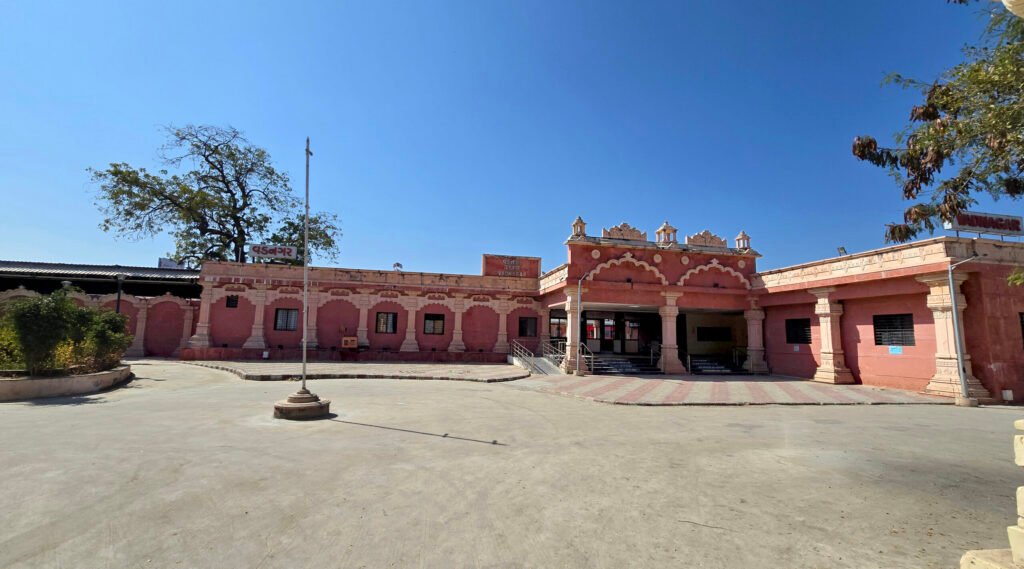
Vadnagar Railway Station
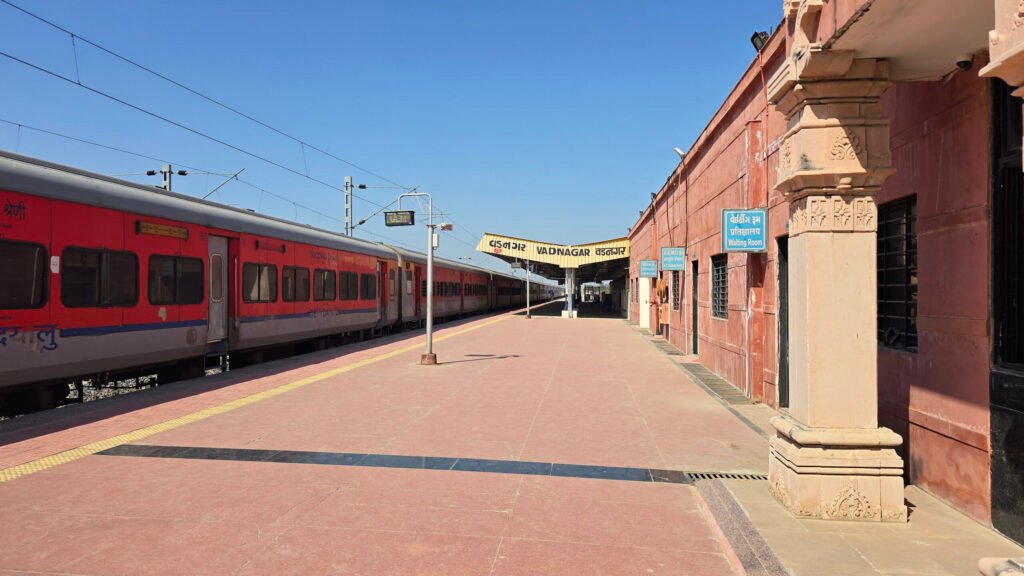
Vadnagar Railway Station
You Might Also Be Interested In
Explore More
Sayajirao Gaekwad III | The Better India
Once a pauper, this king abolished infant marriage and gave free primary education!