Somaskanda
This is the story of an ancient icon, the Somaskanda. Why is Ganesha missing from an image that portrays Shiva's family?
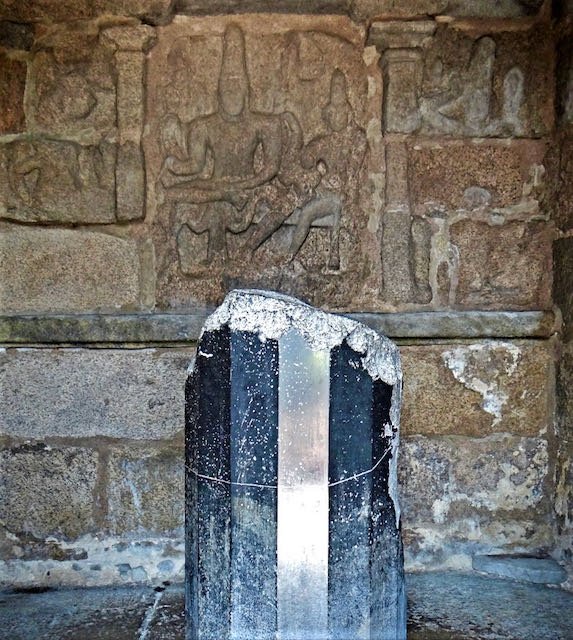
Walk up to the first Shiva shrine - the one facing west. You can play this story there.
This is a Shiva temple and you can see a stone lingam, an ancient symbol representing Shiva in the shrine. But look at the panel behind the lingam. You can spot this panel at many places across Mamallapuram and elsewhere too. The panel depicts Shiva, his wife Parvati and their son, the ancient warrior god Muruga. Behind them are Vishnu, the god of protection and Brahma, the god of creation. This little domestic group of father, mother and son, was a popular icon during the Pallava period. This panel is called Somaskanda, an amalgamation of three names - S is Shiva, Uma is Parvati and Skanda is another name for Muruga.
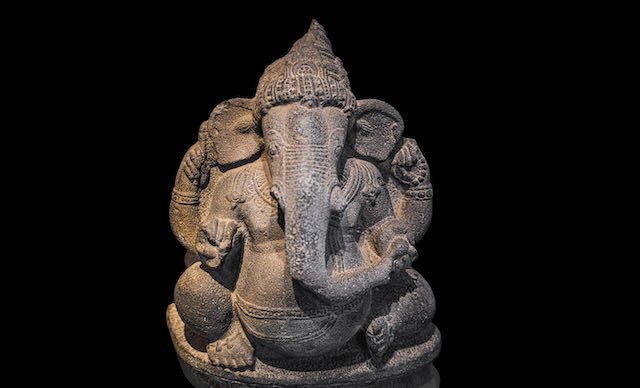
Now, if you are familiar with Indian Gods, you will at once see that someone is missing from this family portrait. Who’s missing? Ganesha, the elephant-headed God, Shiva’s other son. So why is he missing? Archaeologists believe that at the time this sculpture was made Ganesha was a lesser known god in these parts ruled by the Pallavas. Ganesha started appearing in Pallava temples only by the 7th or 8th century CE. Even then, in the early stages, he was venerated not as Shiva’s son, but as Gana-pathy or leader of the attendants who always accompanied Shiva. What makes them so sure? Some historical evidence, and some conjecture.
Sangam literature, or ancient Tamil literature dating to the 3rd century BCE talks of 5 major Gods. There was Mayon, the God of the forests, who is now equated with Vishnu, Indra, was the god in the plains, Varuna oversaw the coastal regions and Kotravai was the queen of the dry lands. The most popular among them was Seyon or Muruga who reigned over the hills. Back then, Shiva, whom we see here as the principal deity, was not a commonly mentioned deity in literature.
Then, between the 6th and 8th centuries, a group of religious poets called the Nayanmars wrote prolific literature and poems in praise of Shiva. This was exactly the time when the Pallavas were at their peak. The Pallava kings accepted Shiva as their main God and started building temples dedicated to him. Many of them still stand.
So when did Ganesha enter the picture? Only by the 7th or 8th century CE. A popular devotional song, Vatapi Ganapati, hints at the story. In 642 CE, the Pallava king Narasimhavarman I, defeated the Chalukya king, Pulakesi II. He invaded the Chalukya capital Vatapi, now called Badami in modern day Karnataka. Story goes that his brave commander brought back an image of an elephant-headed God from Vatapi. He installed it in his hometown, Thiruchengattankudi in Tamil Nadu. It is believed that the statues there could be the oldest evidence of Ganesha worship under the Pallavas. Gradually, Ganesha got absorbed into Shiva’s family, as another son of Shiva in Pallava territories too. But that doesn’t mean that Ganesha wasn’t popular or not worshipped elsewhere in south India. We know that he was a popular god in the kingdom of Pandyas, further down south, even as far back as the 5th century CE.

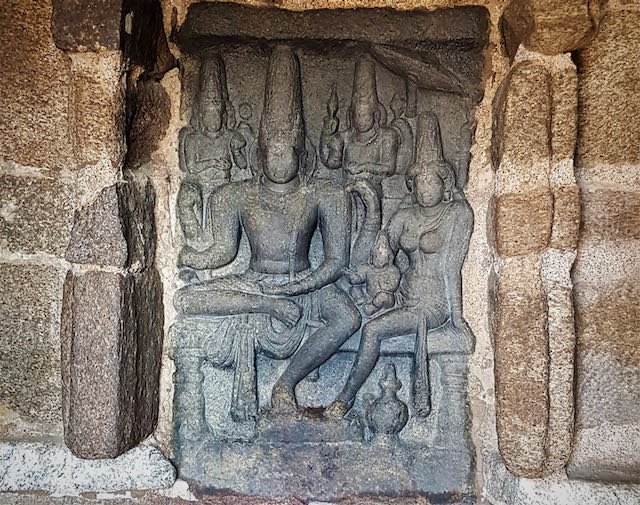
Somaskanda panel, Shore Temple
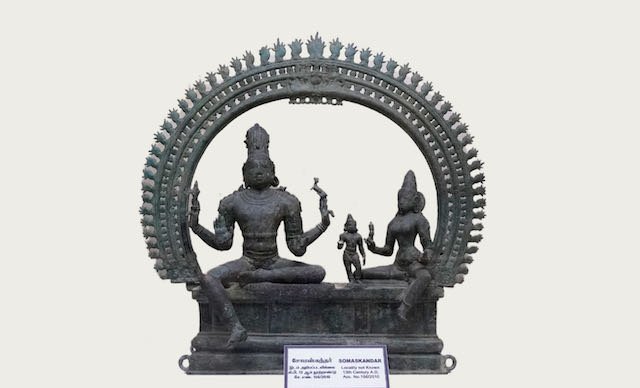
Bronze sculpture of Somaskanda, 13th century CE, Egmore Museum, Chennai